

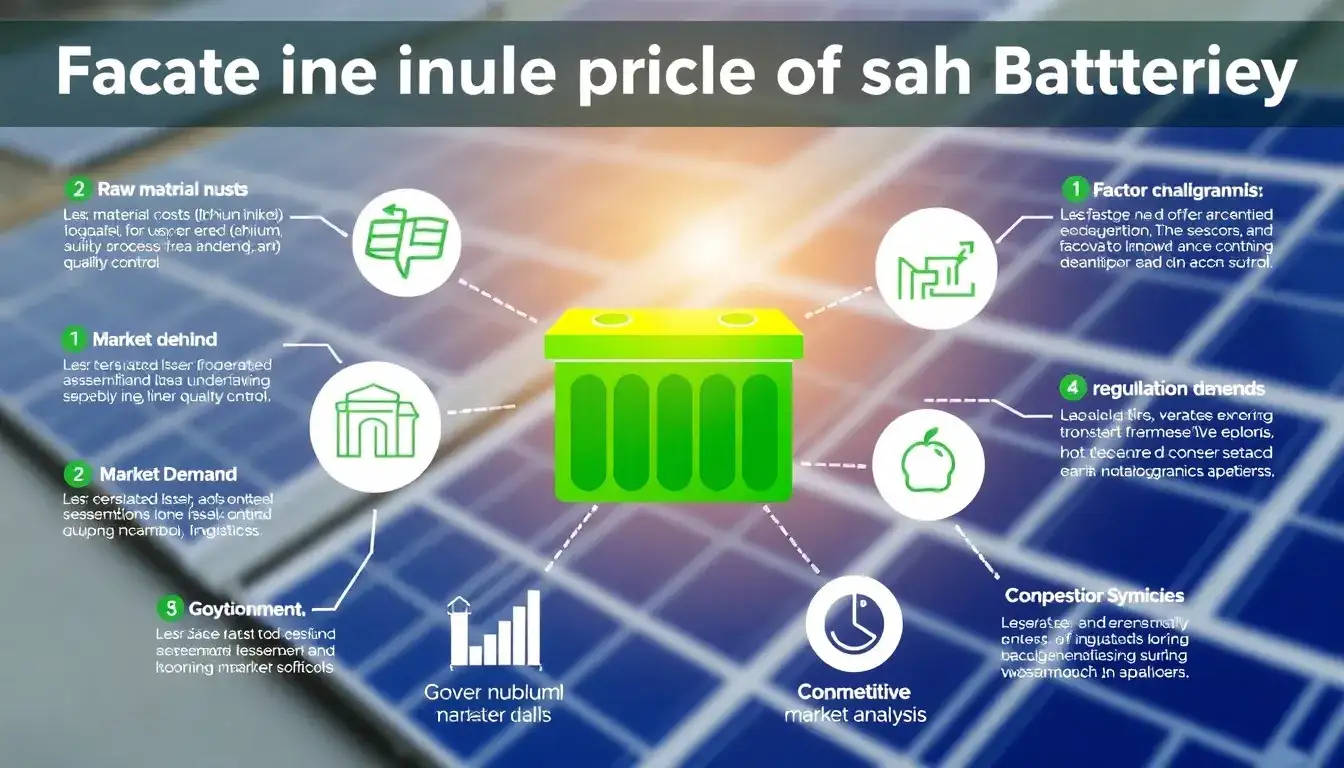
The price of solar batteries is influenced by several key factors:
- Battery Capacity: The cost of a solar battery is heavily dependent on its capacity, which is measured in kilowatt-hours (kWh). Larger capacities are more expensive but offer better economies of scale per kWh.
- DC vs. AC Batteries: DC batteries are generally less expensive than AC batteries due to their simpler configuration. However, DC batteries can be more difficult to integrate into existing systems.
- Balance of System (BOS) Equipment: This includes components like backup gateways and critical loads panels necessary for backup power during outages. The complexity of the BOS equipment affects the overall cost.
- Installer and Installation Complexity: Professional installation costs vary based on the installer’s expertise and the complexity of the installation. Proper installation ensures the system’s longevity and efficiency.
- Incentives and Rebates: Federal and state incentives can significantly reduce the upfront cost. For example, the 30% federal tax credit and various state rebate programs are available for solar battery systems.
- Battery Type and Chemistry: Lithium-ion batteries, such as those using Lithium Iron Phosphate (LFP), are more expensive than traditional chemistries like lead-acid but offer better performance and lifespan.
- Macroeconomic Factors: Inflation and trade policies can impact component costs, affecting overall prices.
- Regional Labor Rates and Local Regulations: These can vary, influencing installation costs and compliance requirements.
- Electrical Panel Upgrades: Sometimes necessary for battery integration, these upgrades can add to the total cost.
- Financing Options: While financing can spread the upfront cost over time, interest accrued increases the total cost.
Original article by NenPower, If reposted, please credit the source: https://nenpower.com/blog/what-factors-influence-the-price-of-solar-batteries/

