

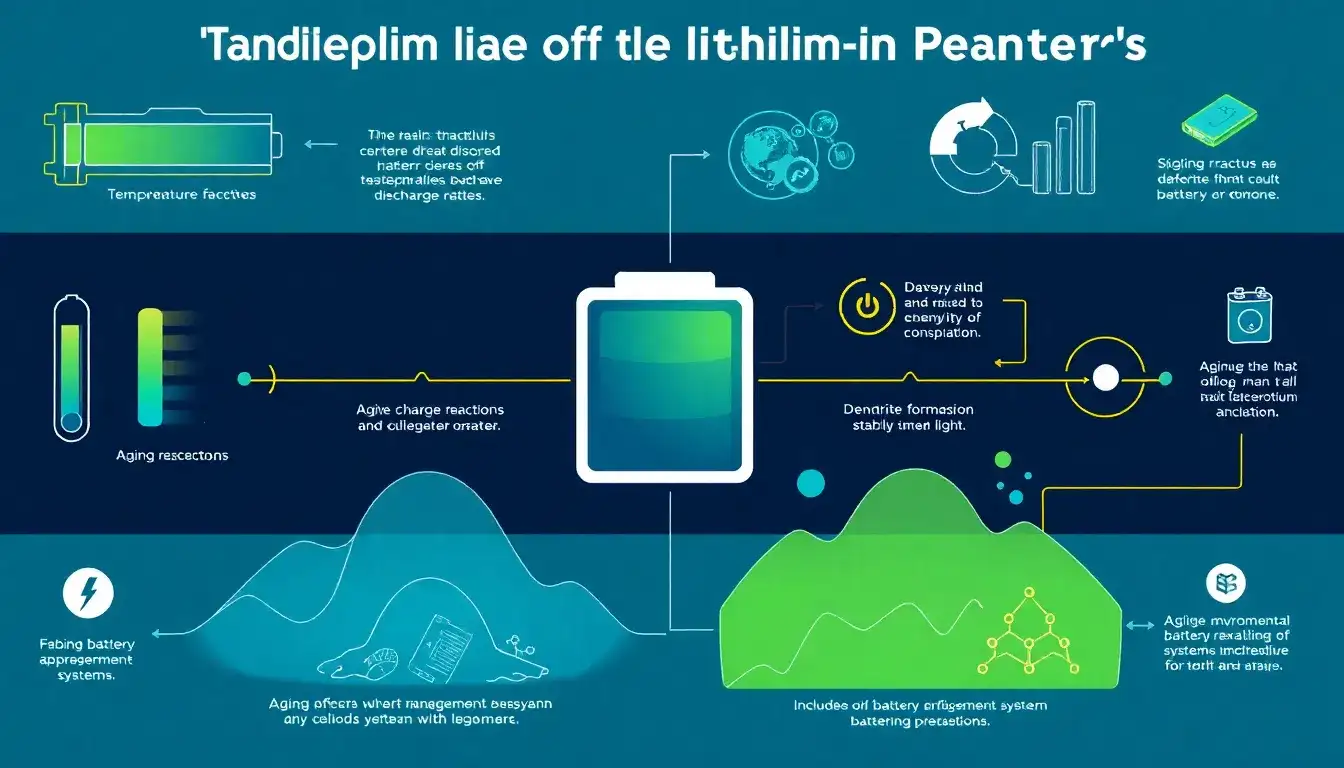
The lifespan of lithium-ion batteries is influenced by several key factors, which can be broadly categorized into environmental conditions, usage patterns, and design specifications. Here are some of the most significant factors:
Environmental Conditions
- Temperature: Both high and low temperatures affect lithium-ion battery performance and longevity. High temperatures accelerate chemical reactions, leading to faster degradation, while low temperatures reduce efficiency and capacity.
- Storage Environment: Batteries should be stored in cool, dry places at a partial charge to minimize degradation.
Usage Patterns
- Depth of Discharge (DoD): Shallow discharges (low DoD) prolong battery life compared to deep discharges, which strain battery cells.
- Charge and Discharge Rates: High current charging or discharging can stress batteries, leading to faster degradation.
- Usage Frequency: Continuous use wears out batteries faster than intermittent usage.
- Charging Habits: Avoid overcharging or rapid charging to maintain battery health.
Design and Management Factors
- Battery Chemistry: Different chemistries have varying lifespans and performance characteristics.
- Battery Management System (BMS): A robust BMS protects against overcharge and deep discharge, ensuring safe operation and maximizing lifespan.
- Manufacturing Quality: Better-quality batteries tend to last longer.
- Physical Integrity: Avoiding physical damage such as impacts or exposure to moisture preserves the battery’s internal structure.
Additional Factors
- Vibration and Shock: Strong vibrations or shocks can damage battery components and infrastructure.
- Regulatory and Safety Factors: Compliance with safety standards and regulations can impact battery lifespan by dictating safe usage conditions.
Original article by NenPower, If reposted, please credit the source: https://nenpower.com/blog/what-factors-influence-the-lifespan-of-lithium-ion-batteries-2/

