

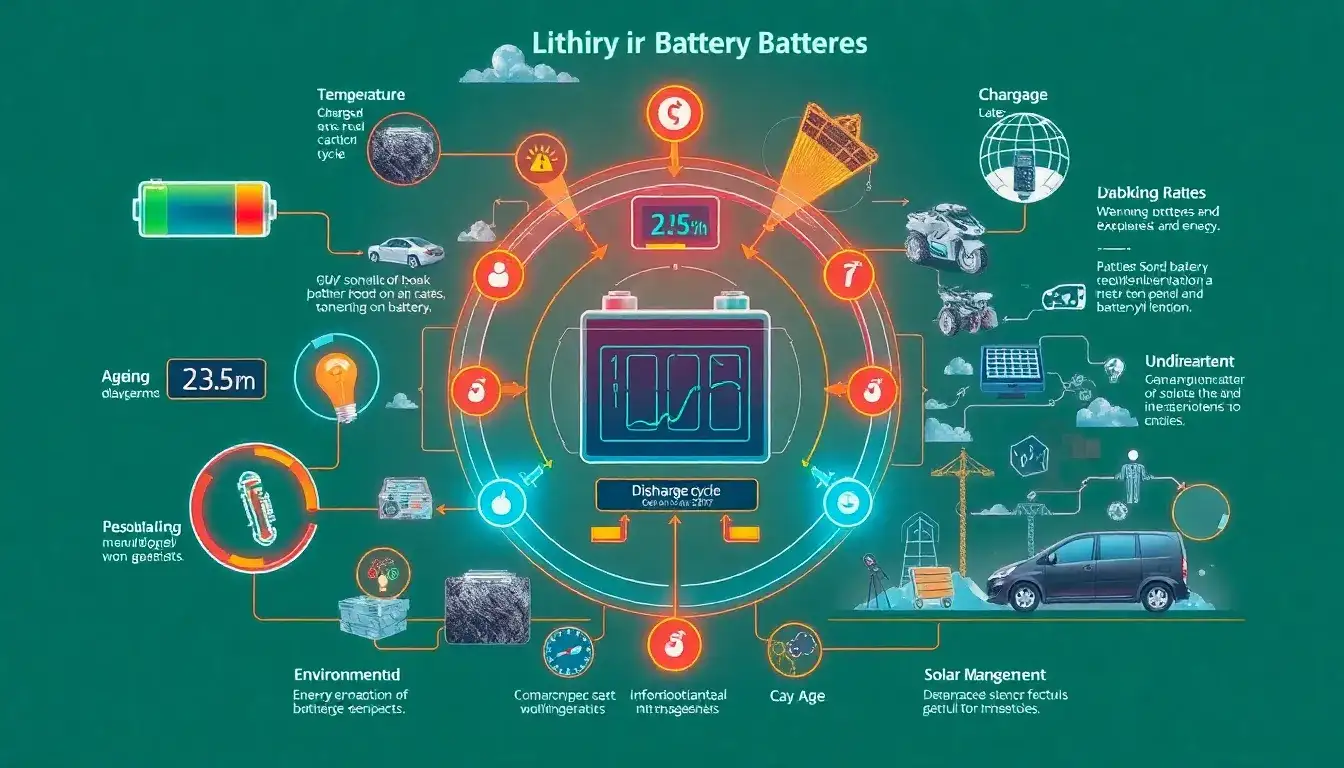
Several factors influence the lifespan of lithium-ion batteries:
-
Temperature:
- High Temperatures: Accelerate chemical reactions within the battery, leading to faster degradation.
- Low Temperatures: Reduce a battery’s efficiency and capacity, prolonging charging times and potentially damaging performance.
-
Depth of Discharge (DoD):
- Consistently deep discharging (e.g., from 100% to 0%) can significantly reduce battery lifespan. Maintaining a DoD between 20% and 80% is recommended.
-
Charging Habits and Currents:
- Rapid charging or using high currents can stress the battery, leading to faster degradation.
- Proper charging practices, such as avoiding overcharging, are essential for maintaining health.
-
Battery Management System (BMS):
- A robust BMS monitors and regulates voltage, current, and temperature to ensure safe operation and prevent issues like overcharging.
-
Usage Patterns:
- Frequent or heavy use tends to wear batteries faster than intermittent use.
-
Battery Age and Storage Conditions:
- Older batteries have shorter cycle lives due to self-discharge and parasitic reactions. Proper storage in cool, dry conditions at partial charge (around 40-60%) helps maintain capacity.
-
Quality of Components and Chemistry:
- High-quality components, such as premium electrode materials, enhance battery longevity. Different chemistries (e.g., NMC, LFP) offer varying benefits.
-
Environmental Conditions and Physical Stress:
- Avoid physical damage and extreme environmental conditions such as strong vibrations or exposure to moisture.
Original article by NenPower, If reposted, please credit the source: https://nenpower.com/blog/what-factors-influence-the-lifespan-of-lithium-ion-batteries/

