

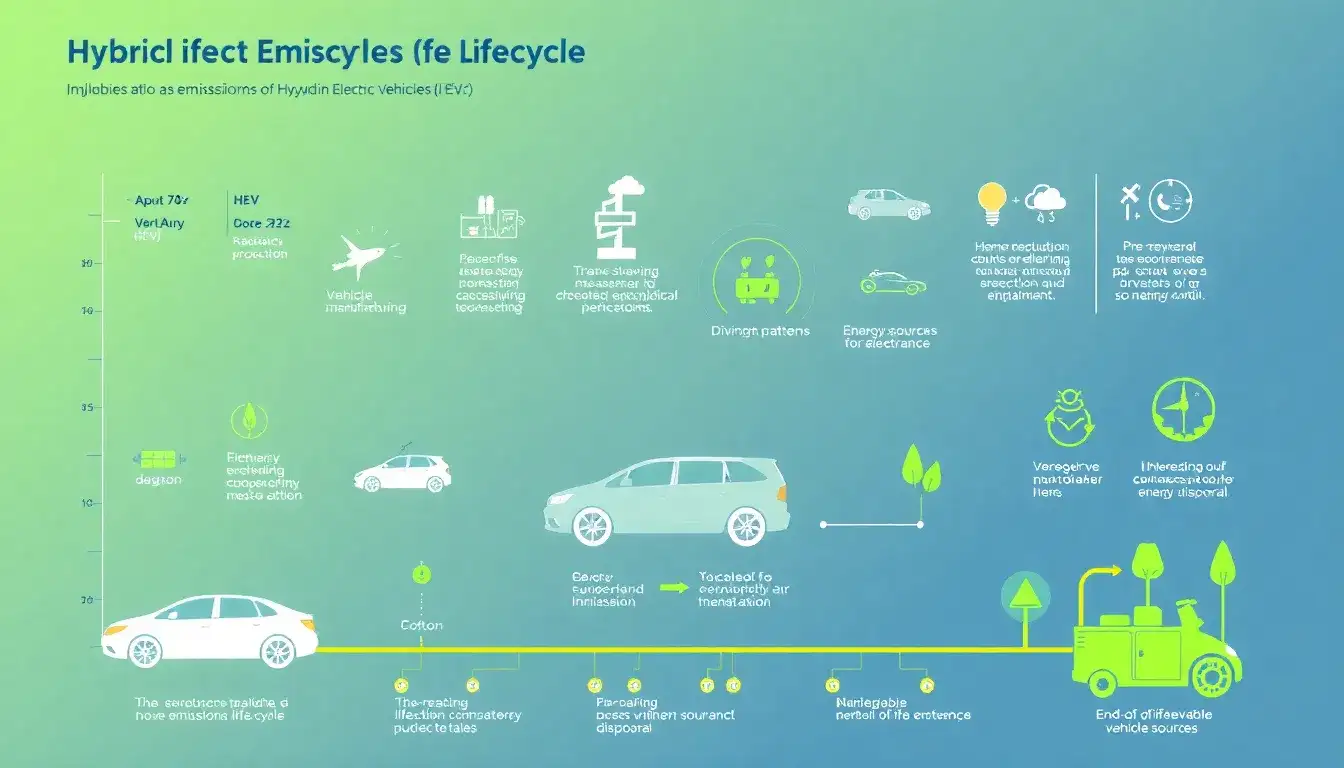
Factors Influencing Lifecycle Emissions of HEVs and PHEVs
The lifecycle emissions of hybrid electric vehicles (HEVs) and plug-in hybrid electric vehicles (PHEVs) are influenced by several key factors, which can be categorized into vehicle production, fuel cycle, and operational emissions.
1. Vehicle Production Emissions
- Material Extraction and Manufacturing: The production phase includes material extraction, manufacturing, and assembly. This stage contributes to greenhouse gas emissions due to energy consumption and raw material processing.
2. Fuel Cycle Emissions
- Electricity Generation: For PHEVs, the type of electricity used for charging affects emissions. Renewable sources like solar or wind reduce emissions, while fossil fuels in the grid increase them.
- Fuel Extraction, Refining, and Transportation: HEVs and PHEVs using gasoline also incur emissions from extracting, refining, and transporting fuel.
3. Operational Emissions
- Tailpipe Emissions: While HEVs and PHEVs running on gasoline produce tailpipe emissions, the emissions are generally lower than those from conventional vehicles. When PHEVs operate in electric mode, they produce zero tailpipe emissions.
- Grid Carbon Intensity: The lifecycle benefit of PHEVs and HEVs decreases in regions with high-carbon electricity grids.
4. Operational Efficiency and Vehicle Type
- Hybrid vs. Plug-in Hybrid: PHEVs tend to offer a greater reduction in lifecycle emissions compared to HEVs, as they can operate for longer periods on electricity alone. The efficiency of the vehicle’s powertrain also impacts overall emissions.
5. End-of-Life Disposal and Recycling
- Vehicle Recycling: At the end of their life, the recycling efficiency and material reuse of vehicles can reduce waste and lower lifecycle emissions.
Understanding these factors helps in optimizing the environmental benefits of HEVs and PHEVs.
Original article by NenPower, If reposted, please credit the source: https://nenpower.com/blog/what-factors-influence-the-lifecycle-emissions-of-hevs-and-phevs/

