

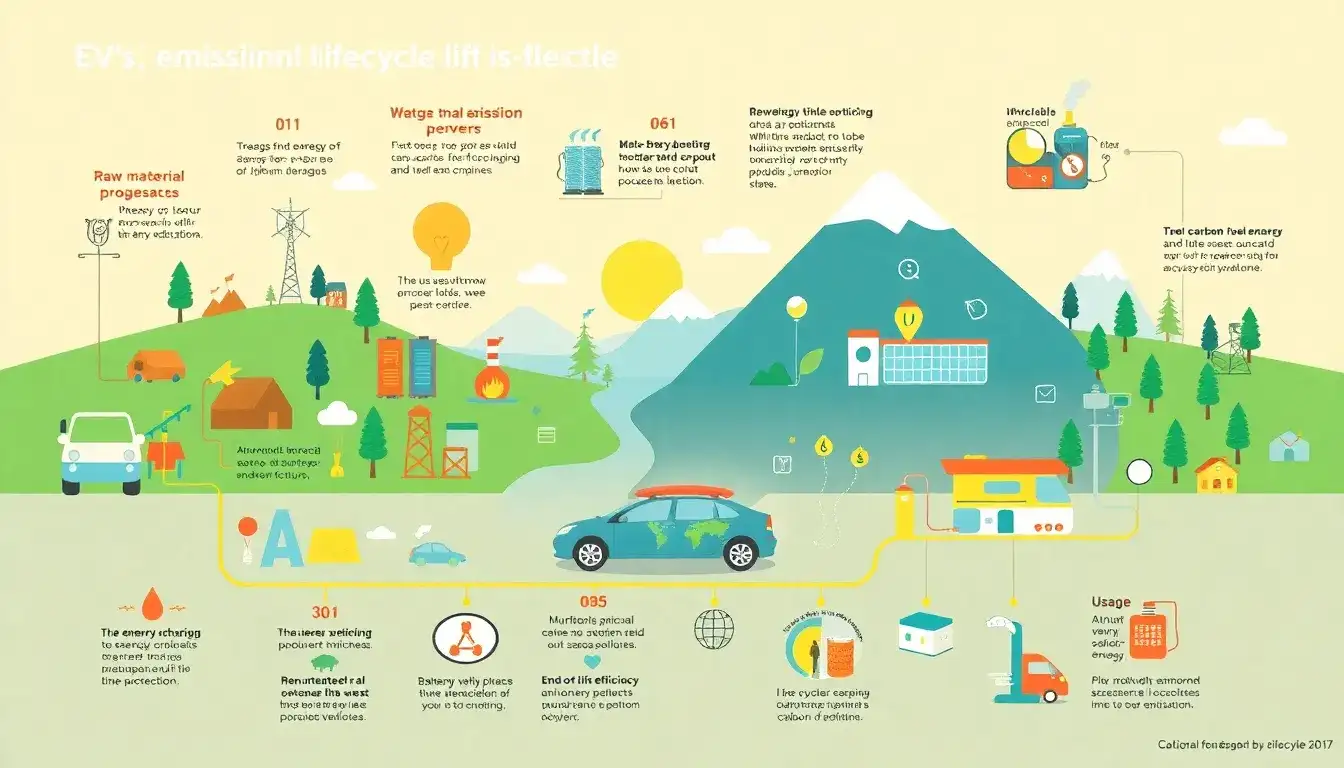
Factors Influencing Lifecycle Emissions of EVs
-
Production Emissions:
- Material Sourcing and Manufacturing: The production of EVs, particularly the extraction and processing of materials for batteries, contributes significantly to their lifecycle emissions. Batteries, made from materials like lithium, cobalt, and nickel, have a substantial environmental footprint during manufacturing.
-
Electricity Source for Charging:
- Grid Carbon Intensity: The carbon emissions from charging EVs depend on the source of electricity used in the grid. Areas with renewable energy sources like solar, wind, or hydroelectric power offer lower lifecycle emissions compared to regions relying on fossil fuels.
-
Battery Chemistry:
- Battery Type and Efficiency: Advances in battery chemistry can reduce production emissions and improve efficiency, influencing overall lifecycle emissions.
-
Usage and Location:
- Driving Behavior and Location: The total lifecycle emissions can be affected by how and where the vehicle is used, including factors such as grid intensity, ambient temperature, and driving patterns.
-
End-of-Life Management:
- Recycling and Disposal: The recyclability of vehicle components and batteries affects the environmental impact at the end of an EV’s lifecycle.
These factors highlight the importance of considering not just tailpipe emissions but the entire lifecycle when evaluating the environmental impact of EVs.
Original article by NenPower, If reposted, please credit the source: https://nenpower.com/blog/what-factors-influence-the-lifecycle-emissions-of-evs/

