

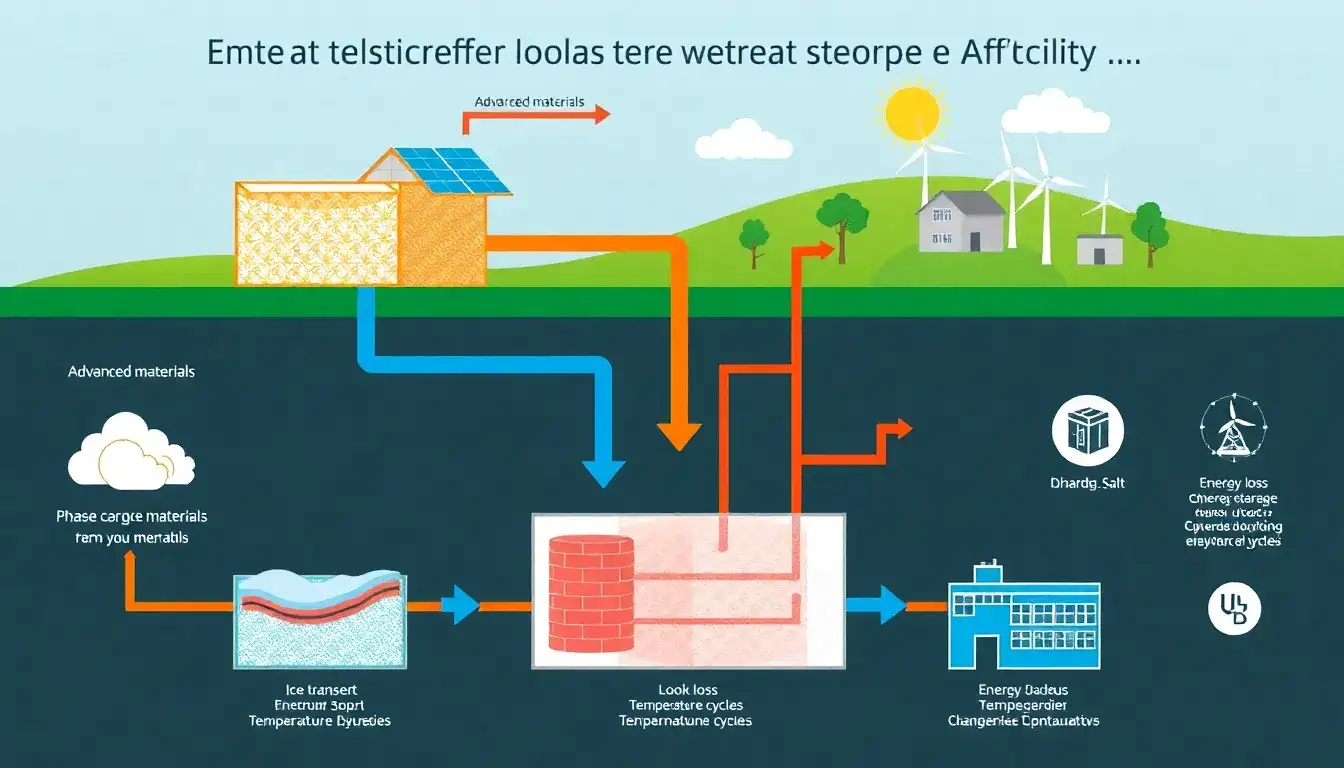
The efficiency of thermal energy storage systems is influenced by several key factors, which can vary depending on the type of technology and materials used. Here are some of the main considerations:
Factors Influencing Efficiency
- Materials and Mediums: Different materials used for thermal energy storage have varying thermodynamic properties, such as specific heat capacity and thermal conductivity. For example, hot air and pebbles can achieve high efficiencies, while molten silicon offers higher storage temperatures and capacity. Phase change materials (PCMs) can provide higher storage capacities and efficiencies by leveraging latent heat energy.
- Insulation Technology: The effectiveness of thermal insulation significantly impacts efficiency. Better insulation reduces heat loss during storage and retrieval, thereby improving overall efficiency.
- Operating Temperatures: The efficiency of thermal energy storage systems can be affected by the operating temperature. For instance, molten aluminum operates at 600°C, while solid or molten silicon can handle much higher temperatures.
- Efficiency Metrics: Efficiency is often measured in terms of how well the system converts input thermal energy into usable output. This can vary significantly among different technologies, with some systems achieving efficiencies between 50% and 90%.
- Storage Duration and Conditions: The duration for which energy is stored can influence efficiency due to potential heat loss over time. Systems that minimize heat loss during storage can maintain higher efficiencies.
- Charge/Discharge Speed: Faster charging and discharging can affect efficiency due to increased thermal stresses and potential energy losses.
- Technological Advancements: Ongoing research and development in thermal energy storage aim to enhance efficiency through innovative designs and materials.
Example Technologies
- Phase Change Materials (PCMs): These offer high storage capacities and efficiencies by utilizing latent heat. They can be tailored for specific temperature ranges and applications.
- Molten Silicon: Offers higher storage temperatures and capacities compared to traditional salts.
- Molten Aluminum: Used by Azelio, this involves heating aluminum to 600°C for energy storage.
Original article by NenPower, If reposted, please credit the source: https://nenpower.com/blog/what-factors-influence-the-efficiency-of-thermal-energy-storage-systems/

