

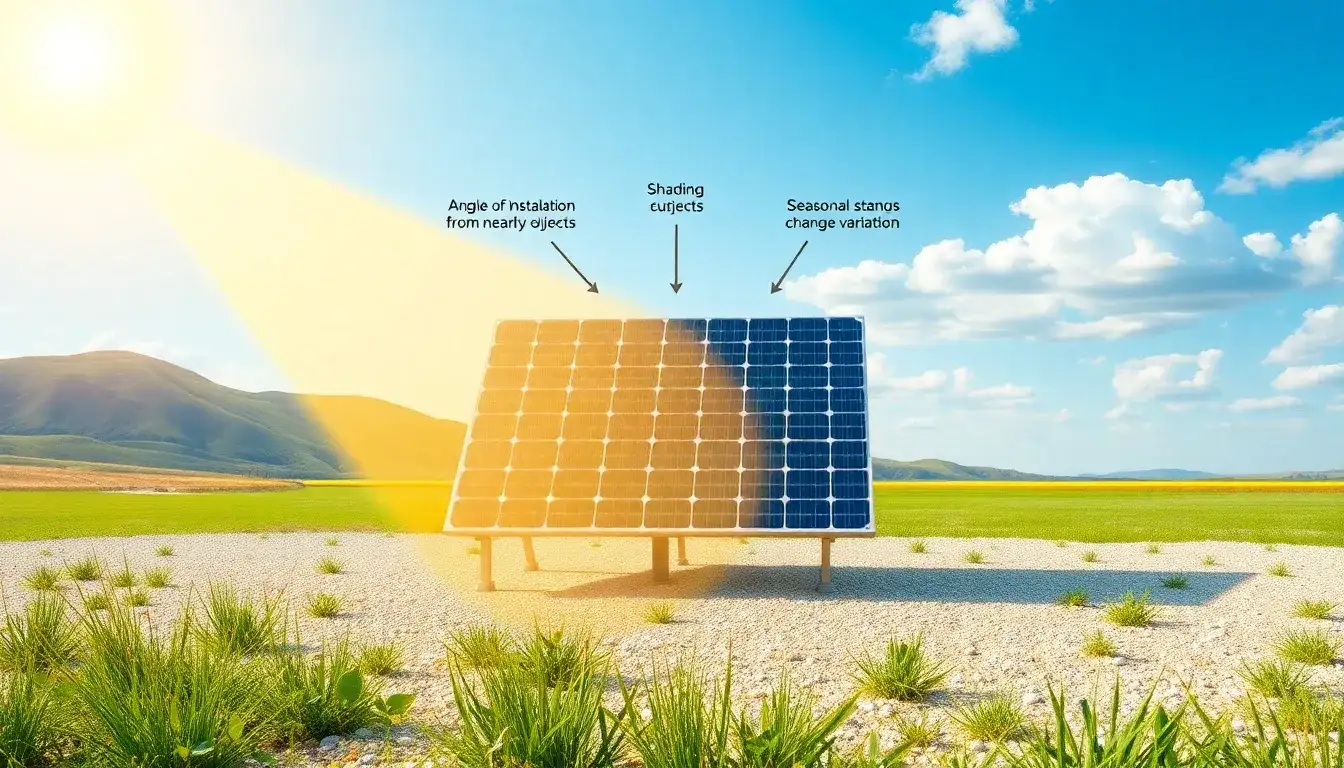
The efficiency of bifacial solar panels is influenced by several key factors related to their design, installation, and environmental conditions. These factors affect how effectively the panels capture sunlight on both their front and rear sides, which is essential for maximizing their energy output. Here are the main influences:
Key Factors Influencing Bifacial Solar Panel Efficiency
1. Tilt Angle and Installation Orientation
The angle at which bifacial panels are tilted and their directional orientation significantly impact performance. An optimal tilt angle maximizes sunlight exposure on both the front and rear surfaces. A higher tilt angle often increases the rear side’s exposure to reflected light, improving overall energy yield. Installation orientation should also align with the sun’s path to maximize direct and reflected irradiance captured by the panels.
2. Albedo Effect (Reflectivity of Ground Surface)
The reflectivity of the surface beneath the panels, known as the albedo, is critical. Surfaces with high reflectivity—such as fresh snow, sand, white rooftops, or specially designed reflective materials—reflect more sunlight onto the panel’s rear side. This can boost the bifacial panel output by up to 30% compared to traditional monofacial panels. Conversely, dark or non-reflective ground surfaces like asphalt reduce rear-side irradiance and thus efficiency.
3. Bifaciality Factor
This intrinsic panel characteristic defines how efficiently the rear side converts light relative to the front side. Bifaciality typically ranges from about 70% to 95%, meaning the rear side generates 70-95% of the power of the front under the same light conditions. Higher bifaciality factors directly increase the panel’s additional energy production.
4. Environmental and Climatic Conditions
Local climate conditions such as sunlight intensity, cloud cover, and temperature affect bifacial panel performance. While bifacial panels perform best in sunny and reflective environments, high ambient temperatures can reduce efficiency. Snow-covered ground in colder climates can substantially increase the albedo effect and winter energy yield. Seasonal variations also cause fluctuations in bifacial gain, with winter gains often being the highest due to snow reflection.
5. Shading and Obstructions
Shading from trees, buildings, or structures can significantly reduce both front and rear irradiance. Since bifacial panels rely on capturing reflected light on the back, shading effects can disproportionately reduce their overall efficiency. Careful site selection and installation to minimize shading throughout the day is essential.
6. Distance from the Ground and Mounting Configuration
The height of the panels above the ground affects how much reflected light reaches the rear surface. A larger distance generally increases the rear-side irradiance and yield, but requires balancing with structural and wind load considerations. Mounting angle and spacing also influence energy capture on both sides.
Summary Table of Factors
| Factor | Effect on Efficiency | Notes |
|---|---|---|
| Tilt Angle & Orientation | Higher tilt can increase rear-side capture | Adjust based on location and season |
| Albedo (Reflectivity) | High albedo (snow, sand, white surfaces) boosts output | Use reflective ground covers or rooftops |
| Bifaciality Factor | Higher bifaciality = more rear-side energy | Ranges typically 70-95% |
| Environmental Conditions | Sunlight intensity, temperature, seasonal changes | Hot temps reduce efficiency; snow increases it |
| Shading | Reduces energy from both sides | Avoid shading, especially behind panels |
| Distance from Ground & Mounting | Greater height can increase rear irradiance | Also affects installation cost and wind resistance |
In ideal conditions, bifacial solar panels can increase energy yield by approximately 10-30% compared to traditional monofacial panels, depending heavily on these influencing factors.
This comprehensive view highlights that maximizing bifacial solar panel efficiency requires careful consideration of site-specific environmental factors, panel characteristics, and installation parameters to fully leverage their dual-sided solar capture capability.
Original article by NenPower, If reposted, please credit the source: https://nenpower.com/blog/what-factors-influence-the-efficiency-of-bifacial-solar-panels/

