

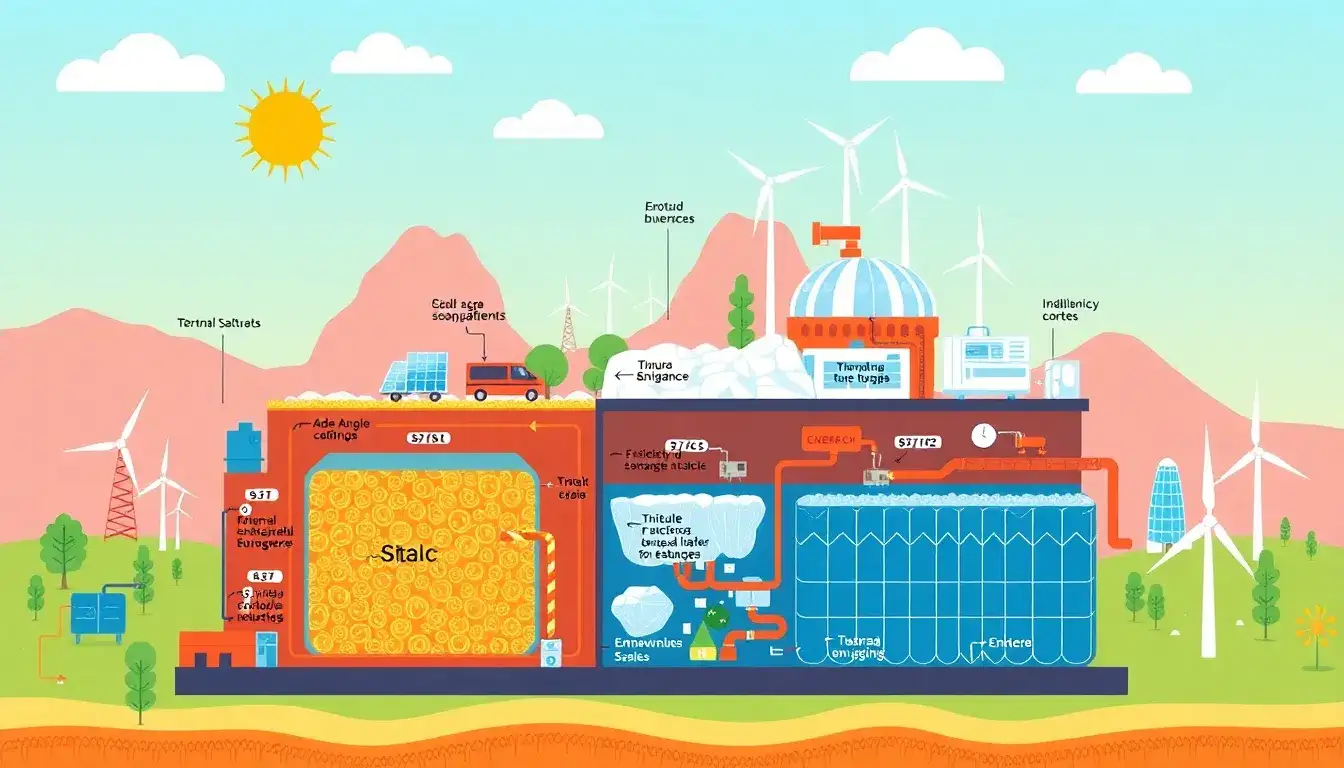
The cost of thermal energy storage (TES) systems is influenced by several key factors:
-
Materials and Design
- Storage Medium: The choice of storage medium, such as molten salt, silica sand, or phase-change materials, affects the cost. Materials with high heat capacity and thermal stability can reduce costs over time.
- Containment Vessels: The type and material of the containment vessels (e.g., carbon steel, stainless steel, or nickel alloys) significantly impact costs, especially at high temperatures.
-
Temperature Range
- Operating at higher temperatures can increase costs due to the need for more robust materials and designs. However, certain temperatures like around 650°C can optimize costs if appropriate materials are used.
-
System Size and Scalability
- Larger systems often benefit from economies of scale, reducing the cost per unit of energy stored. This is seen in countries like China, where large-scale projects have driven down costs.
-
Geographical Location and Policies
- Favorable policies and established infrastructure in locations like China can lower costs by promoting large-scale adoption and reducing operational expenses.
-
Technological Advancements
- Improvements in technology, such as better insulation and more efficient thermal cycles, can enhance system efficiency and reduce costs.
-
Government Incentives
- Subsidies and tax credits provided by governments can significantly lower upfront costs for users, making TES systems more economically viable.
-
Operational and Maintenance Costs
- Lower operating and maintenance costs in mature systems contribute to overall cost-effectiveness over the system’s lifespan.
Original article by NenPower, If reposted, please credit the source: https://nenpower.com/blog/what-factors-influence-the-cost-of-thermal-energy-storage-systems/

