

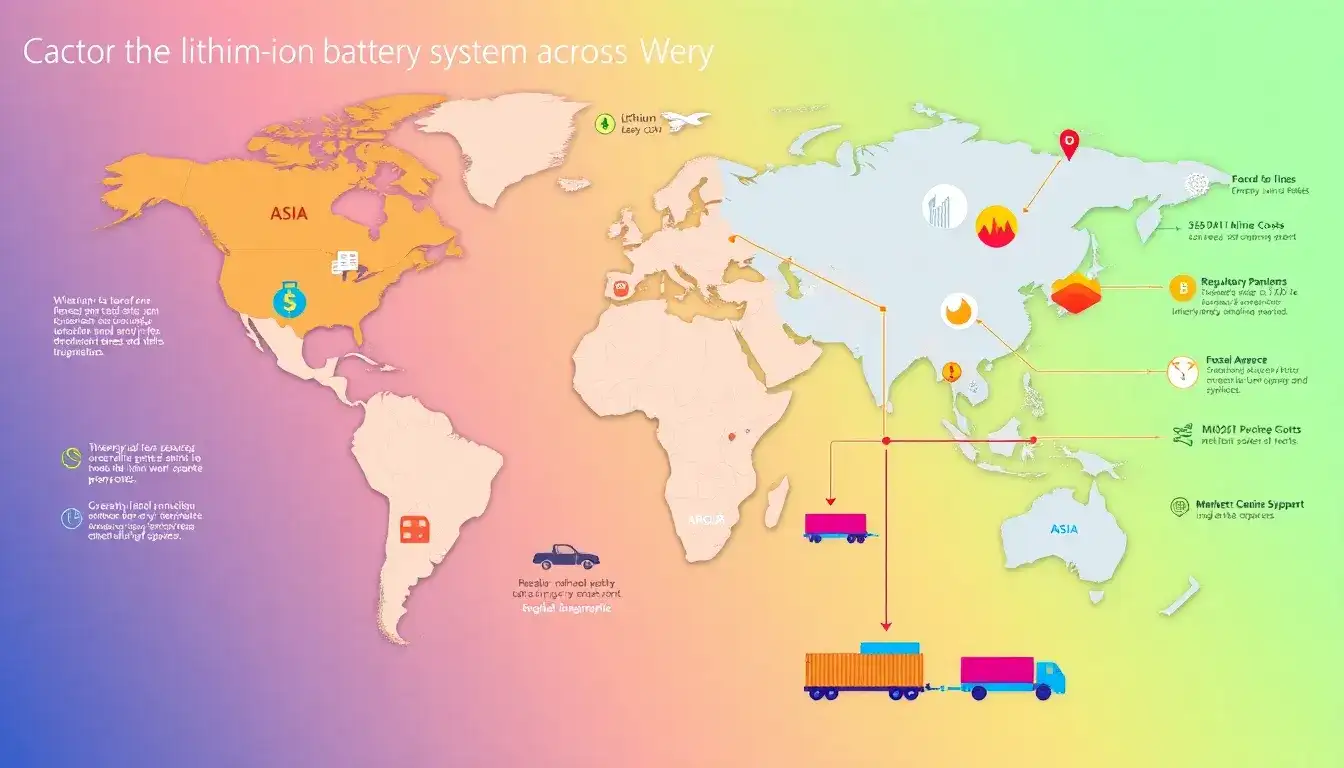
Factors Influencing Lithium-Ion Battery Costs
1. Raw Material Prices
- Cathode Materials: Lithium, cobalt, nickel, and manganese are crucial components, with their prices impacting up to 51% of the total battery cost due to their scarcity and geopolitical factors affecting supply chains.
- Anode Materials: Graphite is commonly used, comprising around 8-12% of the total cell cost.
- Other Components: Electrolytes, separators, and packaging materials also contribute to costs but to a lesser extent.
2. Manufacturing Costs
- Technology and Efficiency: Improved manufacturing processes, such as dry electrode coating, can reduce costs and environmental impact.
- Economies of Scale: Increased production volumes lead to lower unit costs due to better resource allocation and reduced overheads.
3. Supply Chain Dynamics
- Geopolitical Factors: Availability and cost of raw materials are influenced by geopolitical stability and trade policies in regions like China and the Democratic Republic of Congo.
- Market Demand: High demand, particularly from electric vehicle (EV) manufacturers, can impact supply chain robustness and costs.
4. Regulatory Policies
- Incentives and Subsidies: Governments offering incentives for renewable energy and electric vehicles can reduce the effective cost of lithium-ion batteries.
- Environmental Regulations: Policies related to recycling and waste management can increase costs by requiring additional processes.
5. Market Competition
- Number of Manufacturers: Competition among multiple global manufacturers drives innovation and reduces prices.
- Brand Reputation: Established brands often charge higher prices due to perceived quality and reliability.
6. Regional Factors
- Local Market Conditions: Costs can be influenced by regional demand, local manufacturing capabilities, and logistical considerations.
- Trade Policies: Tariffs and other trade regulations can affect the cost of importing raw materials or finished batteries into different regions.
7. Installation Costs (for Home Systems)
- Capacity and Chemistry: Larger capacity systems and specific chemistries like Lithium Iron Phosphate (LiFePO4) can be more costly than smaller or Nickel Manganese Cobalt Oxide (NMC) systems.
- Installation and Maintenance: Labor and maintenance costs vary by region and can significantly impact the total cost of ownership.
8. Battery Management Systems (BMS)
- Safety and Efficiency: Advanced BMS features increase costs but improve safety and efficiency.
These factors collectively influence the pricing of lithium-ion battery systems across various regions, making them more or less affordable based on local market conditions.
Original article by NenPower, If reposted, please credit the source: https://nenpower.com/blog/what-factors-influence-the-cost-of-lithium-ion-battery-systems-in-different-regions/

