

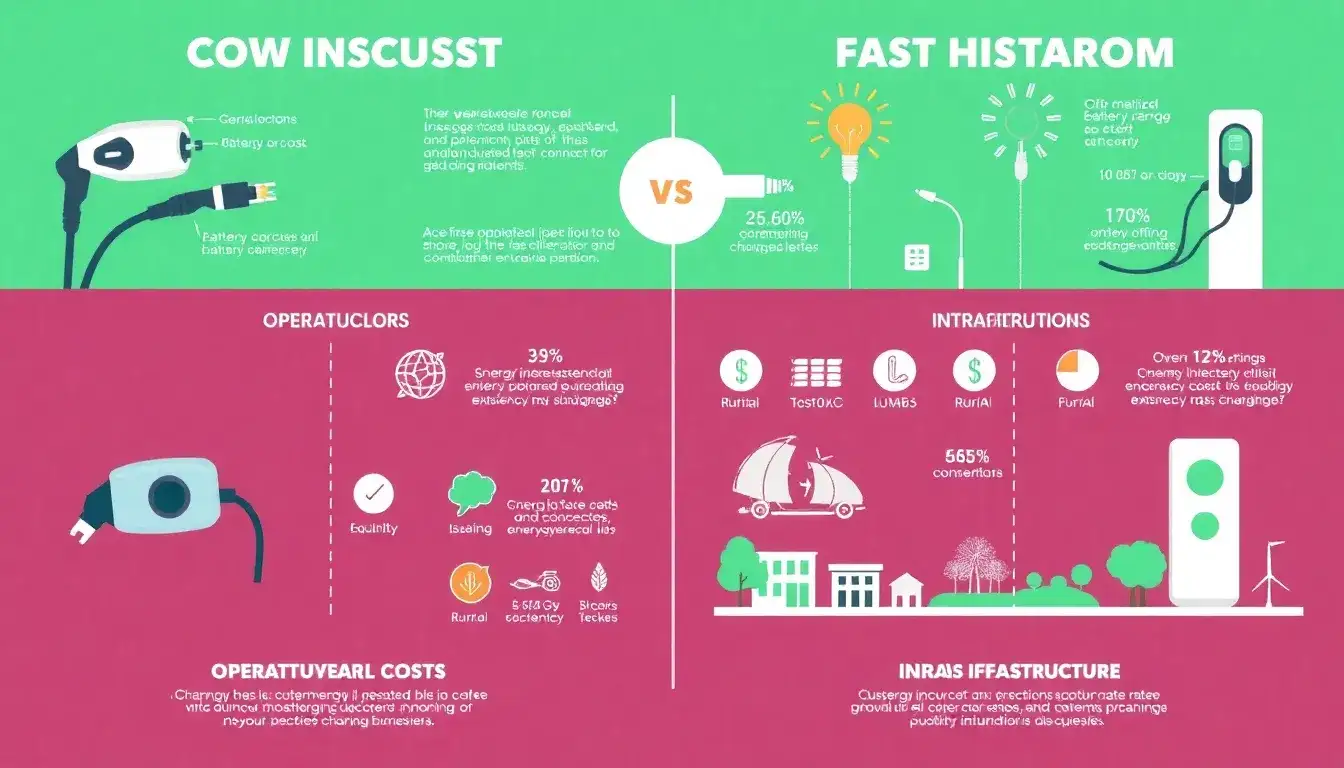
Several factors influence the cost difference between slow and fast charging for electric vehicles (EVs). These factors can be categorized into initial setup costs, ongoing electricity costs, and operational considerations.
Initial Setup Costs
- Hardware Costs:
- Slow Charging (Level 1): Typically uses a standard household outlet, so no additional equipment is required, making it the most cost-effective option for initial setup.
- Fast Charging (Level 2): Requires purchasing a dedicated home charging station or upgrading existing infrastructure, which can be more expensive than Level 1.
- DC Fast Charging (Level 3): The most expensive option due to its advanced technology, high power output, and higher installation costs.
- Installation Costs:
- Fast charging stations, especially DC Fast Charging, have higher installation costs compared to slow charging setups.
Ongoing Electricity Costs
- Electricity Rates:
- Electricity costs vary by location and usage patterns. Fast charging often incurs higher costs due to peak hour charging and higher peak demand charges.
- Slow charging can leverage off-peak rates, reducing operational expenses.
- Energy Consumption:
- Fast charging has higher energy consumption per session due to rapid charging, increasing electricity bills. Slow charging uses less power, resulting in lower ongoing costs.
Operational Considerations
- Station Fees and Membership:
- Public fast charging stations may charge per minute or per kWh, and membership in charging networks can offer discounts. Slow charging often lacks these fees since it uses standard outlets.
- Maintenance and Upgrades:
- While fast charging stations are built to last, any maintenance or repairs can be more expensive compared to slow charging setups.
- Business ROI and Usage Patterns:
- Fast charging offers higher revenue potential in high-traffic areas but requires higher investments. Slow charging provides better ROI in locations with longer customer dwell times due to lower operational costs.
Original article by NenPower, If reposted, please credit the source: https://nenpower.com/blog/what-factors-influence-the-cost-difference-between-slow-and-fast-charging/

