

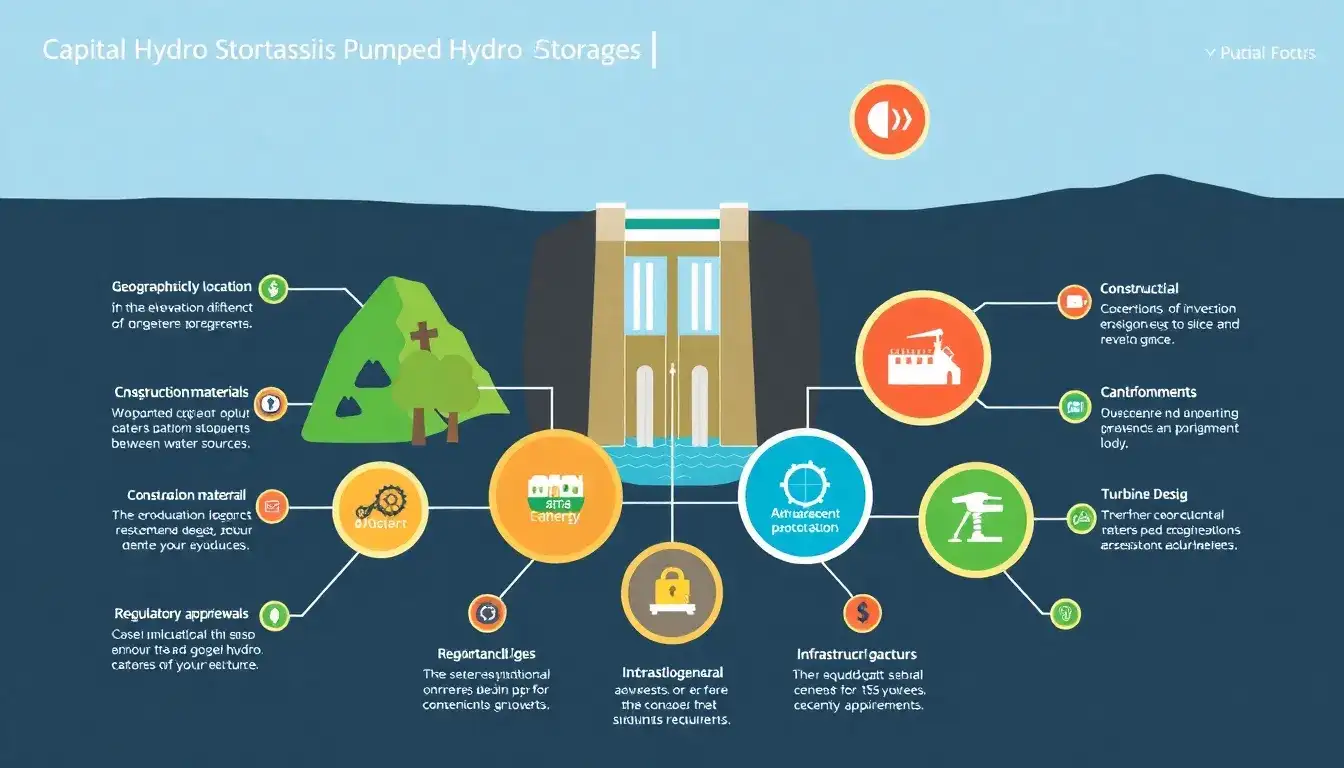
The capital costs of pumped hydro storage (PHS) are influenced by several key factors:
- Installed Power and Energy Storage Capacity: The size and capacity of the PHS facility significantly impact capital costs. Larger facilities generally achieve economies of scale in electricity generation but require substantial initial investment.
- Site-Specific Characteristics: The geography, terrain, and geology of the site can greatly affect construction costs. For example, the need for advanced engineering and materials to manage complex terrain or specific geological conditions can increase costs.
- Design and Infrastructure Components: PHS systems typically include two reservoirs, a waterway connecting them, and a power station with pumps and turbines. The costs of constructing these elements, including dams, tunnels, and equipment, contribute significantly to overall capital costs.
- Materials and Construction Materials: The choice of materials for structures like dams and reservoirs can influence costs. Factors such as the use of roller-compacted concrete and the complexity of features like emergency spillways can add expense.
- Indirect Costs: Indirect costs, including preliminary engineering studies, environmental impact assessments, licensing and permit fees, labor for construction, construction management, and corporate overheads, also contribute to the overall cost.
- Scalability and Modular Design: Implementing scalable, modular designs can help reduce upfront costs and make PHS more economically viable by aligning better with the capacities of other renewable energy sources like solar and wind.
Original article by NenPower, If reposted, please credit the source: https://nenpower.com/blog/what-factors-influence-the-capital-costs-of-pumped-hydro-storage/

