

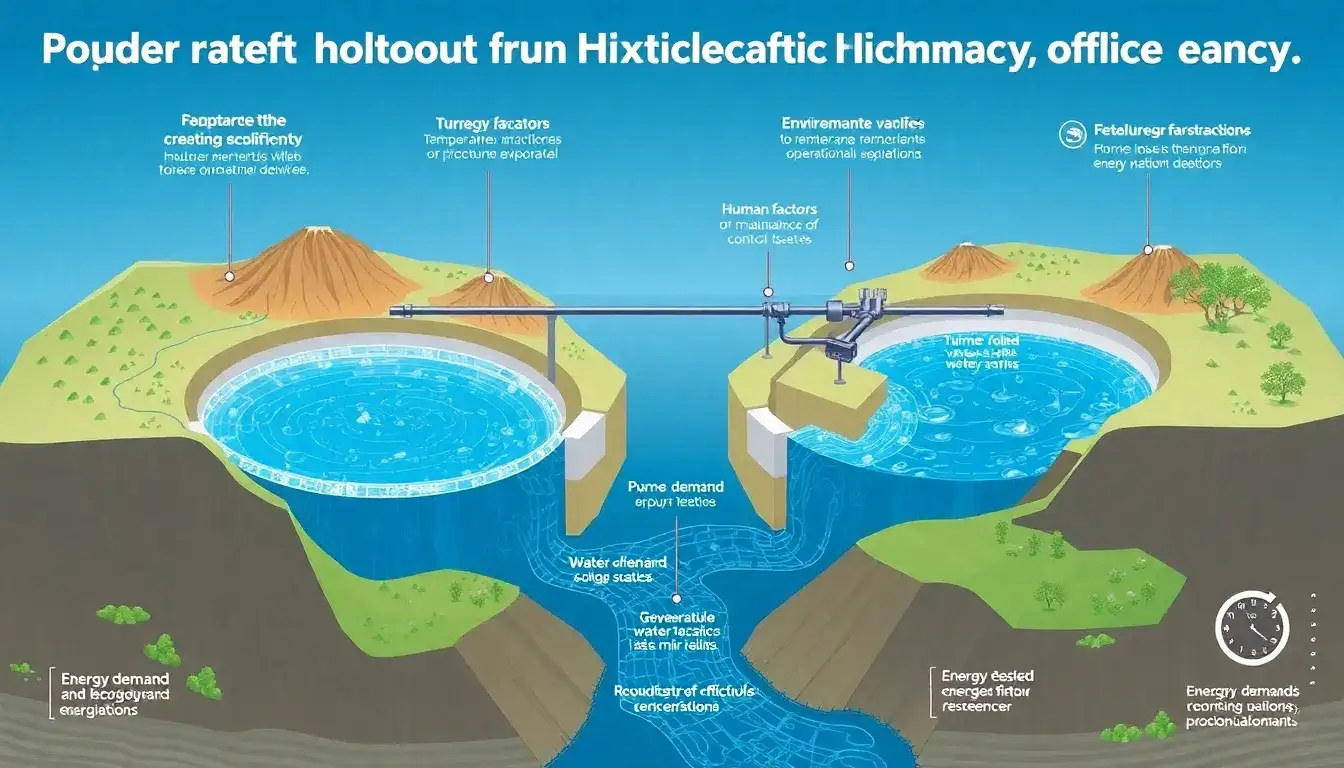
The round-trip efficiency of pumped hydroelectric energy storage (PHS) varies, typically ranging between 70% and 80%. Several factors contribute to this variability:
Factors Contributing to Variability in Round-Trip Efficiency
- Material and Equipment Wear:
- Turbine Runners, Shafts, and Gears: These components experience double the wear due to reversible use (as both turbines and pumps), leading to inefficiencies over time.
- Bearings, Blades, Valves, and Penstocks: Similar wear issues affect these components, impacting efficiency and requiring regular maintenance.
- Conversion Losses:
The energy lost during both the pumping and generating phases affects overall efficiency. This includes mechanical losses in turbines and pumps, as well as electrical losses in generators and motors. - Evaporation Losses:
Exposed water surfaces in reservoirs lead to significant evaporation losses, which impact the net energy stored in the system. - System Design and Geography:
- The height difference and capacity of the two reservoirs greatly influence the potential energy stored and released.
- The efficiency is also affected by the technical specifications of the turbines and pumps used in the system.
- Operational Parameters:
The efficiency can vary based on the operational mode (e.g., frequency of pumping and generation cycles) and the capacity utilization of the facility. - Age and Maintenance of Facilities:
Older facilities might have lower efficiency due to outdated technology or lack of maintenance, while modern facilities benefit from advancements in turbine and pump efficiency.
Understanding these factors helps in optimizing PHS systems to achieve higher round-trip efficiencies and improve their reliability in supporting energy grids.
Original article by NenPower, If reposted, please credit the source: https://nenpower.com/blog/what-factors-contribute-to-the-variability-in-round-trip-efficiency-of-pumped-hydroelectric-energy-storage/

