

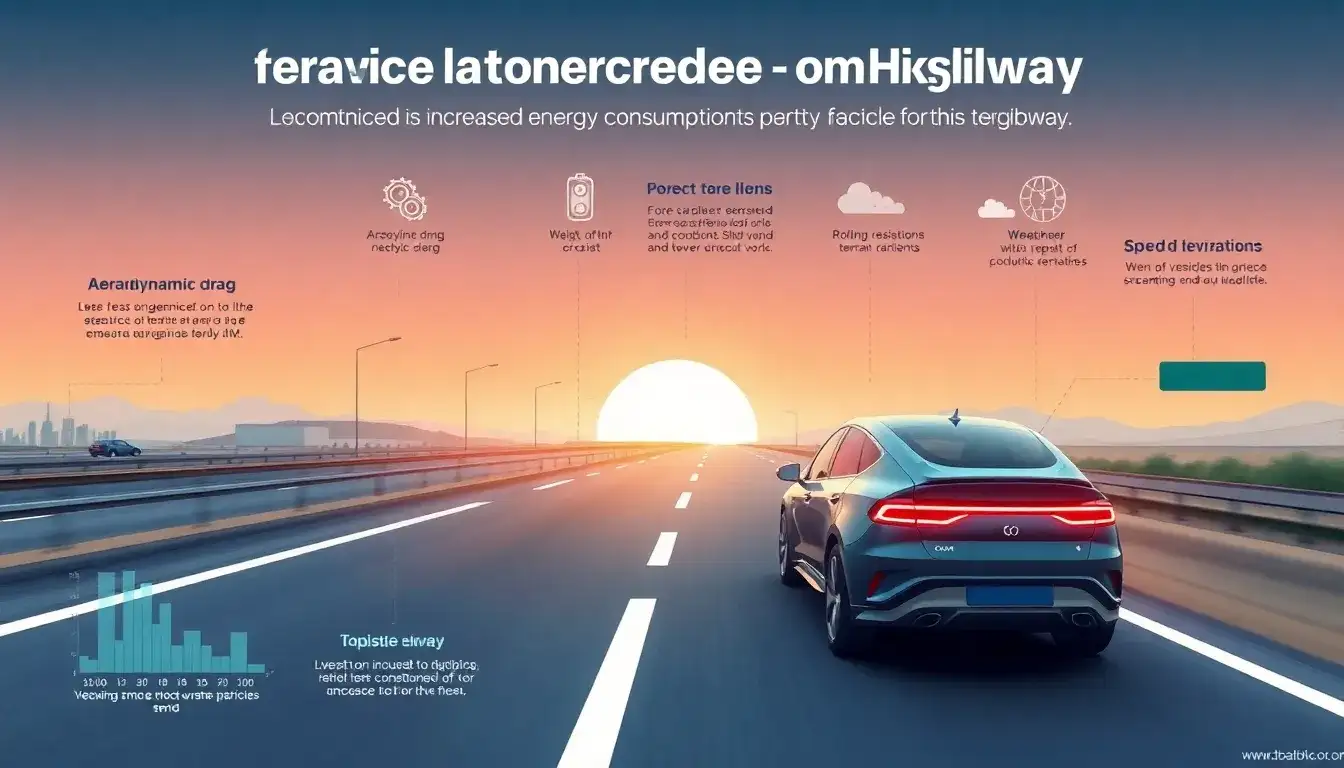
Several key factors contribute to the increased energy consumption of electric vehicles (EVs) when driving on highways:
1. Higher Speeds Leading to Increased Aerodynamic Drag
As speed increases on highways, aerodynamic drag rises dramatically. This resistance requires more power from the battery to maintain highway speeds, significantly reducing range compared to city driving or lower speeds. EV energy consumption increases notably at speeds above typical urban rates, because drag force grows exponentially with speed.
2. Lack of Energy Recapture Opportunities
Unlike city driving, where frequent braking allows EVs to use regenerative braking to recover some energy, highway driving at steady high speeds offers few opportunities to slow down and recapture energy. This leads to a net increase in battery consumption.
3. Route Terrain and Environmental Conditions
Elevated energy use can occur if the highway route involves uphill stretches or strong crosswinds, which increase resistance against the vehicle and require more power to maintain speed. Flat and well-maintained highways generally allow more efficient travel but varying terrain can worsen consumption.
4. Use of HVAC and Electronics
On highways, maintaining cabin comfort through heating or air conditioning can draw substantial power from the EV’s battery. This is especially impactful in cold weather, where heating can increase energy consumption significantly (up to 35% increase in some tests), reducing range by dozens of miles. Use of infotainment and other electronic accessories also contributes, though to a lesser extent.
5. Vehicle Acceleration Patterns
While steady cruising consumes less energy than frequent acceleration, highway driving that involves acceleration to merge or overtake still demands high power output from the battery, increasing consumption. This factor, combined with the vehicle’s speed, directly influences the energy draw from the battery.
In summary, the main contributors to increased EV energy consumption on highways are the higher speeds (and resulting aerodynamic drag), the absence of regenerative braking opportunities, challenging terrain or weather conditions, use of climate control systems, and acceleration demands. These combine to reduce EV range and increase battery power usage compared to lower-speed urban driving conditions.
Original article by NenPower, If reposted, please credit the source: https://nenpower.com/blog/what-factors-contribute-to-the-increased-energy-consumption-on-highways-for-evs/

