

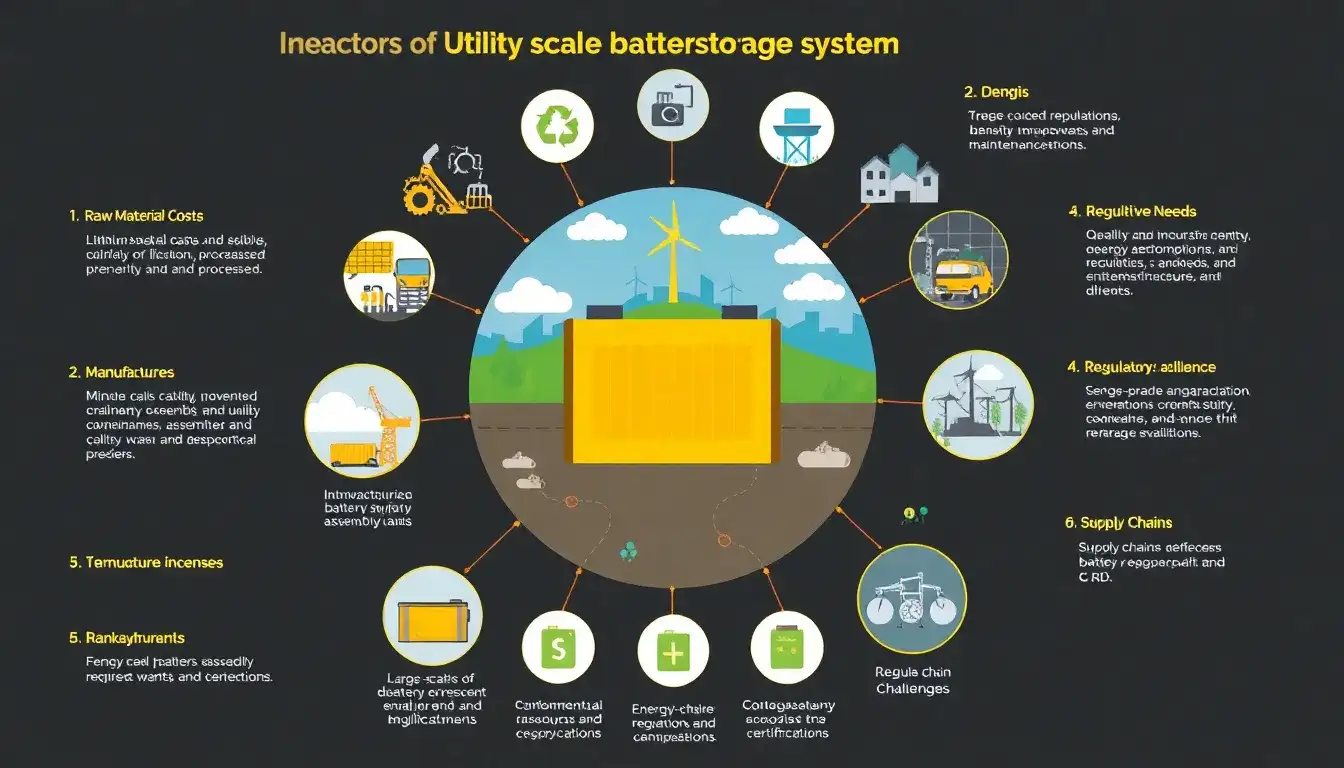
Utility-scale battery storage systems incur higher costs due to several key factors:
- Balance of System (BOS) Components: While the cost of the battery cells themselves is significant, the BOS components—such as power conversion systems (inverters and transformers), cooling systems, electrical wiring, and monitoring systems—add considerably to the overall cost. These components often account for 50% to 60% of the total system cost, increasing the final cost beyond the cost of the batteries alone.
- Installation and Integration Costs: The process of installing utility-scale systems requires heavy machinery, specialized labor, and site preparation, which can account for 15-25% of the total project costs.
- System Design and Integration: Utility-scale systems need to be designed and integrated with the existing grid infrastructure, including grid connection equipment and safety features. This complexity increases the cost compared to smaller-scale storage solutions.
- Scalability and Manufacturing Factors: Although economies of scale reduce costs over time, the initial setup and scaling of large manufacturing facilities contribute to high upfront investments in utility-scale battery storage.
- Materials and Technology: The type of battery technology used, such as lithium-ion, and its specific chemistry (e.g., lithium iron phosphate or nickel manganese cobalt), influence the cost. Additionally, technological advancements can drive longer-term cost savings but may initially be expensive.
- Policy and Regulatory Factors: Regulatory frameworks can impact the cost of utility-scale battery storage projects by influencing production timelines and operational standards.
- Environmental and Climate Conditions: In regions with extreme weather conditions, additional climate control systems are necessary, further increasing costs.
Original article by NenPower, If reposted, please credit the source: https://nenpower.com/blog/what-factors-contribute-to-the-higher-costs-of-utility-scale-battery-storage-systems/

