

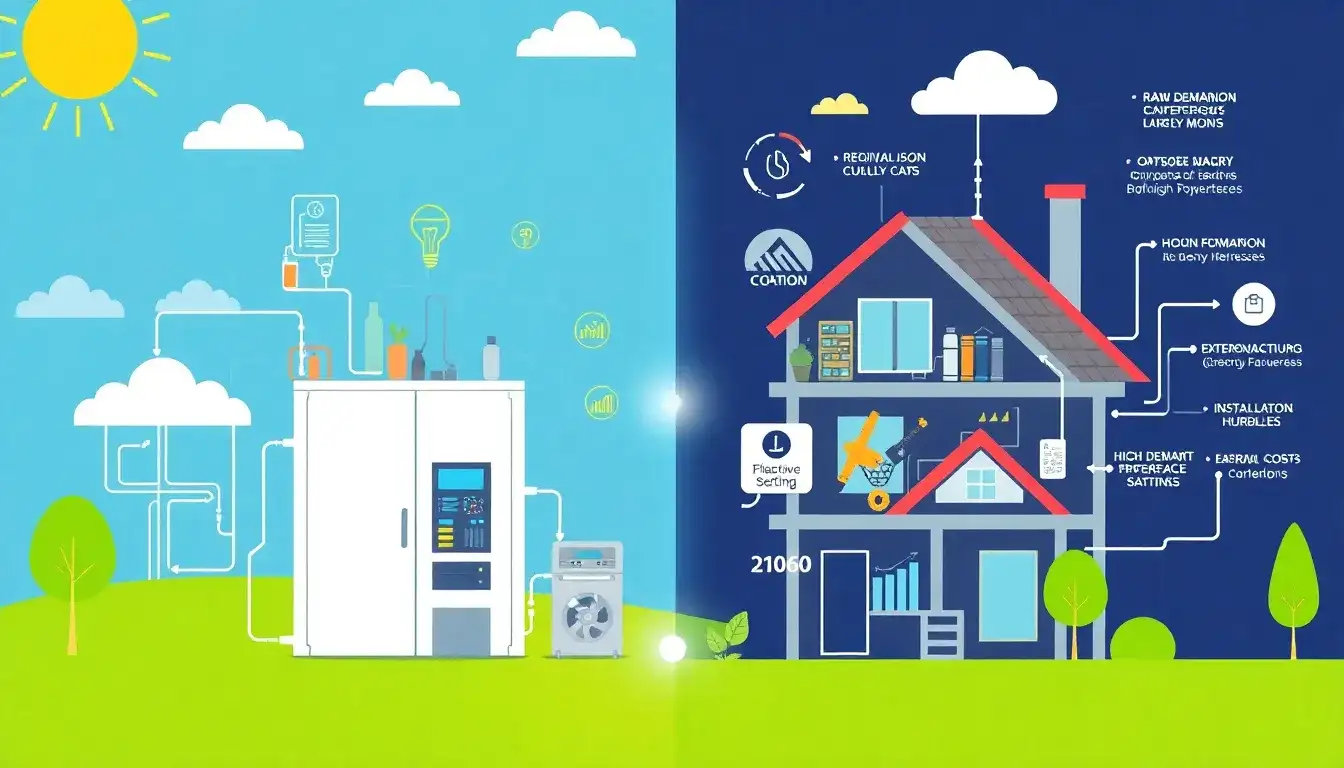
Several key factors contribute to the higher costs of residential battery storage systems:
1. Battery Energy Storage Capacity and Power Output
The core cost driver is the battery’s energy storage capacity (measured in kilowatt-hours, kWh) and power output (kilowatts, kW). Larger capacity batteries that store more energy and deliver higher power output cost significantly more because they use more and higher-quality materials and cells. For instance, typical residential batteries range from 5 kWh to 15 kWh or more, with costs scaling roughly between $1,000 to $1,500 per kWh of storage capacity.
2. Battery Chemistry and Quality
The type of battery chemistry used influences price. Lithium-ion batteries, especially NMC (Nickel Manganese Cobalt) and LFP (Lithium Iron Phosphate), are the most common for residential systems due to their high energy density and lifespan but remain relatively expensive compared to other chemistries. High-quality brands with proven longevity and safety standards can also add to the cost but offer more reliable warranties and performance.
3. Balance of System (BoS) Components and Inverters
Beyond the battery cells themselves, the system requires inverters to convert stored DC electricity into usable AC power for home use. These inverters can be standalone or integrated hybrid models and add thousands of dollars to the overall cost. Additional BoS components include transformers, wiring, cooling systems, structural mounts, and control electronics, which can constitute 30-40% of the total system cost.
4. Installation Complexity and Labor Costs
Installation involves electrical work, including connecting the battery to home circuits, possibly adding or upgrading a critical load panel, and ensuring safety compliance. Labor rates (averaging about $35/hour in the U.S.) and the complexity of the installation—including permitting, inspection, and interconnection fees—contribute significantly to overall costs. Retrofitting an existing solar system with battery storage tends to be costlier than simultaneous installation with solar panels.
5. Warranty, Brand Reputation, and Longevity
A longer or more comprehensive warranty generally increases upfront costs but provides long-term assurance. Established manufacturers with reputable warranties (typically 10 years) price their batteries higher to cover these guarantees. Consumers often pay a premium to avoid risks associated with newer or less reliable brands.
6. Overhead, Sales, and Marketing Costs
Costs related to administrative overhead, sales, marketing/customer acquisition, and profit margins also add to the final price consumers pay. These can be substantial, sometimes several thousand dollars per system, reflecting the business expenses of manufacturers and installers.
7. Location and Regulatory Factors
Regional variations in permitting fees, local labor costs, and regulations can affect the installation and overall price. Remote or challenging installation sites may incur additional expenses.
Summary Table of Cost Factors
| Factor | Impact on Cost |
|---|---|
| Battery capacity (kWh) | Direct proportional increase with size and output |
| Battery chemistry | Lithium-ion (NMC, LFP) costlier but higher quality |
| Inverter and BoS components | Add 30-40% to total system cost |
| Installation labor & complexity | Significant, includes permitting and electrical work |
| Warranty & brand reputation | Longer warranty and trusted brands increase price |
| Overhead, sales, marketing | Several thousand dollars included in system price |
| Location & regulatory fees | Varies by region, can increase installation cost |
In summary, the higher cost of residential battery storage systems results from the combination of expensive, high-quality battery cells, necessary supporting hardware like inverters, complex installation requirements, warranty and brand factors, and business-related overhead expenses.
Original article by NenPower, If reposted, please credit the source: https://nenpower.com/blog/what-factors-contribute-to-the-higher-costs-of-residential-battery-storage-systems/

