

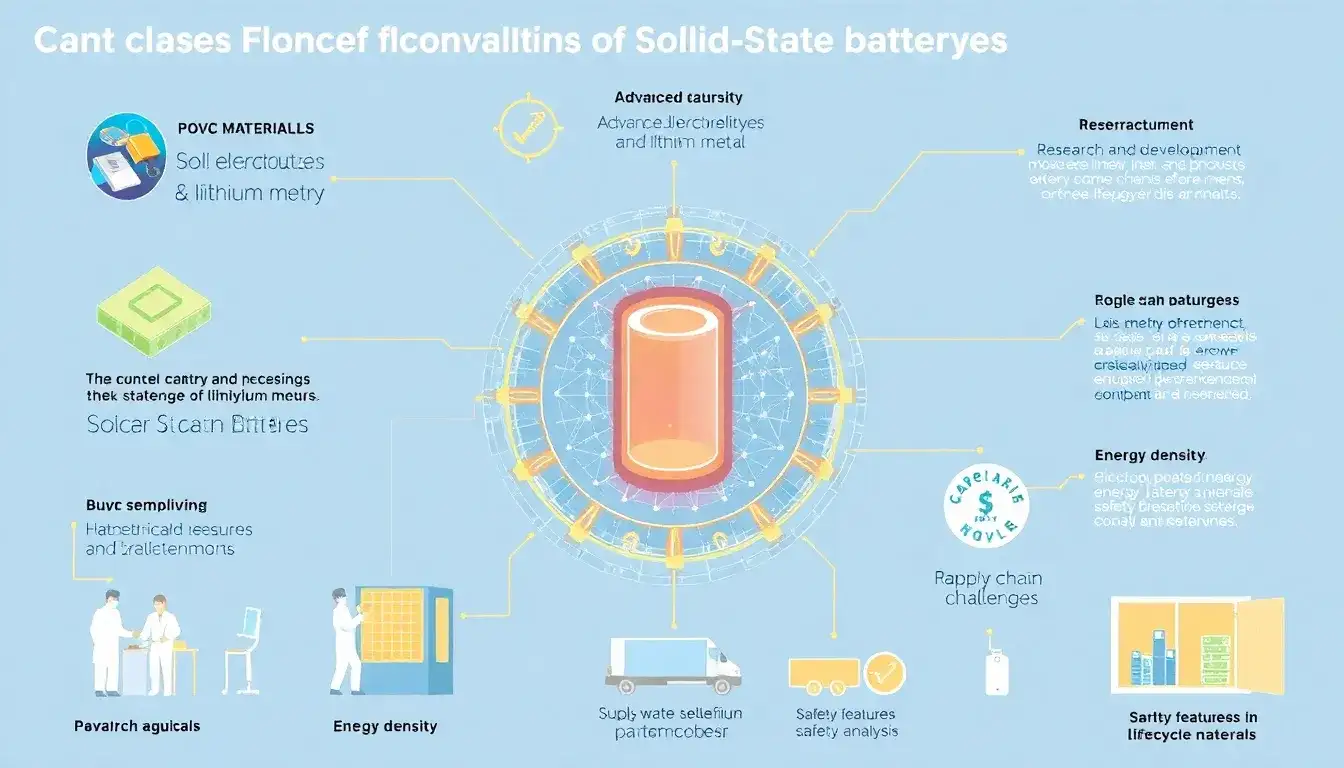
Several key factors contribute to the higher cost of solid-state batteries compared to conventional lithium-ion batteries:
1. Complex Manufacturing Processes
- The production of solid-state batteries involves sophisticated and less mature manufacturing processes. Fabricating a stable solid electrolyte that is a good ion conductor and chemically inert is challenging and more complex than producing liquid electrolytes used in conventional batteries. This complexity increases production difficulty and cost.
- Additionally, the brittle nature of solid electrolytes introduces risks such as cracking during manufacturing, requiring more precise and careful fabrication techniques.
- Because the technology differs significantly from traditional lithium-ion battery production, manufacturers often need separate production lines and specialized machinery, entailing large capital investments.
- At the current stage, smaller production volumes and lack of process optimization raise manufacturing costs. Scaling up production and optimizing processes, as seen historically in lithium-ion batteries, are expected to reduce costs over time, but this is still in early phases for solid-state batteries.
2. Material Costs and Availability
- Solid-state batteries use different materials, particularly for solid electrolytes, which can be more expensive or less available than materials used in conventional batteries. This scarcity or cost of raw materials adds to the overall battery cost.
- Research is ongoing to find alternative materials and improve recycling methods to help mitigate material cost constraints.
3. Technological Challenges and Research Investment
- Overcoming technical hurdles such as interface stability between the solid electrolyte and electrodes, ensuring high ionic conductivity, and achieving scalable manufacturing is still an active area of research. These challenges contribute to higher initial costs as extensive R&D and innovation investments are necessary.
- Development of solid-state batteries requires significant investment in research and technology development, further adding to overall expenses, especially during the early commercial phases.
4. Economic Scale and Market Maturity
- Solid-state batteries are currently produced at much smaller scales than lithium-ion batteries, limiting economies of scale. As production scales up and processes become more efficient, costs could fall substantially, similar to past trends in lithium-ion battery pricing.
- Current cost estimates place solid-state batteries at roughly 4 to 8 times more expensive than lithium-ion batteries, with forecasts around $400-800 per kWh compared to approximately $100 per kWh for lithium-ion systems.
Summary Table of Key Cost Factors
| Factor | Explanation |
|---|---|
| Complex Manufacturing | New, sophisticated processes; brittle electrolytes; specialized equipment needed |
| Material Costs | More expensive or less available materials for solid electrolytes and electrodes |
| Technological Hurdles | Interface stability, ion conductivity challenges, extensive R&D investment required |
| Scale and Market Maturity | Early-stage production with limited economies of scale, leading to higher unit costs |
In conclusion, the higher cost of solid-state batteries is primarily due to their complex and not yet fully optimized manufacturing process, the expense and availability of novel materials, ongoing technological challenges requiring heavy R&D investment, and the early stage of market scale that limits economies of scale. Over time, these costs are expected to decrease significantly as the technology matures and production ramps up.
Original article by NenPower, If reposted, please credit the source: https://nenpower.com/blog/what-factors-contribute-to-the-higher-cost-of-solid-state-batteries/

