

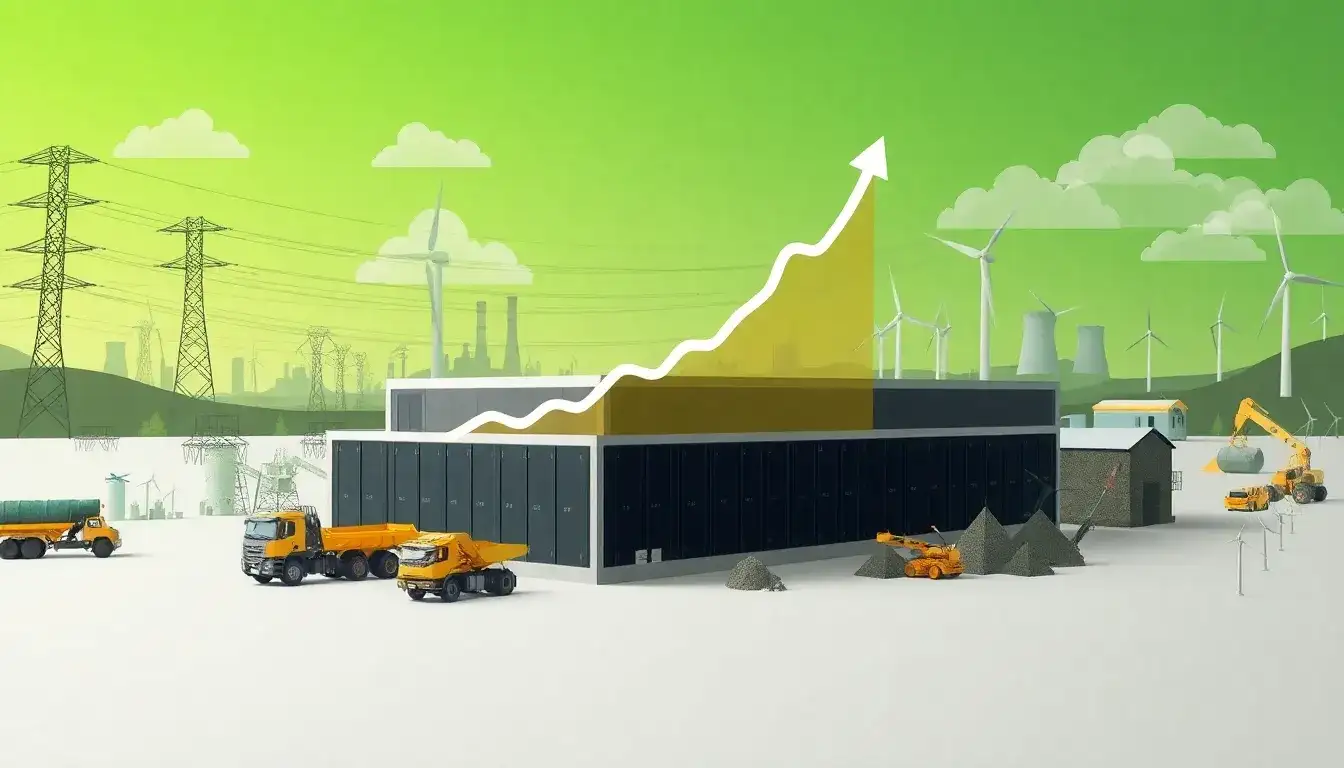
Several factors contribute to the increase in emissions from utility-scale battery energy storage systems (BESS):
1. Battery Production Emissions
- The manufacturing of utility-scale batteries is energy intensive, resulting in significant upstream emissions. For example, EPRI estimates an average of about 254.6 kg CO2e emitted per kW of installed battery capacity, reflecting embodied emissions from raw material extraction, processing, and battery assembly.
- These production emissions depend on the battery’s power capacity (kW) and energy storage capacity (kWh), as well as the carbon intensity of the electricity used in the factory where the battery is produced.
2. Operational Charging and Discharging Emissions
- The emissions impact during operation arises mainly because batteries often charge from electricity produced on the grid, which may include fossil fuel generation, especially during peak times or from carbon-intensive grids.
- If batteries charge when grid carbon intensity is high, the emissions associated with charging can surpass the emissions saved by displacing fossil fuel generation during discharge, leading to net emission increases.
3. Inefficient Usage Patterns and Capacity Factors
- High capacity factors (utilization rates) beyond certain thresholds can cause excessive energy “spillage” (wasted energy), worsening emissions outcomes due to inefficiencies in cycling the battery.
- Storage duration and the timing of charge-discharge cycles critically affect emissions: batteries need to be optimally charged from low-carbon sources and discharged to offset high-carbon generation to achieve net emissions reductions.
4. Grid Carbon Intensity Variation
- The emissions benefit of BESS depends strongly on the carbon intensity differential between charging and discharging times. Emissions increase if batteries predominantly charge during periods of high grid emissions and discharge when grid emissions are low.
- This means that in grids with fluctuating or generally high fossil fuel reliance, utility-scale batteries may inadvertently increase total emissions.
Summary
| Factor | Description |
|---|---|
| Battery production emissions | Significant embodied emissions from mining, manufacturing, and transporting battery components. |
| Charging emissions | Charging from carbon-intensive grid electricity can increase emissions. |
| Utilization inefficiencies | High cycling rates beyond optimal levels cause energy losses and increased emissions. |
| Grid carbon intensity profile | Emissions depend on when batteries charge or discharge relative to the grid’s carbon intensity. |
Therefore, the emissions increase from utility-scale batteries arises primarily from their embodied carbon footprint in manufacturing combined with charging from fossil-fueled electricity and inefficient operation patterns that fail to leverage low-carbon times for charging and peak fossil displacement during discharge. Addressing these factors through cleaner manufacturing, smart charging strategies, and grid decarbonization is key to reducing the overall emissions impact of battery energy storage systems.
Original article by NenPower, If reposted, please credit the source: https://nenpower.com/blog/what-factors-contribute-to-the-emissions-increase-from-utility-scale-batteries/

