

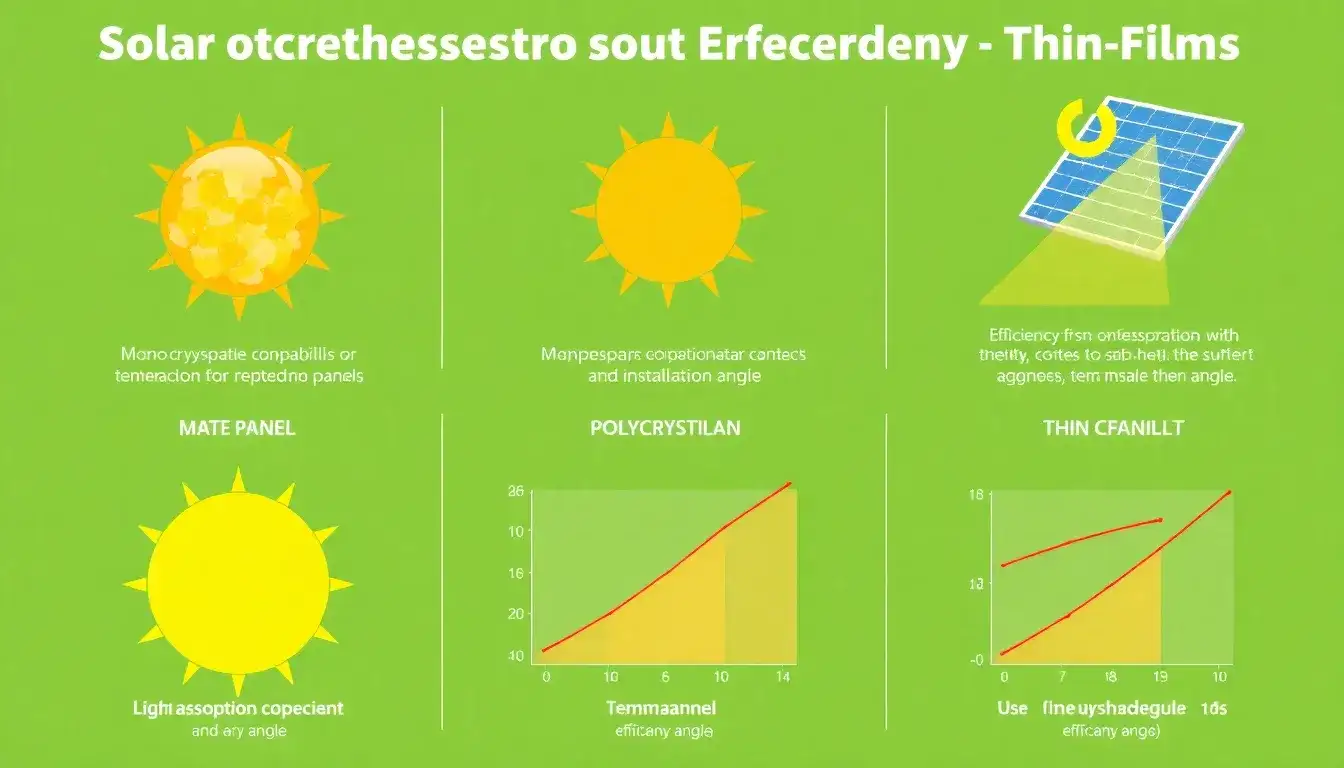
Factors Contributing to Solar Panel Efficiency
1. Material and Design
- Material Type: Solar panels are made from different materials, such as monocrystalline, polycrystalline, and thin-film. Monocrystalline panels are generally more efficient because they have fewer impurities, allowing electrons to move more freely.
- Cell Design: Technologies like PERC (Passivated Emitter and Rear Cell) and IBC (Interdigitated Back Contact) enhance efficiency by reducing electron recombination and increasing light absorption.
2. Wavelength and Reflection
- Wavelength: Photons with the right energy are needed to excite electrons and produce electricity. This depends on the semiconductor material and design.
- Reflection: Anti-reflective coatings and textured surfaces minimize light reflection, increasing the amount of light absorbed by the cells.
3. Solar Panel Orientation and Tilt
- Orientation: Panels should face south in the northern hemisphere to maximize sunlight exposure.
- Tilt Angle: The angle should be adjusted based on latitude for optimal sunlight absorption throughout the day.
4. Environmental Conditions
- Temperature: Higher temperatures reduce efficiency due to decreased voltage output. Ideal operating temperatures range from 15°C to 35°C.
- Shading: Shading significantly impacts efficiency, and microinverters can mitigate individual panel performance losses.
5. Inverter Efficiency
Inverters convert DC power from solar panels to AC for household use. Efficient inverters minimize energy losses during this conversion.
6. Aging and Degradation
As solar panels age, their efficiency decreases due to material degradation and environmental factors.
Types of Solar Panels by Efficiency
- Polycrystalline: 13-16% efficiency
- Monocrystalline: 18-24% efficiency
- Thin-Film: 7-13% efficiency
- Perovskite: Up to 27% efficiency
Choosing the right type of solar panel and optimizing installation conditions can significantly improve overall system efficiency.
Summary Table
| Solar Panel Type | Efficiency Range |
|---|---|
| Polycrystalline | 13-16% |
| Monocrystalline | 18-24% |
| Thin-Film | 7-13% |
| Perovskite | Up to 27% |
Efficiency varies based on cell materials and technologies used. Understanding these factors helps in selecting the most efficient solar panels for specific applications.
Original article by NenPower, If reposted, please credit the source: https://nenpower.com/blog/what-factors-contribute-to-the-efficiency-of-different-solar-panel-types/

