

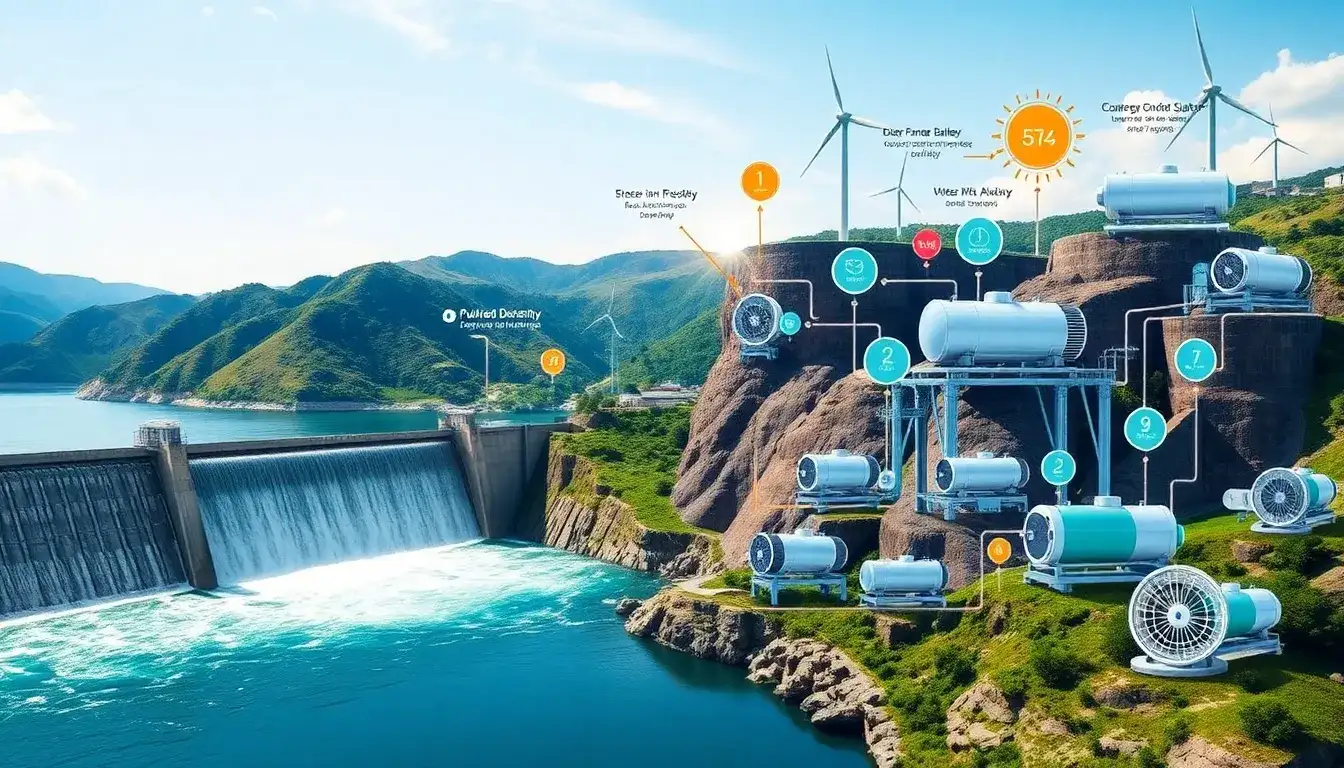
Efficiency differences between pumped hydro storage and other energy storage technologies are influenced by several key factors:
Factors Contributing to Efficiency Differences
1. Energy Conversion Processes
- Pumped Hydro Storage (PHS): PHS involves the conversion of electrical energy into potential energy by pumping water between two reservoirs. It achieves an efficiency of about 80-90% due to the mechanical nature of the process, which involves minimal energy conversion steps beyond mechanical and hydraulic.
- Other Technologies:
- Compressed Air Energy Storage (CAES): CAES can reach up to 70% efficiency if the heat generated during compression is utilized, otherwise efficiency drops to between 42% and 55%. This is because CAES involves both compression and expansion processes that consume energy.
- Lithium-ion Batteries: These typically have higher round-trip efficiencies (around 90-95%) due to direct electrochemical reactions.
- Thermal Energy Storage: Technologies like ThermalBattery™ emphasize cost-effectiveness and recyclability. Efficiency can vary based on the application but is generally lower than PHS due to thermal losses.
2. Loss Mechanisms
- Energy Storage and Conversion Losses: Each technology has inherent loss mechanisms. For example, PHS has mechanical losses, while CAES has thermal and electrical losses. Lithium-ion batteries suffer from electrical and chemical degradation losses.
- Scalability and Maintenance: Larger systems like PHS require significant infrastructure but offer economies of scale. Smaller systems like lithium-ion batteries are more modular but may have higher maintenance needs over time.
3. Environmental and Operational Factors
- Location-Specific Factors: PHS requires suitable geography, limiting its deployment. Other technologies are more versatile in terms of location.
- Environmental Impact: Different technologies have varying environmental impacts. For instance, PHS affects local ecosystems, whereas lithium-ion batteries have concerns related to material sourcing and disposal.
4. Technological Maturity and Cost
- Maturity and Cost Efficiency: PHS is well-established but expensive to build due to infrastructure requirements. Other technologies like lithium-ion batteries continue to decrease in cost as they mature.
- Innovation and Advancements: Continuous research and development in energy storage technologies are improving efficiencies and reducing costs across the board.
In summary, the efficiency differences between pumped hydro storage and other energy storage technologies are largely influenced by the type of energy conversion involved, the inherent loss mechanisms within each technology, and factors like scalability, environmental impact, and cost.
Original article by NenPower, If reposted, please credit the source: https://nenpower.com/blog/what-factors-contribute-to-the-efficiency-differences-between-pumped-hydro-storage-and-other-energy-storage-technologies/

