

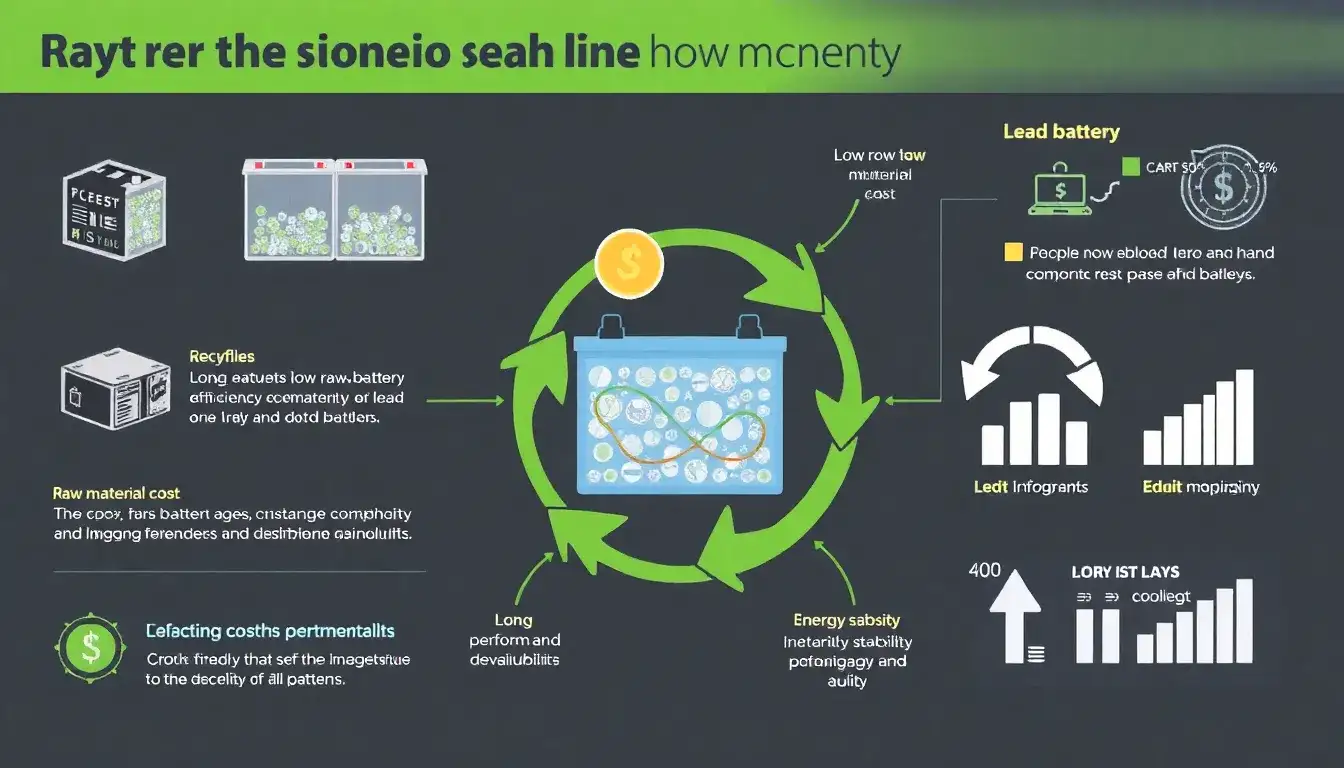
Several key factors contribute to the cost-effectiveness of lead batteries:
1. Low Upfront Cost
Lead batteries have a significantly lower initial purchase price compared to other battery technologies like lithium-ion. For renewable energy storage, lead batteries typically cost around $150–$200 per kWh, which is up to three times less expensive than some alternative battery systems. This low upfront investment makes them attractive for many applications.
2. Established and Scalable Technology
Lead battery technology is mature, well-understood, and primarily domestically sourced in many countries, which helps keep manufacturing and supply chain costs down. The industry is also poised to scale with growing demand, which supports cost efficiencies through economies of scale.
3. Robustness and Reliability
Lead batteries have a long track record of reliable performance across many applications, from automotive to critical power systems. Their proven reliability reduces risks of failure and associated costs, especially in backup power and industrial uses.
4. Environmental Sustainability Through Recycling
Lead batteries boast a very high recycling rate—over 97%—which significantly lowers the environmental impact and material costs. A large portion (60 to 80%) of a new lead battery’s materials come from recycled sources, creating a closed-loop system that reduces raw material expenses.
5. Energy-to-Cost Efficiency
Lead-acid batteries offer a favorable energy-to-consumer-price ratio, ranging from about 7 Wh/US$ for sealed lead-acid to 18 Wh/US$ for flooded lead-acid types. This means consumers get reasonable energy capacity per dollar spent upfront.
6. Wide Operating Temperature Range
Lead batteries can operate effectively between –35°C and 45°C, which allows reliable use in varied environmental conditions without extra thermal management costs.
Cost-Effectiveness Considerations Compared to Lithium Batteries
While lead batteries have a lower initial cost, their total cost-effectiveness depends on factors including:
- Cycle Life: Lead batteries typically endure 300–500 cycles, much fewer than lithium batteries (3,000–5,000 cycles). This leads to more frequent replacements, increasing total lifecycle costs.
- Depth of Discharge (DoD): Lead batteries usually can only safely use about 30–50% of their capacity without damage, unlike lithium batteries which can use nearly 100%. This results in a need for larger lead battery banks to deliver the same usable energy, raising upfront costs.
- Maintenance and Labor: Lead batteries require regular maintenance such as electrolyte checks, watering, and cleaning, adding to operational expenses and downtime. Lithium batteries require minimal maintenance.
- Energy Efficiency: Lead batteries have higher energy losses during charge/discharge cycles (efficiency ranges widely, sometimes as low as 50%), which increases electricity costs compared to lithium batteries that are about 30% more efficient in energy use.
- Charging Time: Lead batteries usually need 6–8 hours plus cool-down periods to recharge fully, causing more downtime and labor costs. Lithium batteries charge faster and can be opportunity charged during breaks.
Despite these disadvantages, the low initial capital investment, maturity of the technology, and extensive recycling infrastructure make lead batteries a cost-effective choice in many applications, especially where upfront cost and environmental sustainability via recycling are prioritized over longer cycle life and higher efficiency.
In summary, the cost-effectiveness of lead batteries is mainly driven by their:
- Low upfront cost
- Mature and scalable manufacturing
- High recyclability and environmental sustainability
- Robustness and operational reliability
- Favorable energy-to-cost ratio
However, their shorter lifespan, lower depth of discharge, and higher maintenance compared to lithium batteries may increase long-term costs, which users should consider based on their specific application needs.
Original article by NenPower, If reposted, please credit the source: https://nenpower.com/blog/what-factors-contribute-to-the-cost-effectiveness-of-lead-batteries/

