

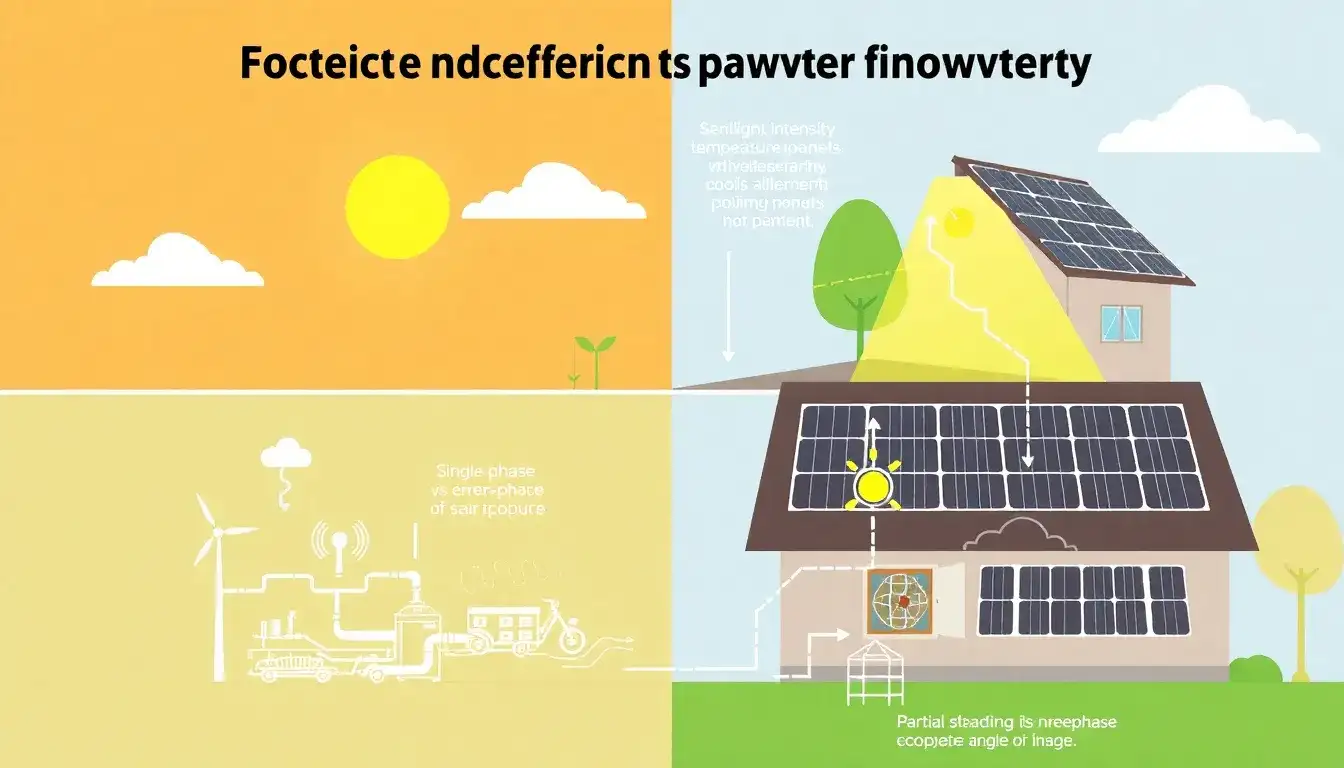
The efficiency of a solar inverter—the device that converts DC power from solar panels into usable AC power—can be affected by various factors related to the inverter itself, the solar system design, and environmental conditions. Key factors influencing solar inverter efficiency include:
1. Inverter Quality and Type
- Waveform Type: High-quality sine wave inverters are typically more efficient (90-95%) than modified sine wave inverters (75-85% efficiency).
- Frequency: High-frequency inverters usually have higher efficiency than low-frequency models.
- Conversion Efficiency: The inherent power loss during DC to AC conversion means inverters never reach 100% efficiency; good inverters convert 95-98% of DC input into AC output power.
2. Load Level on the Inverter
- Efficiency depends on the inverter load. Inverter conversion efficiency is highest near its optimal power output (peak efficiency). At low loads, stand-by losses become significant, reducing efficiency.
3. Sizing and Capacity Matching
- Proper Inverter Sizing: An inverter should closely match or slightly exceed the solar panel array’s peak output to maximize efficiency. Oversizing or undersizing the inverter relative to the panel array affects efficiency.
- Oversized Inverters: While oversizing can increase daily power production during certain periods, it may also reduce energy yield under low irradiance or partial shading conditions, potentially reducing overall efficiency.
- Undersized Inverters: Can lead to “clipping,” where the inverter limits output to its maximum capacity, wasting potential power.
4. Maximum Power Point Tracking (MPPT) Efficiency
MPPT is a technique used inside inverters to continuously track the optimal voltage/current point for maximum power extraction from solar panels. The quality of MPPT algorithms greatly affects inverter efficiency. Higher MPPT efficiency means more energy is extracted, improving overall system yield. Microinverters with individual MPPT per panel generally provide better efficiency than traditional string inverters with a single MPPT.
5. Environmental and Installation Factors
Temperature
High temperatures reduce solar panel voltage and output, indirectly affecting inverter efficiency since it receives less input power. Efficiency can drop between 10% to 25% with rising temperature depending on the panel’s temperature coefficient.
Geography and Shading
Geographic location influences solar radiation and temperature. Shading from buildings, trees, or mountains reduces the solar input power, impacting the inverter input and thus its efficiency.
Distance and Voltage Drop
Long cable runs from solar panels to the inverter cause voltage drops, reducing the power input to the inverter and lowering system efficiency.
Electrical Mismatch
Mismatched solar panels or improper electrical connections can reduce the power delivered to the inverter, thus lowering efficiency.
Installation and Orientation
The orientation and tilt of solar panels affect how much sunlight they receive, directly affecting inverter input and efficiency. Proper installation minimizing shading and maximizing exposure optimizes the system’s efficiency.
Summary Table of Factors Affecting Solar Inverter Efficiency
| Factor | Impact on Efficiency | Notes |
|---|---|---|
| Inverter Type & Quality | Higher-quality sine wave and high-frequency inverters have higher efficiency | 90–98% efficiency typical |
| Load Level | Efficiency peaks near optimal load; drops at low load | Stand-by losses significant at low output |
| Inverter Sizing | Properly sized inverter maximizes efficiency | Oversizing or undersizing can reduce overall yield |
| MPPT Efficiency | Better MPPT algorithms improve power extraction | Microinverters usually better MPPT |
| Temperature | High temp reduces panel output, indirectly reducing inverter efficiency | Efficiency drops 10-25% in heat |
| Geography & Shading | Reduced solar irradiance lowers power input to inverter | Shade and location critical |
| Distance & Voltage Drop | Long cable runs reduce voltage, lowering input power | Keep inverter close to panels |
| Electrical Mismatch | Poor wiring or mismatch reduces input quality | Ensures stable power input |
| Panel Orientation & Tilt | Affects sunlight capture, impacting inverter input | Optimal positioning maximizes efficiency |
In conclusion, the efficiency of a solar inverter depends on its design, quality, load, sizing relative to solar panels, MPPT capability, and environmental and installation conditions such as temperature, shading, and cable losses. Proper system design and high-quality components are essential to maximize inverter and overall solar system efficiency.
Original article by NenPower, If reposted, please credit the source: https://nenpower.com/blog/what-factors-can-affect-the-efficiency-of-a-solar-inverter/

