

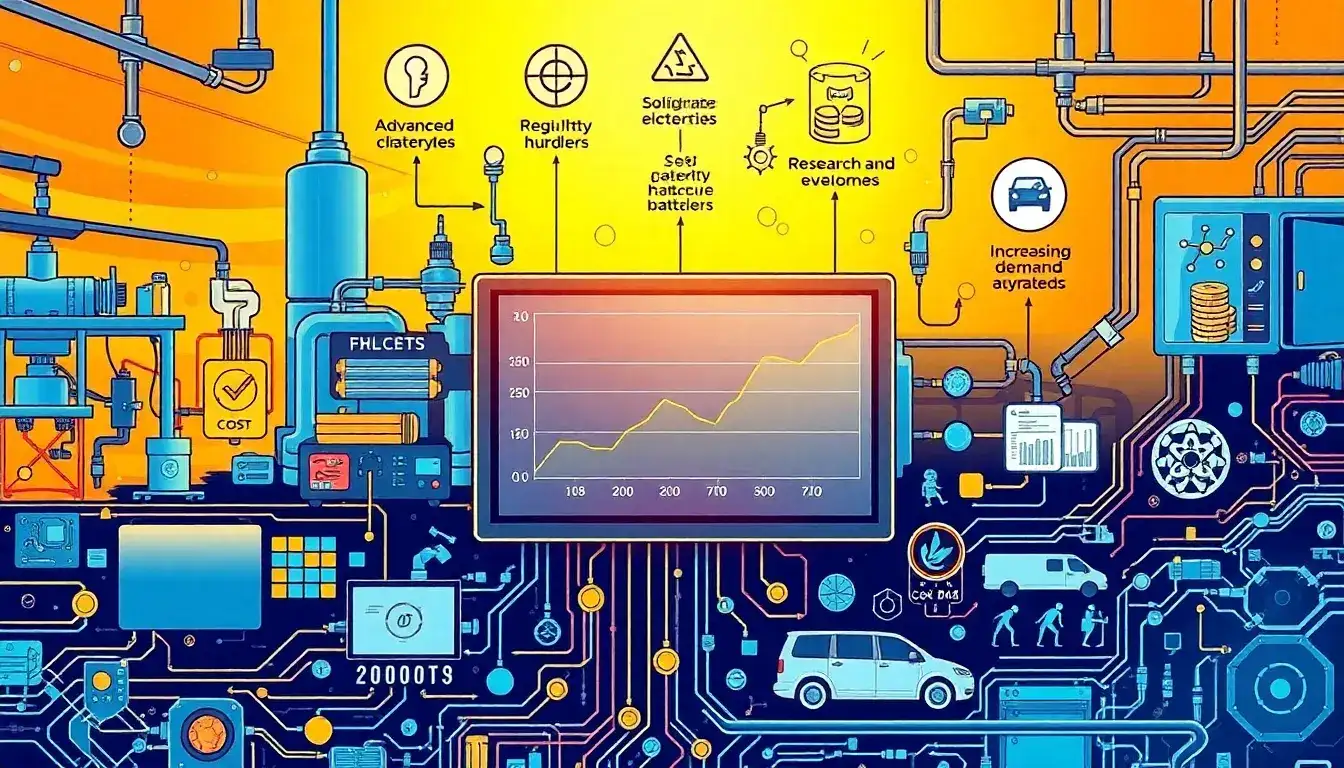
Key Factors Driving Higher Costs of Solid-State Batteries
1. Complex and Innovative Manufacturing Process
– Solid-state batteries require highly sophisticated and different manufacturing processes compared to conventional lithium-ion batteries. The need for advanced machinery and cutting-edge technologies to produce solid electrolytes and assemble the cells raises capital and operational costs significantly.
– The process is complicated by challenges such as designing a stable solid electrolyte that is an effective ion conductor yet chemically inert, and addressing issues like the brittleness of electrolytes that cause cracking risks during manufacturing.
2. Expensive and Specialized Materials
– Materials for solid electrolytes and electrodes tend to be more costly and less abundant than those in traditional batteries. This impacts upfront material sourcing costs. Ongoing research seeks alternative, more abundant materials and recycling methods to mitigate costs, but these are not yet widely implemented.
3. Small Production Scale and Lack of Process Optimization
– Currently, solid-state batteries are produced at a relatively low scale, which inherently increases per-unit costs due to fewer economies of scale. The technology is still in early commercial stages, so manufacturing efficiencies and process optimizations that have lowered lithium-ion battery costs over the past decade are not yet realized for solid-state batteries.
4. Research & Development Investments
– Developing solid-state battery technology requires significant investment in R&D due to the need to solve technological hurdles such as interface stability between electrodes and electrolytes, ion conductivity optimization, and scalability of manufacturing processes. These high upfront costs are reflected in the battery prices.
5. Need for New Production Lines
– Because solid-state batteries differ fundamentally from lithium-ion cells, manufacturers may need to set up entirely new production lines with specialized machinery. This capital expenditure is a barrier, particularly for new entrants, and contributes to the higher overall cost.
Cost Comparisons and Forecasts
- Estimates suggest that by 2026, solid-state battery costs could range between $400 to $800 per kWh, which is about four to eight times higher than current lithium-ion battery prices (~$100 per kWh).
- Some long-term analyses predict the possibility of price parity or slight cost advantages over lithium-ion batteries depending on design specifics, such as the excess lithium used in the anode, but these are based on future assumptions and optimizations.
In summary, the higher cost of solid-state batteries stems primarily from their complex and novel manufacturing process, expensive and less mature materials, limited production scale, substantial R&D costs, and the need for new production infrastructure. As these challenges are addressed over time with scaling and innovation, costs are expected to decrease, but currently, they remain significantly above traditional lithium-ion battery costs.
Original article by NenPower, If reposted, please credit the source: https://nenpower.com/blog/what-factors-are-driving-the-higher-cost-of-solid-state-batteries/

