

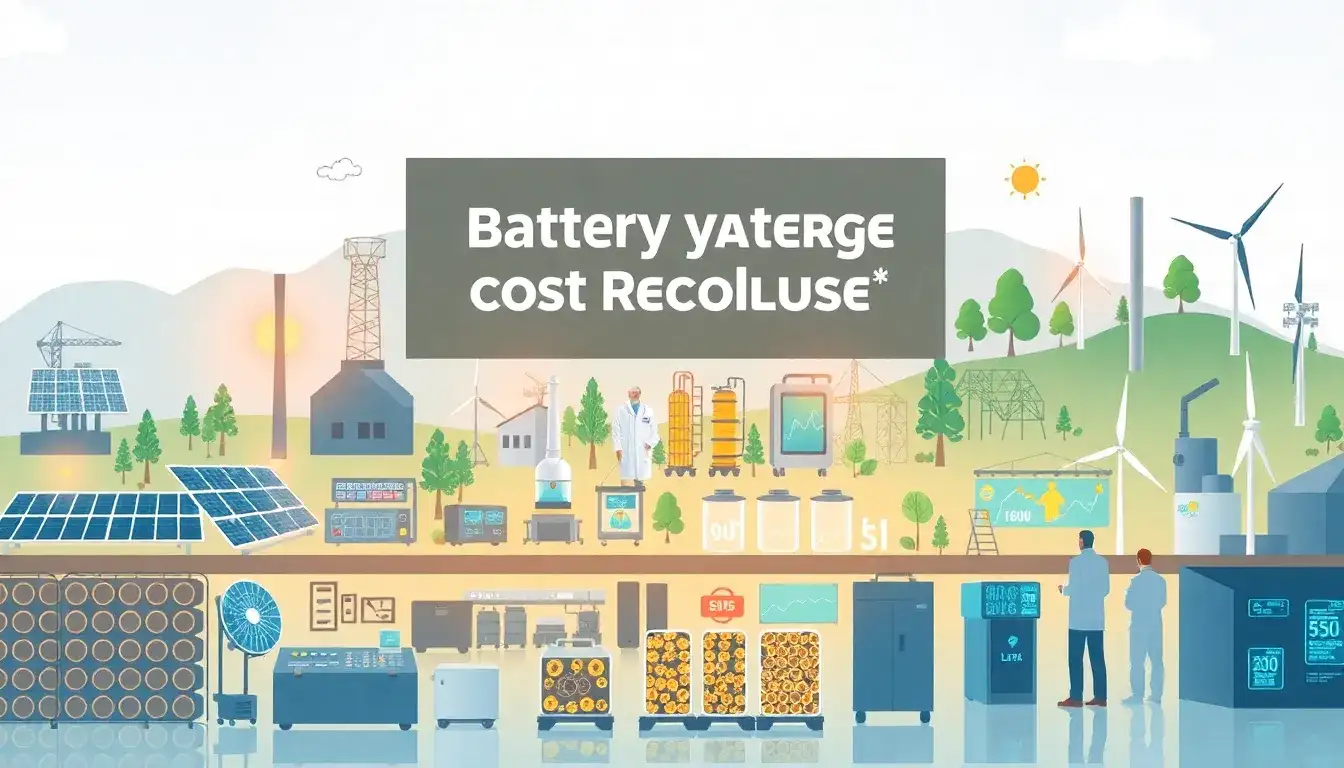
Several key factors are driving the ongoing cost reductions in battery storage, especially utility-scale battery energy storage systems (BESS), with lithium-ion batteries (Li-ion) being the dominant technology:
1. Battery Cell Manufacturing and Scale
- Manufacturing Overcapacity: There is currently an overcapacity in battery cell manufacturing globally—around 3.1 terawatt-hours fully commissioned capacity, more than 2.5 times the annual demand expected in 2024. This overcapacity increases competition among manufacturers, pressing prices downward.
- Economies of Scale: As the battery industry expands across sectors like consumer electronics, electric vehicles, and utilities, larger production volumes lead to economies of scale, reducing per-unit costs.
2. Technological Innovation and Larger Cell Formats
- Bigger Battery Cells: A recent industry trend is the shift toward larger battery cells (300Ah or more), which have higher energy density and lower cost per kilowatt-hour. Systems using these larger cells are about 5% cheaper than those with smaller cells, contributing significantly to cost declines.
- Advanced Materials and Chemistries: Adoption of lower-cost chemistries such as lithium-iron-phosphate (LFP), and development of next-generation materials like silicon and lithium metal anodes, solid-state electrolytes, and new cathode materials are helping reduce costs further.
3. Supply Chain and Raw Materials
- Falling Metal and Component Prices: Recent years have seen reductions in prices of key battery materials and components, which directly lower battery pack costs.
- Improved Material Processing: Better processing techniques and supply chain efficiencies reduce manufacturing expenses.
4. System-Level Cost Reductions Beyond Battery Packs
Although the battery pack cost is the largest component, cost reductions are also occurring in:
- Power Conversion Systems (PCS) and Balance of System (BOS): Optimization and sourcing of more cost-competitive suppliers help reduce the non-battery components of BESS.
- Installation and Integration Efficiencies: Streamlined installation processes and system designs contribute to lowering total installed costs.
5. Market and Industry Dynamics
- Increased Competition: Heightened competition, especially among Chinese manufacturers, is driving prices down substantially, with turnkey system costs in China reported 60% lower than those in the U.S. and Europe for similar durations.
- Slowdowns in Some Demand Segments: For example, slower growth in electric vehicle battery demand has contributed to overcapacity, pressuring prices downward.
6. Projected Cost Reductions Based on Scenarios
According to NREL modeling:
- Battery pack costs are expected to decline more rapidly than other system components over the next decades.
- Moderate technology innovation scenarios project capital expenditure reductions of about 37% by 2035 and further reductions through 2050.
DOE’s analyses indicate that innovation implementations (e.g., automation, improved cell packaging) could reduce levelized costs significantly, especially for technologies like flow batteries, pumped hydro, and compressed air storage, although lithium-ion remains dominant for now.
Summary Table of Key Drivers
| Driver | Impact on Cost Reduction |
|---|---|
| Manufacturing overcapacity | Increased supply lowers prices |
| Economies of scale | Larger volumes reduce per-unit costs |
| Larger battery cell sizes | Higher energy density and lower cost per kWh |
| Advanced materials & chemistries | Adoption of LFP, silicon anodes, solid-state electrolytes |
| Falling raw material prices | Lower input costs |
| System component optimization | Lower PCS and BOS costs |
| Market competition | Strong competition, especially in China, drives prices down |
| Innovation in production & design | Automation, improved packaging, and cell design |
These factors collectively have contributed to recent historic price drops—such as a 20% decrease in lithium-ion pack prices from 2023 to 2024 and a 40% year-on-year drop in turnkey storage system costs globally—as well as forecasted continued reductions into the 2030s and beyond.
Original article by NenPower, If reposted, please credit the source: https://nenpower.com/blog/what-factors-are-driving-the-cost-reductions-in-battery-storage/

