

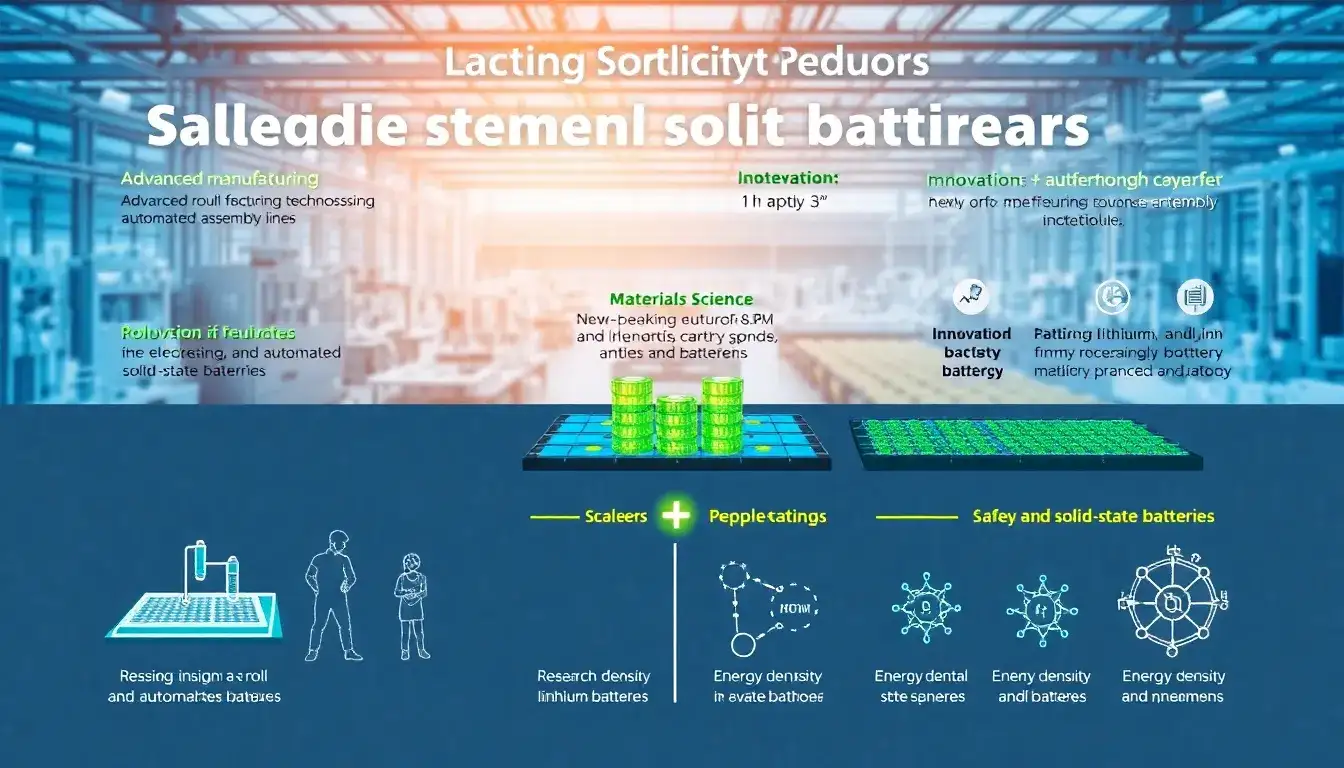
The cost reduction of solid-state batteries is driven by several key factors related to materials, manufacturing processes, and system-level efficiencies:
1. Simplified Manufacturing and Component Reduction
- Solid-state batteries combine the separator and electrolyte into a single solid component, reducing the number of parts needed, which can simplify production lines and potentially lower manufacturing complexity and costs over time.
- Innovations such as “Cell is pack” (CIP) or “Cell is module” (CIM) system concepts could further simplify production and reduce costs by eliminating some components at the cell or system level.
2. Material Considerations and Energy Density
- Although solid-state batteries use lithium metal anodes with higher lithium requirements, their higher energy density means fewer cells are needed for a given capacity, which could offset some material cost increases.
- Transitioning to low-cost electrode materials (like lithium iron phosphate or low cobalt/high nickel formulations) alongside solid electrolytes helps reduce raw material expenses.
- Advances in battery chemistry tweaks, such as silicon anodes and advanced cathode materials, contribute to better performance and efficiency, potentially lowering lifecycle costs.
3. Economies of Scale and Manufacturing Improvements
- As production volume increases, economies of scale drive down battery costs through higher yields and improved manufacturing efficiency.
- Continuous research and development are optimizing battery chemistries and manufacturing techniques, contributing to roughly an 8% annual cost reduction in battery production, which is expected to benefit solid-state batteries similarly.
4. Enhanced Durability and Lifecycle Cost Benefits
- Solid-state batteries offer longer lifespans and improved reliability compared to traditional lithium-ion batteries, reducing maintenance frequencies and replacement costs, thereby lowering total cost of ownership (TCO) over time.
- Higher energy efficiency and fast-charging capabilities lead to operational savings for end users, further improving cost-effectiveness.
5. Safety and System-Level Cost Reductions
- Improved safety characteristics of solid-state batteries may reduce or eliminate the need for expensive thermal management and cell monitoring systems currently required for liquid electrolyte batteries, potentially lowering system costs significantly.
Summary Table of Key Cost-Reduction Factors
| Factor | Impact on Cost Reduction |
|---|---|
| Component integration | Fewer parts, simpler manufacturing |
| High energy density | Material efficiencies despite higher Li use |
| Low-cost electrode materials | Reduced raw material expenses |
| Economies of scale | Manufacturing cost improvements |
| Longer battery lifespan | Lower maintenance and replacement costs |
| Improved safety | Reduced thermal management costs |
| Advances in R&D and chemistry | Continuous incremental cost and performance gains |
In conclusion, solid-state battery cost reductions are driven by material innovation, manufacturing simplification, scale economies, improved battery lifespan, and system-level efficiencies enabled by enhanced safety and energy density. While initial material costs, especially lithium usage, may be higher, these are expected to be offset by the overall benefits and production improvements as the technology matures.
Original article by NenPower, If reposted, please credit the source: https://nenpower.com/blog/what-factors-are-driving-the-cost-reduction-of-solid-state-batteries/

