

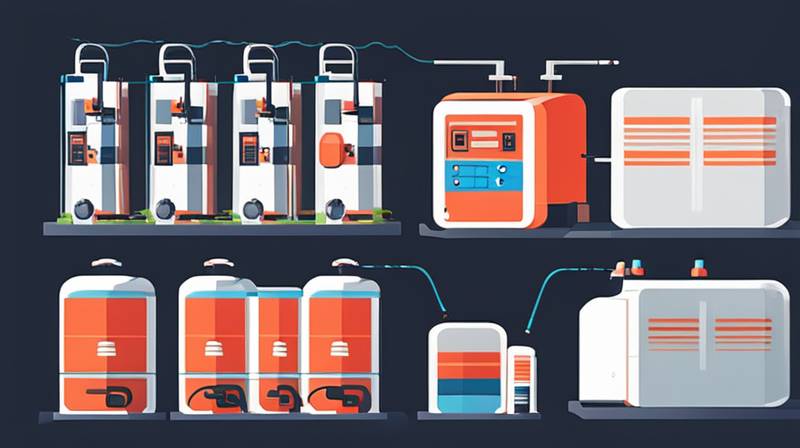
To understand the types of energy storage equipment utilized in factories, several key aspects stand out. 1. Battery systems, 2. Flywheels, 3. Pumped hydro storage, 4. Capacitors, and 5. Thermal energy storage represent fundamental technologies adopted in various industrial settings.
Among these, battery systems, particularly lithium-ion batteries, dominate due to their efficiency and adaptability in various applications. These systems can handle fluctuations in energy supply and demand, making them invaluable for factories that rely heavily on renewable energy sources such as solar and wind. They allow factories to store excess energy generated during peak production times, facilitating smoother operations during periods of high demand when energy availability can be less predictable. Additionally, leading manufacturers often leverage these technologies to enhance operational resilience, reduce costs, and maintain productivity.
1. BATTERY SYSTEMS
Battery technologies have revolutionized energy storage solutions in industrial applications, allowing for efficient energy management and enhanced operational flexibility. The primary function of these systems is to store energy generated during low-demand periods or from renewable sources for later use when energy requirements peak. Among the various battery technologies available, lithium-ion batteries lead the market due to their high energy density, longer life cycles, and decreasing costs.
The specific advantages of lithium-ion batteries stem from their ability to provide fast response times and high efficiency, critical for maintaining continuous operations in factories. These batteries can charge and discharge rapidly, which supports quick adjustments to energy loads and mitigates the impact of grid fluctuations. Furthermore, advancements in battery management systems (BMS) have improved the overall reliability and safety of these storage solutions, enabling factories to monitor and optimize battery performance effectively.
Another alternative in battery technology includes lead-acid batteries, which are often used in applications that require lower costs and moderate energy storage capacities. Although they have a shorter lifespan and lower energy density compared to lithium-ion variants, their proven reliability and availability still make them a viable option for certain industrial applications.
2. FLYWHEEL TECHNOLOGY
Flywheel energy storage systems utilize the kinetic energy of a rotating mass to store and release energy as needed. By accelerating a rotor to high speeds, the system can provide bursts of energy when required, making it suitable for applications with short-duration energy requirements. The adaptability of flywheel systems to match fluctuating loads makes them ideal for factories experiencing sudden spikes in energy consumption.
One of the primary benefits of flywheel systems is their longevity; they typically have a lifespan exceeding 20 years with minimal maintenance. Additionally, the fast response times of flywheels allow them to be employed in frequency regulation applications, which increases grid stability. This technology not only enhances operational efficiency in industrial settings but also contributes positively to environmental sustainability efforts by enabling factories to better utilize renewable energy sources.
Implementing flywheel systems does come with some challenges, notably their high initial capital costs. However, this investment can be recouped over time through savings in energy costs and enhanced operational efficiency. Such systems can often be integrated into existing production lines without major modifications, making them an attractive option for factories looking to modernize their energy infrastructure.
3. PUMPED HYDRO STORAGE
Pumped hydro storage remains the most prominent large-scale energy storage solution globally, using gravity to store energy. The principle operates by pumping water to an elevated reservoir during low energy demand and releasing it through turbines to generate electricity during high demand. This technology is particularly well-suited for factories located near suitable geographical features, offering an exceptionally efficient means of large-scale energy storage.
One significant advantage of pumped hydro storage lies in its ability to provide long-duration energy storage, ensuring that factories have a reliable energy source during prolonged peak demands. Additionally, it contributes to grid stability by delivering energy during critical times, allowing manufacturers to maintain consistent output and minimize disruptions. The capability of pumped hydro systems to quickly balance supply and demand makes them indispensable in today’s energy landscape.
However, establishing new pumped hydro plants can be constrained by environmental and geographical factors, as they require significant water resources and specific landscape features. Existing plants may be optimized to improve efficiency, minimizing ecological impacts while ensuring that they meet the energy demands of industrial operations.
4. CAPACITORS
Capacitors provide rapid energy storage and discharge capabilities, making them crucial for applications requiring instantaneous energy adjustments. They store electrical energy in an electric field, releasing it quickly when needed, which is essential in environments like factories where equipment may operate intermittently. This characteristic provides manufacturers with the agility necessary to optimize energy usage as production demands fluctuate.
In addition to their quick response time, capacitors are highly durable and have an extensive cycle life, which reduces the frequency of replacements. This durability is particularly valuable in the industrial sector, where equipment longevity can directly impact operational efficiency and cost-effectiveness. Though capacitors are often used in conjunction with other energy storage systems, such as batteries, they can be an effective standalone solution for particular applications.
The limitations of capacitors primarily concern their energy density, which is significantly lower than traditional battery systems. However, their ability to rapidly release stored energy makes them an invaluable tool for specific factory applications, especially those characterized by sudden energy requirement fluctuations, such as motor drives and conveyor belts.
5. THERMAL ENERGY STORAGE
Thermal energy storage (TES) systems utilize the principle of storing energy in the form of heat. Factories often consume substantial amounts of energy for heating processes, and by capturing excess heat generated during production, they can significantly improve overall energy efficiency. Through systems such as molten salt storage or chilled water storage, factories can manage thermal energy to meet operational demands, further reducing reliance on continuous energy supply from the grid.
One prominent application of TES is in the integration with renewable energy sources. For instance, solar thermal systems can trap heat during sunny periods and store it for later use in energy-intensive manufacturing processes. This integration enhances the sustainability of factories, allowing them to operate efficiently while minimizing their carbon footprint.
However, the successful implementation of thermal energy storage systems requires careful consideration of various factors, including the specific thermal requirements of industrial processes and potential space constraints. Given the diversity of manufacturing operations, custom solutions tailored to meet specific needs can often yield the best results.
FAQS
WHAT ARE THE MAIN ADVANTAGES OF BATTERY SYSTEMS IN FACTORIES?
Battery systems, particularly lithium-ion batteries, offer substantial advantages for factories. Their high energy density allows them to store significant amounts of electricity in a small footprint compared to other storage solutions. Additionally, battery systems provide rapid response times, making them ideal for operations that require quick adjustments to energy supply. This characteristic is crucial in situations where production demands fluctuate throughout the day.
Another critical advantage is the decreasing cost of battery technologies, especially lithium-ion, which has become more accessible over the years. The ongoing advancements in battery management systems have also enhanced the performance and safety of these storage solutions, making them more reliable for industrial applications. Finally, the integration capacity of battery systems with renewable energy sources empowers factories to increase their sustainability and reduce dependence on fossil fuels.
HOW DOES PUMPED HYDRO STORAGE WORK IN INDUSTRIAL APPLICATIONS?
Pumped hydro storage operates by utilizing gravitational potential energy. When electricity demand is low, excess energy is used to pump water from a lower reservoir to a higher one. When energy demand peaks, the stored water is released back into the lower reservoir via turbines, generating electricity. This dual operation effectively acts as a large-scale energy storage solution, which helps factories manage energy requirements efficiently.
In industrial applications, especially for those located near suitable water sources, pumped hydro storage can provide substantial benefits. It allows for long-duration energy storage, significantly contributing to maintaining a consistent energy supply during high demand periods. The ability of pumped hydro systems to respond to energy fluctuations also assists in stabilizing the overall energy grid, ensuring smoother operational continuity for factories. Moreover, factories can achieve considerable cost savings through optimized energy use, particularly during times of low electricity prices.
WHAT IS THERMAL ENERGY STORAGE, AND HOW IS IT IMPLEMENTED IN FACTORIES?
Thermal energy storage (TES) involves capturing and storing thermal energy to be utilized later. Factories generate heat through various processes; capturing this excess thermal energy enables efficient energy management. **Implementation of TES systems can involve storing heat in materials such as water or molten salts, which can be used when energy demand surges. **
In a factory setting, TES can be utilized in conjunction with renewable energy sources, such as solar thermal energy, where excess heat is collected during peak sunlight periods. This stored heat can later be used for manufacturing processes or to provide heating as demand arises, significantly enhancing energy efficiency. The strategic use of TES allows factories to operate more sustainably, not only improving their energy efficiency but also reducing carbon emissions associated with industrial operations. Careful consideration must be given to the specific thermal needs and storage capacity to maximize the effectiveness of these systems.
Consequently, the implementation of diverse energy storage technologies in factories offers substantial advantages, from cost savings and operational efficiencies to enhanced sustainability. Different systems such as battery solutions, flywheels, pumped hydro storage, capacitors, and thermal energy storage all play unique roles in contributing to reliable and efficient energy management. By analyzing their features, advantages, and integration possibilities, factories can select appropriate energy storage solutions based on their specific needs, ensuring they remain competitive in a rapidly evolving energy landscape. Ultimately, the adoption of more advanced energy storage systems will allow factories to navigate energy transitions effectively, fostering resilience and encouraging further innovation in production processes.
Original article by NenPower, If reposted, please credit the source: https://nenpower.com/blog/what-energy-storage-equipment-does-the-factory-use/

