

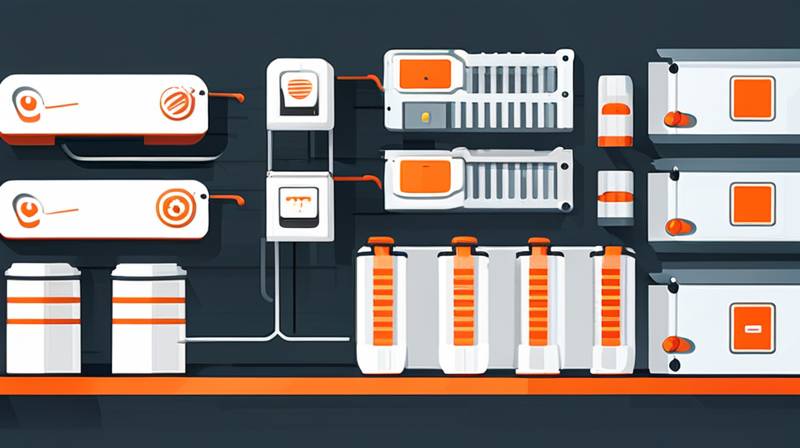
1. Stock energy storage refers to the capability of retaining electrical energy for later use, 2. It enables optimized energy consumption and stability in power supply, 3. This system plays a crucial role in integrating renewable energy, 4. The technology encompasses various approaches, such as batteries and pumped hydro storage for effective energy management in modern grids.
1. INTRODUCTION TO STOCK ENERGY STORAGE
The present-day energy landscape necessitates a transformation towards greater efficiency and reliability. As the focus shifts towards renewable energy sources such as solar and wind, the importance of effective energy storage solutions becomes paramount. Stock energy storage represents a significant advancement in this domain, allowing for the extensive retention of generated electrical power until it is needed.
Essentially, stock energy storage systems facilitate the balance between energy production and consumption. During times when energy generation surpasses demand, excess energy can be stored. Conversely, when demand exceeds generation capabilities, stored energy is released to meet consumer needs. This dynamic relationship offers versatility and robust support to the electrical grid, thus fostering a more sustainable energy future.
2. TYPES OF STOCK ENERGY STORAGE SYSTEMS
Within the realm of stock energy storage, various technologies come into play. The main categories include chemical storage (primarily batteries), mechanical storage (such as pumped hydro and compressed air), and thermal storage solutions.
CHEMICAL STORAGE SYSTEMS
Chemical storage predominantly utilizes batteries for energy retention. These systems convert electrical energy into chemical potential energy, which can be effectively stored and retrieved when necessary. Different battery types, including lithium-ion, lead-acid, and flow batteries, serve distinct applications based on factors such as discharge durations and energy capacities.
Those batteries are not merely passive recipients of electrical energy; they have advanced to include smart capabilities, allowing for real-time monitoring and optimization. As technologies improve, innovations like solid-state batteries are rising, which promise higher energy densities and longer lifespans. Battery storage systems thus embody a critical element of modern energy infrastructure.
MECHANICAL STORAGE SYSTEMS
In contrast, mechanical storage systems leverage kinetic and potential energy to achieve energy storage. Pumped hydro storage (PHS), perhaps the most widely utilized method, harnesses gravitational potential energy. During periods of low demand, electric pumps drive water to elevated reservoirs. When energy demand surges, the stored water is released, driving turbines to generate electricity.
This approach is favored for its capability to handle substantial amounts of energy over extended periods. Although PHS is geographically constrained and usually requires significant upfront investment, it is known for its reliability and minimal operational costs over time. Other mechanical systems include compressed air energy storage (CAES), which stores energy in the form of compressed air, expanding when energy is required.
3. POTENTIAL IMPACTS ON RENEWABLE ENERGY INTEGRATION
The harmonization of stock energy storage technology with renewable energy sources presents immense potential for transforming energy landscapes. As reliance on renewables grows, challenges related to intermittency become pronounced. Stock energy storage acts as a buffer, allowing renewable energy producers to smooth out generation variability.
ENHANCING GRID STABILITY
One of the most significant benefits of implementing stock energy storage is its capability to bolster grid stability. During periods when renewable generation may dip due to changing environmental conditions like cloud cover or wind patterns, stored energy can be systematically deployed to mitigate disruptions.
Utilizing advanced energy management systems, grid operators will be far better equipped to respond swiftly to fluctuations in energy supply and demand. As a result, resilience within the electrical grid is fortified, helping to prevent potential outages and ensuring consistent service delivery to consumers.
FOSTERING SUSTAINABLE DEVELOPMENT
Moreover, the proliferation of stock energy storage solutions aligns closely with sustainable development goals. These technologies provide a means for communities and industries to reduce dependence on fossil fuels, hence mitigating greenhouse gas emissions. Localized energy storage facilitates the proliferation of decentralized energy systems, promoting energy independence that can be particularly advantageous in remote areas.
As energy costs continue to decline, the economic viability of integrated stock energy storage systems advances. They present opportunities for job creation in manufacturing, maintenance, and technological innovation, ultimately contributing to a sustainable economic framework while enhancing energy resilience.
4. ECONOMIC CONSIDERATIONS AND FUTURE TRENDS
As innovations in stock energy storage technologies emerge, economic dimensions play a pivotal role in shaping deployment strategies. Evaluating the total cost of ownership and lifecycle assessments will become increasingly critical.
COST OF INSTALLATION AND RETROFITTING
The initial investment requirements for stock energy storage systems can be formidable, particularly concerning utility-scale installations. While batteries exhibit decreasing costs, other installations, like pumped hydro, require substantial infrastructure investments and geographical assessments.
However, incentives at governmental levels and declining technology costs are expected to propel wider adoption. As visibility into long-term returns on investment improves, stakeholders will be better positioned to make informed decisions that align with broader renewable energy goals.
EMERGING TECHNOLOGICAL INNOVATIONS
Looking ahead, advancements in technology will continue to reshape the landscape of stock energy storage solutions. Innovations like artificial intelligence (AI) and machine learning are enhancing predictive analytics capabilities, thereby optimizing performance and deployment strategies.
Emerging options such as lithium-sulfur and sodium-ion batteries show promise in addressing the limitations of existing storage technologies, paving the way for energy storage systems that are more efficient and sustainable. These trends indicate not only the evolving nature of stock energy storage but highlight its crucial role within the global energy transition.
5. ENVIRONMENTAL CONSIDERATIONS
Environmental implications are significant when discussing stock energy storage technologies. Each storage method comes with its unique set of ecological footprints, necessitating careful evaluations.
SUSTAINABILITY OF RESOURCES
The manufacturing of batteries, for instance, raises concerns about resource scarcity and environmental degradation. Materials like lithium and cobalt have come under scrutiny due to the environmental impacts associated with their extraction processes.
Finding sustainable alternatives and promoting recycling initiatives offer opportunities to diminish negative outcomes while also maintaining supply chains for necessary materials. The advancement of methods such as urban mining can substantially enhance the sustainability of battery technology.
LIFE CYCLE IMPACT
Beyond production, the entire life cycle assessment plays a crucial role in determining the ecological viability of stock energy storage systems. Factors involving transportation, installation, usage, and eventual recycling or disposal must be meticulously scrutinized to ascertain the overall environmental impact.
Policies encouraging circular economies can facilitate a transition towards more sustainable energy storage solutions. Implementing best practices for factory operations, logistics, and end-of-life management can contribute significantly to mitigating any adverse effects associated with stock energy storage.
6. REGULATORY FRAMEWORK AND POLICY SUPPORT
The pivotal role of regulatory frameworks and governmental policies cannot be understated in the promotion of stock energy storage technologies.
INCENTIVES AND SUBSIDIES
Governments across the globe are increasingly aware of the potential benefits provided by stock energy storage systems. Consequently, many nations have instituted incentives and subsidies aimed at stimulating growth within this sector.
Such financial support mechanisms can make the upfront capital costs more manageable and bolster confidence among investors. Transitioning to cleaner energy sources necessitates collaboration among stakeholders and policy frameworks capable of enabling innovation while ensuring stability during the transition.
SUPPORTING INFRASTRUCTURE
Furthermore, supportive infrastructure plays an equally vital role in facilitating the adoption of stock energy storage technologies. Upgrading grid systems to accommodate such innovations will be essential in their successful integration.
Given the interconnected nature of energy markets, fostering collaboration among regional authorities will be indispensable. Effective coordination through joint initiatives and shared knowledge can create synergies that expedite the transition to a sustainable energy system equipped with reliable stock energy storage solutions.
7. FUTURE OPPORTUNITIES
Envisioning the future of stock energy storage evokes promising opportunities that transcend current limitations.
INTEGRATION WITH SMART GRIDS
The convergence of stock energy storage with smart grid technologies is especially noteworthy. The ability to deploy automated resource management systems can significantly enhance efficiency.
Smart grids equipped with real-time analytics and predictive capabilities will empower stakeholders with insights to optimize energy generation, consumption, and storage. This integration fosters demand response systems, enabling flexibility that suits varying consumer needs.
GLOBALLY SCALABLE SOLUTIONS
The opportunity for stock energy storage to offer solutions at both micro and macro levels is compelling. Developing scalable energy models tailored for diverse geographic and socio-economic contexts can ensure that communities worldwide can harness the benefits.
Microgrid arrangements powered by local stock energy storage could transform the nature of energy access in remote regions where traditional infrastructure investment might be prohibitive. Enabling energy resilience across multiple tiers of supply will be essential for achieving global energy equity.
COMMON QUESTIONS
WHAT ARE THE BENEFITS OF STOCK ENERGY STORAGE IN RENEWABLE SYSTEMS?
Stock energy storage offers several benefits when integrated with renewable energy systems. Firstly, it allows for balancing intermittent energy production, such as solar and wind generation, which inherently fluctuates. For instance, on sunny days, excess energy generated through solar panels can be stored and utilized during the night when production ceases. This capacity to store surplus energy aids in eliminating wastefulness while providing reliability during peak consumption times.
Moreover, stock energy storage enhances grid stability. It serves as a buffer against fluctuations in supply and demand, effectively fostering a more resilient electricity infrastructure. Such facilities can sustain electrical output during peak usage, thereby alleviating the burden on power plants. Furthermore, lower dependence on fossil-fuel-based energy sources contributes to a reduction in greenhouse gas emissions, aligning with broader sustainability goals. As the landscape evolves, advances in technology and decreasing costs will likely enhance the role of stock energy storage in promoting renewables.
HOW DO DIFFERENT TYPES OF STOCK ENERGY STORAGE COMPARE?
Each stock energy storage technology exhibits unique characteristics that cater to varying requirements and use cases. Chemical energy storage, exemplified by batteries, provides quicker discharge rates, making them suitable for short-term applications and peak shaving. For instance, lithium-ion batteries are prevalent in electric vehicle applications, where rapid energy supply is essential for performance.
Conversely, mechanical storage systems like pumped hydro or compressed air typically manage larger capacities over longer durations, making them ideal for balancing the grid over extended periods. Their dependence on geography can limit implementation but can establish a robust foundation for larger-scale energy demands. Thermal storage, like molten salt energy storage, is particularly valuable in concentrating solar applications because it retains heat generated during production hours for later energy release. Consequently, selecting an appropriate storage technology involves considering relevant factors like cost, application, and distribution needs for optimal performance.
WHAT ARE THE FUTURE TRENDS IN STOCK ENERGY STORAGE?
The horizon for stock energy storage is bright, with several emerging trends poised to reshape the industry. One paramount shift is the ongoing decrease in costs associated with battery technologies, particularly lithium-ion and alternatives such as solid-state or sodium-ion batteries. These advancements will significantly enhance the financial feasibility of widespread adoption for diverse applications.
Moreover, the intersection of stock energy storage with smart grid technologies is accelerating. The utilization of advanced analytics through artificial intelligence and machine learning promises to optimize energy allocation and user engagement effectively. Expectations for decentralized energy systems are also gaining traction, facilitating greater consumer participation in energy production and retention.
Additionally, the adoption of circular economy principles within the battery supply chain will become increasingly relevant. Efforts to recycle and repurpose old batteries will help alleviate concerns regarding resource scarcity and environmental impacts. In this evolving landscape, regulatory support, innovative financing solutions, and collaborative efforts between various stakeholders will further drive progress within stock energy storage technologies.
The exploration of stock energy storage reveals critical insights into the foundations that underpin energy management in our shifting world. By providing capacity for retaining electrical energy, stock energy storage serves as a cornerstone of modern efficiency and resilience, allowing communities to better harness renewable resources while addressing consumption challenges. This comprehensive perspective highlights both the multifaceted nature of the technology and the complex web of interrelated considerations spanning economics, environmental impacts, and infrastructural support. The future promises transformation through advancements in technology and strategy that will not only facilitate cleaner energy transitions but will act as a catalyst for sustainability initiatives worldwide. As energy systems continue to evolve, stock energy storage stands poised to play a central role, ensuring energy security while driving innovative pathways towards sustainable development. With a proactive approach to integrating these systems into existing frameworks, society can unlock the tremendous potential of energy autonomy, embracing a future heralded by cleaner, smarter, and more resilient energy solutions.
Original article by NenPower, If reposted, please credit the source: https://nenpower.com/blog/what-does-stock-energy-storage-mean/

