

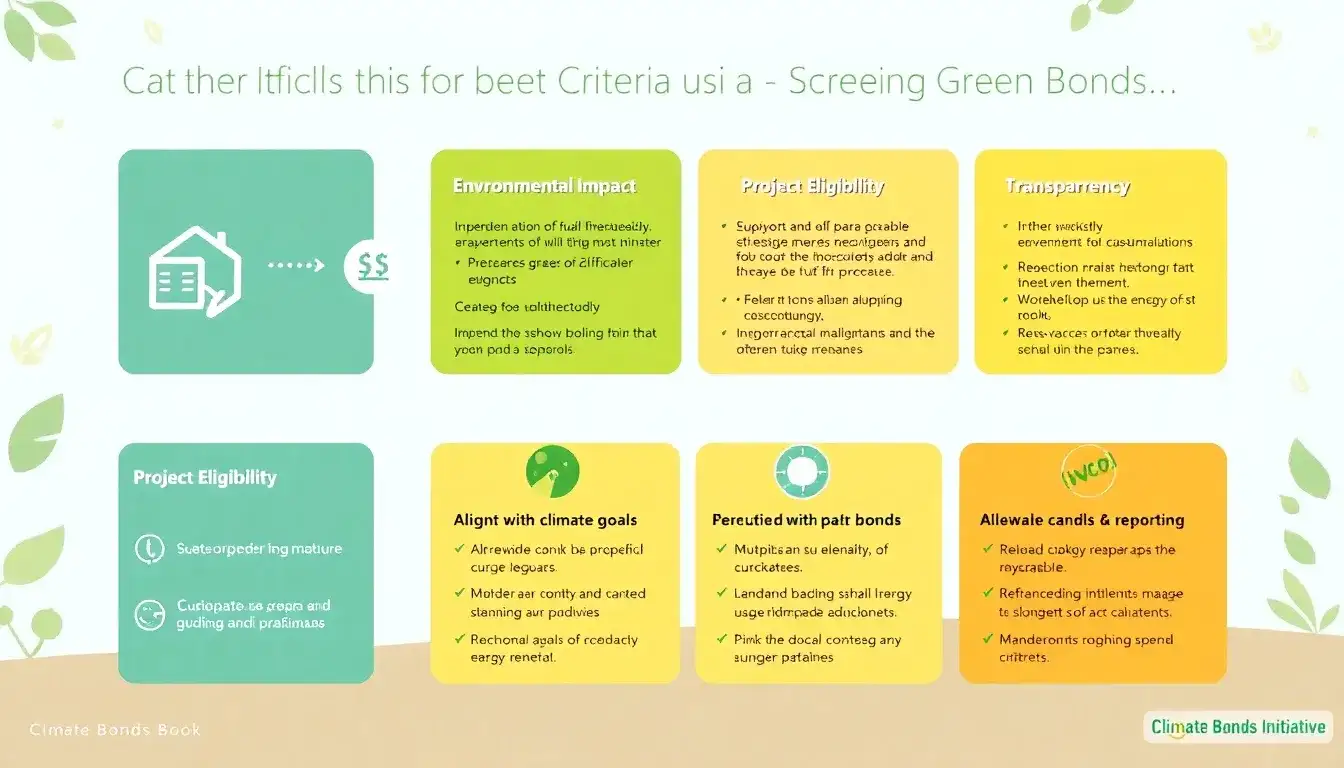
The Climate Bonds Initiative uses a rigorous methodology to screen green bonds, ensuring they align with climate change mitigation and adaptation goals. The main criteria used in this process include:
Key Screening Criteria
- Climate Bonds Taxonomy: This provides broad guidelines on eligible sectors and subsectors that align with the Paris Agreement’s goal of limiting global warming to below 2°C.
- Sector Criteria: These are sector-specific requirements developed through multi-stakeholder engagement, including technical and industry working groups. Available criteria cover sectors such as energy, transport, natural capital, buildings, industry, and waste.
- Use of Proceeds (UoP): Bonds must allocate at least 90% of their net proceeds to assets or projects that align with the sector criteria and contribute to climate mitigation or adaptation.
- Certification Process: Bonds are certified through a labelling scheme that verifies their adherence to the Climate Bonds Standard, ensuring that they meet the established criteria for climate integrity.
These criteria are designed to ensure that bonds labelled as “green” genuinely contribute to reducing greenhouse gas emissions and supporting climate resilience, aligning with global climate goals.
Original article by NenPower, If reposted, please credit the source: https://nenpower.com/blog/what-criteria-does-the-climate-bonds-initiative-use-to-screen-green-bonds/

