

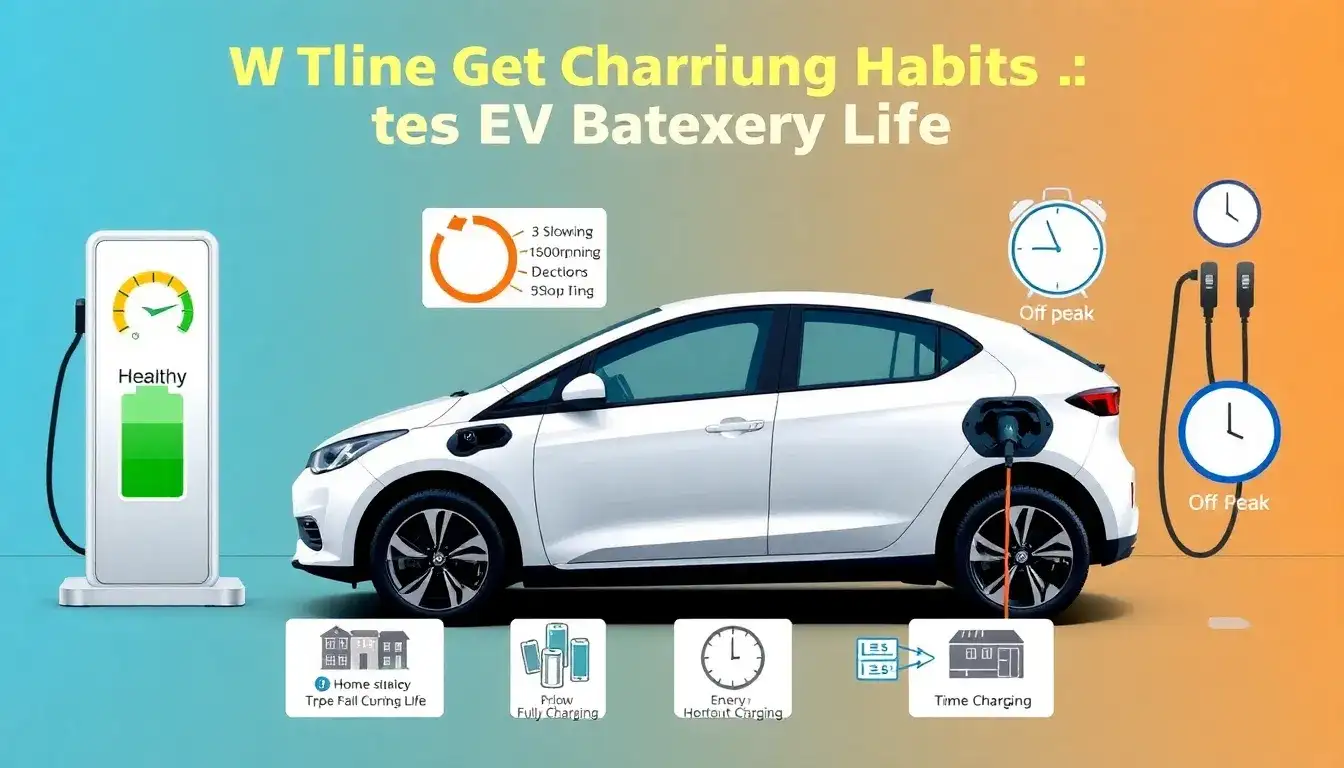
To maximize EV battery lifespan, follow these charging practices:
Charge Level Management
Apply the 20-80% rule
Keep the battery’s state of charge (SOC) between 20% and 80% for daily use. This reduces stress on lithium-ion cells compared to full 0-100% cycles. Avoid letting the battery drop below 20% for extended periods, as deep discharges strain components.
Fast Charging Limitations
Minimize DC fast charging (DCFC)
Frequent use of DCFC accelerates degradation due to high heat generation. Reserve rapid charging for trips and prioritize Level 1/2 charging for daily needs. Geotab data shows DCFC-heavy users in hot climates experience faster capacity loss.
Charging Frequency
Avoid unnecessary charging
Don’t plug in after every short drive. Instead, charge when the battery nears 20-30%. This reduces charge cycles, as lithium-ion batteries degrade slightly with each cycle regardless of depth.
Environmental Considerations
Mitigate temperature extremes
Park in shaded or climate-controlled areas when possible. High heat accelerates chemical wear, while extreme cold temporarily reduces range and charging efficiency (though modern battery systems actively manage these conditions).
Key Additional Tips
- Leave buffer room: Charging to 80% preserves regenerative braking capability, which gets disabled near full capacity.
- Storage prep: If storing the EV, maintain 30-50% SOC to prevent deep discharge.
- Manufacturer guidance: Some automakers recommend specific SOC limits (e.g., 90% max) for certain models – always consult your manual.
Original article by NenPower, If reposted, please credit the source: https://nenpower.com/blog/what-charging-habits-are-best-for-extending-ev-battery-life/

