

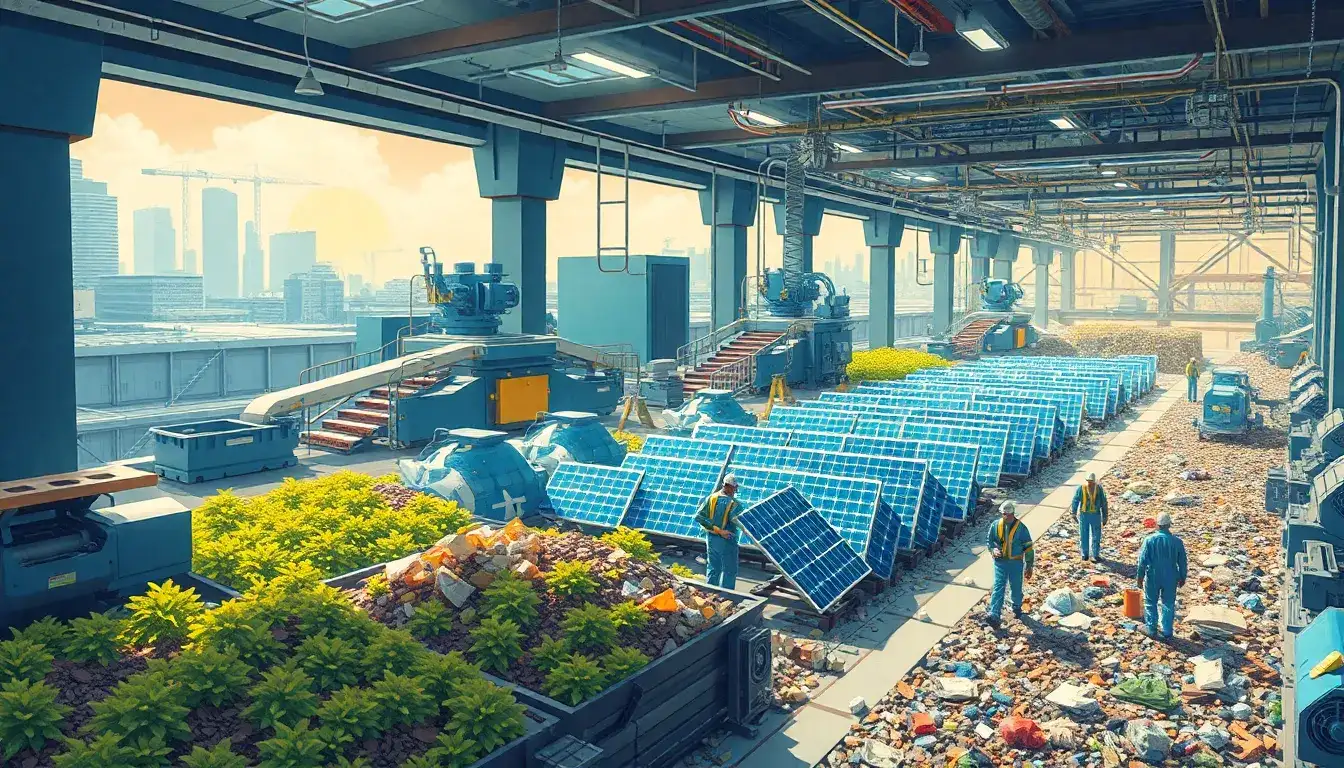
Recycling solar panels presents several significant challenges that hinder the development of an efficient and sustainable end-of-life management system for photovoltaic (PV) waste. These challenges span technological, economic, regulatory, and logistical aspects:
Key Challenges in Solar Panel Recycling
1. Lack of Standardization in Panel Composition
Solar panels contain a complex mix of materials including various types of silicon, glass, metals such as copper, aluminum, and valuable elements like silver and gallium. The diversity is compounded by different technologies, such as crystalline silicon and thin-film modules, each requiring distinct recycling processes. This variability makes it difficult to standardize and optimize recycling methods effectively.
2. Technological Difficulties in Material Recovery
Current recycling technologies are rudimentary and often unable to recover all valuable materials at high purity. For example, unbinding the glass from solar cells is a significant technical hurdle. Higher purity recovery increases market value and economic incentives but involves more complex, costly processes. The lack of a consensus on the best recycling approach further complicates efforts.
3. Economic Viability
Recycling solar panels is expensive due to the intricate processing needed and limited markets for recovered materials. The balance between recovering high-purity materials and cost-efficiency is a major dilemma. Without significant improvements in recovery methods and economies of scale, the economic case for recycling remains weak.
4. Limited Collection and Logistics Infrastructure
Establishing a wide-ranging collection and transport system for end-of-life solar panels is challenging. Panels are geographically dispersed, ranging from small residential installations to large solar farms. The lack of unified collection systems and the complexity brought by panel diversity complicate logistics, reducing efficiency and increasing costs.
5. Hazardous Materials and Environmental Concerns
Solar panels contain potentially toxic substances that pose environmental and human health risks if panels are disposed of improperly. Effective extraction and neutralization methods for hazardous materials are necessary to mitigate these risks, requiring further technological development.
6. Regulatory and Business Model Issues
While there are some regulations (e.g., EU mandates to recycle at least 80% of panel mass and new rules in Washington State requiring manufacturer end-of-life plans), worldwide regulatory frameworks are still evolving. Innovative business models, such as manufacturers retaining ownership of panels and providing them as a service, are being explored to improve recycling rates and responsibility.
Summary Table of Challenges and Opportunities
| Challenges | Opportunities for Improvement |
|---|---|
| Lack of standardization in panel materials | Design panels for easier disassembly and recycling |
| Technical difficulty in material separation | Develop advanced chemical and mechanical recycling methods |
| High cost and economic challenges | Increase recovery purity and scale up recycling facilities |
| Fragmented collection and logistics | Establish centralized collection networks and infrastructure |
| Hazardous materials management | Innovate safer extraction and neutralization technologies |
| Regulatory inconsistencies | Implement stronger, harmonized policies and incentivize take-back programs |
Addressing these challenges through technological innovation, improved regulations, industry collaboration, and new business models is essential to create a sustainable, circular economy for solar panels and to maximize the environmental benefits of solar energy.
Original article by NenPower, If reposted, please credit the source: https://nenpower.com/blog/what-challenges-exist-in-the-recycling-of-solar-panels/

