

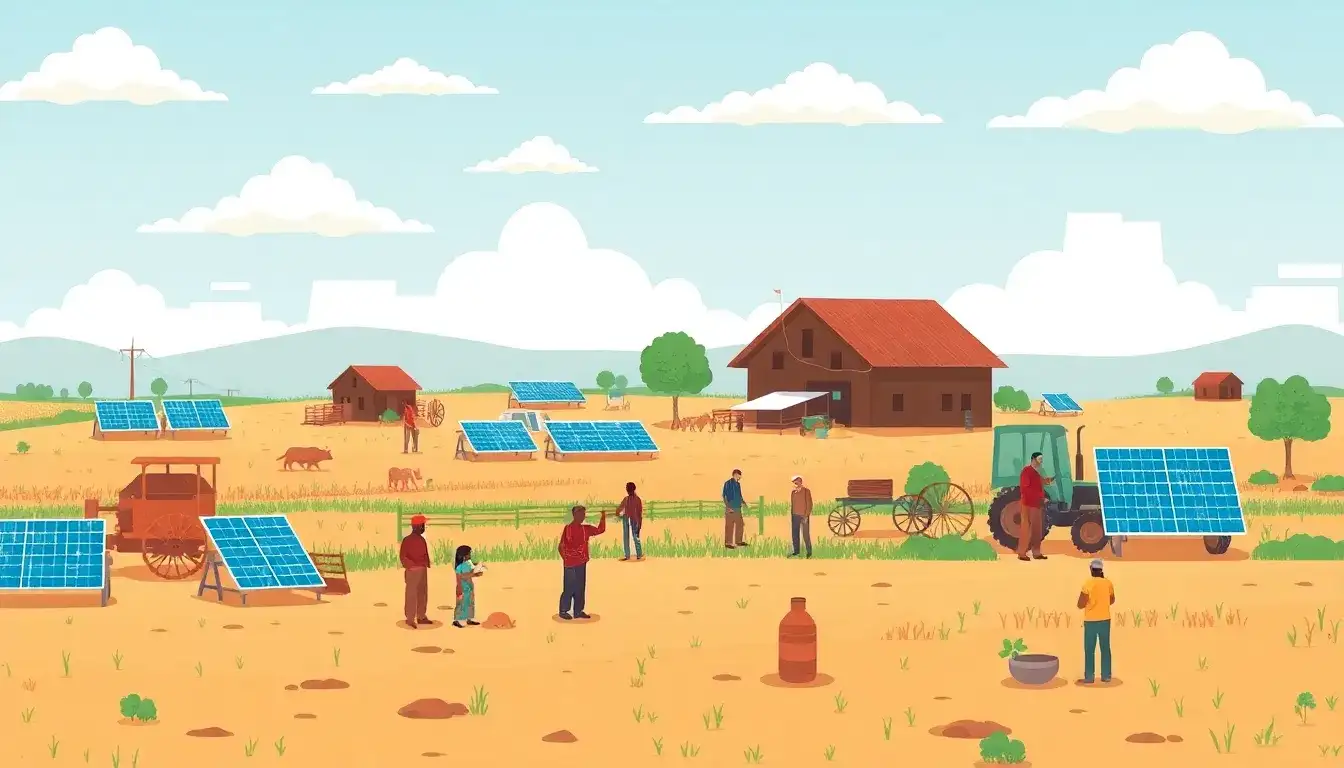
Rural communities face several significant challenges when implementing solar energy projects:
1. High Upfront Costs and Financing Barriers
Although solar technology costs have decreased, the initial capital required for solar installations—especially larger systems like mini-grids—remains a major obstacle. Many rural households and businesses have limited financial resources to afford these upfront expenses. Additionally, rural areas often lack access to financing options such as bank loans, microloans, or leasing programs, further complicating project funding.
2. Lack of Existing Infrastructure
Rural locations frequently suffer from poor infrastructure, including inadequate roads and communication networks. This lack of infrastructure hinders the transport of solar equipment and materials to remote sites and complicates ongoing system maintenance and monitoring.
3. Limited Technical Capacity and Support
There is often a shortage of qualified technicians and installers in rural communities to install, maintain, and repair solar energy systems. Without local technical expertise and service providers, sustaining the operation of solar projects is difficult, impacting long-term reliability.
4. Community Acceptance and Awareness
Introducing solar technology can face social and cultural resistance. Some rural communities may distrust new technologies or be unfamiliar with renewable energy benefits. Successful projects require meaningful community engagement and customized approaches to address local needs and concerns.
5. Maintenance and Sustainability Challenges
Ensuring long-term operation is difficult when spare parts are unavailable locally, and technical knowledge is scarce. Sustainable solar deployment depends on creating local supply chains and maintenance networks for ongoing support.
6. Additional Challenges
- Transportation costs to remote areas can be particularly high, increasing overall project costs.
- Interconnection processes with existing energy grids can be complex and slow, delaying project implementation.
In summary, rural solar projects must overcome financial, infrastructural, technical, social, and logistical hurdles to achieve successful and sustainable deployment. Addressing these challenges requires integrated solutions such as financing support, capacity building, community involvement, and infrastructure development.
Original article by NenPower, If reposted, please credit the source: https://nenpower.com/blog/what-challenges-do-rural-communities-face-when-implementing-solar-energy-projects/

