

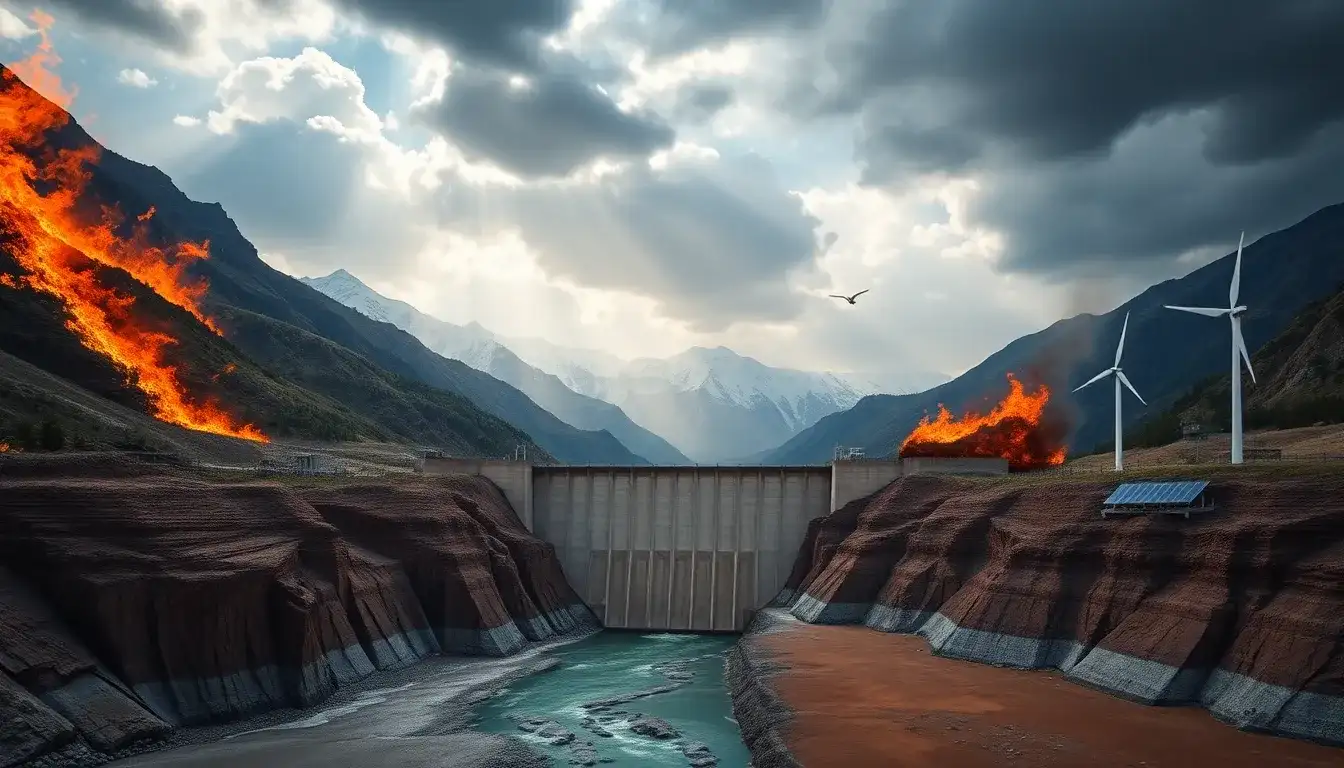
Regions with high reliance on hydropower face several significant challenges due to climate change, primarily stemming from altered water availability and hydrological patterns:
- Reduced water availability from droughts and changing precipitation: Many hydropower systems depend on consistent river flows fed by rainfall, snowmelt, or glaciers. Climate change is increasing the frequency and severity of droughts in many regions globally, such as the southwestern United States, southern Africa, Brazil, and parts of Central America and Mexico. This leads to lower river flows and reservoir levels, directly reducing hydropower generation capacity. For example, by 2050, 61% of global hydropower dams will be situated in basins at extremely high risk of droughts or floods, threatening reliable power supply.
- Glacier retreat and reduced snowmelt: In mountainous regions such as the Andes and parts of Asia, glaciers and snowpack are critical sources of river flow. Climate-induced glacier depletion and diminished snowmelt shorten the periods of high water availability, thereby reducing the seasonal water input needed for hydropower generation. The Andes face significant reductions in streamflow due to glacier loss, which compromises power generation. However, regions with large reservoirs and reliance on diverse water sources, like the Alps, may be less affected by glacier retreat.
- Increased hydrological variability and extreme weather: Climate change is causing increased year-to-year variability in precipitation and river flows, resulting in more frequent extremes such as floods and droughts. Hydropower systems must manage both too little water during droughts and too much during floods, which complicates reservoir operations and power planning. This variability challenges the stability and predictability of hydropower output, for example in Latin America, where capacity factors fluctuate significantly under different greenhouse gas scenarios.
- Rising water demand and evaporation: Higher temperatures increase evaporation from reservoirs and soils, reducing water availability for hydropower. Additionally, competing demands for water from agriculture, industry, and urban areas intensify under climate stress, limiting the water allocated for power generation.
- Ecological and biodiversity impacts: Hydropower dams already contribute to significant declines in freshwater biodiversity by disrupting river ecosystems. Climate change exacerbates these pressures, increasing risks to biodiversity where hydropower dams are located, especially as many new dams are planned in ecologically sensitive regions.
In summary, regions highly dependent on hydropower face multifaceted challenges from climate change, including diminished and more variable water resources due to droughts, glacier retreat, altered precipitation patterns, and increased evaporation, all of which threaten the reliability and sustainability of hydropower generation. Some regions may see seasonal or overall declines in capacity, which can be severe under high greenhouse gas emission scenarios. These challenges call for adaptive management, diversification of energy sources, and integrated water resource planning to maintain hydropower’s role in a changing climate.
Original article by NenPower, If reposted, please credit the source: https://nenpower.com/blog/what-challenges-do-regions-with-high-hydropower-reliance-face-due-to-climate-change/

