

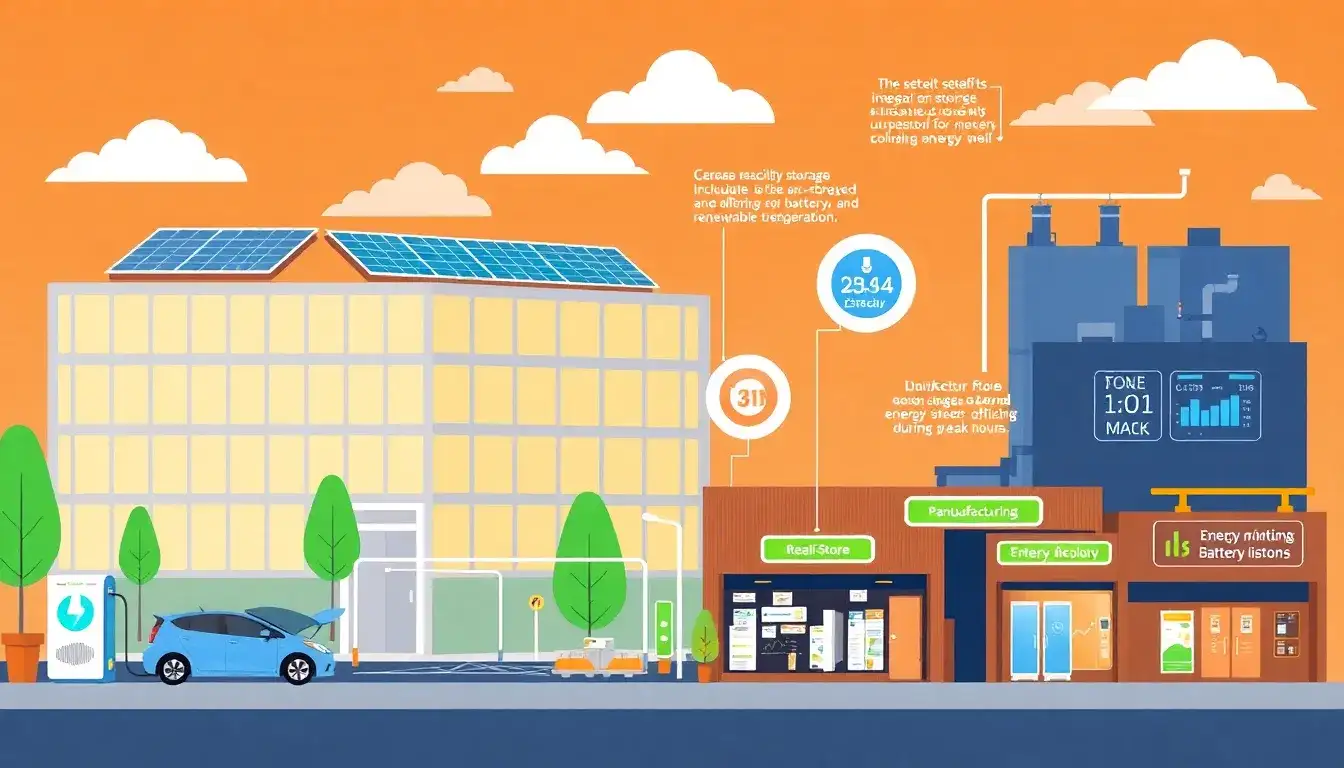
Typical Use Cases for Commercial Battery Energy Storage Systems
1. Demand Charge Management
BESS help businesses reduce peak demand charges by storing energy during periods of low usage and discharging it during peak demand times. This reduces the peak grid energy drawn, lowering demand charges imposed by utilities on commercial customers.
2. Backup Power and Resilience
Commercial BESS provide critical backup power during grid outages, ensuring uninterrupted operations for businesses that require continuous power, such as hospitals, refrigerated facilities, data centers, and manufacturing plants. This enhances business resilience and reliability.
3. Support for Renewable Energy Integration
These systems store excess energy generated by on-site renewable sources, such as solar panels, during periods of high production (e.g., daytime) and release it when renewable generation is low or unavailable (e.g., night time). This enables better use of renewable energy and reduces dependence on the grid.
4. Load Shifting and Energy Cost Optimization
By strategically programming battery usage based on energy prices and peak demand periods, businesses can optimize electricity consumption patterns. This lowers overall energy costs and improves operational efficiency.
5. Electric Vehicle (EV) Charging Load Management
With the growing adoption of EVs, commercial battery storage systems help manage the demand of EV charging stations by storing power during low grid demand periods and supplying it during high demand. This prevents overloads and maintains stable power delivery to EV chargers.
6. Participation in Grid Services and Demand Response
Commercial BESS can participate in demand response programs or provide ancillary services to the grid, such as frequency regulation and voltage support. These capabilities can generate additional revenue or cost savings for businesses.
7. Environmental Sustainability
By facilitating the use of renewable energy and reducing peak grid consumption, BESS help commercial entities lower their carbon footprint and meet sustainability goals.
Summary Table of Commercial BESS Use Cases
| Use Case | Description |
|---|---|
| Demand Charge Management | Reduces peak energy costs by discharging stored energy during peak demand periods |
| Backup Power | Provides uninterrupted power supply during grid outages |
| Renewable Energy Support | Stores excess solar or wind energy for use when generation is low |
| Load Shifting & Cost Optimization | Optimizes energy use based on price & demand cycles to reduce electricity expenses |
| EV Charging Load Management | Balances load for EV chargers by storing energy during low grid demand |
| Grid Services & Demand Response | Enables participation in grid stability programs and potential additional revenue streams |
| Environmental Sustainability | Supports carbon footprint reduction through increased renewable energy use |
These capabilities make commercial battery energy storage systems a key technology for modern energy management, enhancing efficiency, resilience, and sustainability across various types of commercial and industrial facilities.
Original article by NenPower, If reposted, please credit the source: https://nenpower.com/blog/what-are-the-typical-use-cases-for-battery-energy-storage-systems-in-commercial-settings/

