

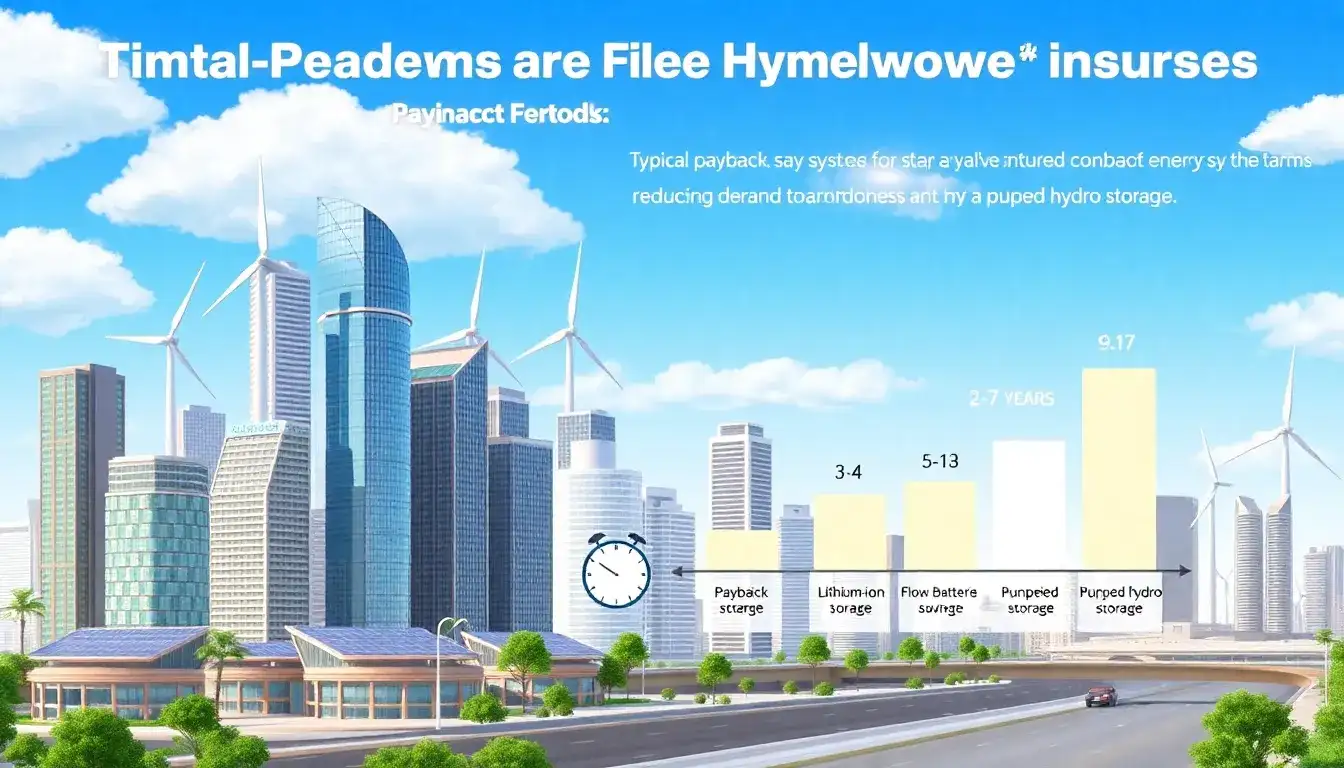
The payback periods for energy storage systems, particularly those used to reduce demand charges, vary based on several factors including the technology used, local energy rates, and available incentives. Here are some typical payback periods for different energy storage systems:
- Lithium-Ion Batteries: These batteries are highly effective for demand charge reduction, especially in systems with larger power to energy ratios. In markets with high demand charges, lithium-ion energy storage systems can have payback periods under 5 years.
- Solar-Plus-Storage Systems: Adding solar batteries to solar panel systems can shorten the payback period compared to solar-only setups. Even with a higher upfront investment, solar-plus-storage systems can offer a 30% faster payback period due to increased savings from optimizing energy self-consumption and reducing reliance on grid electricity.
- General Energy Storage Systems: The payback period for energy storage systems, especially in commercial settings, is influenced by factors like energy usage, system size, local utility rates, and incentives. With proper installation and incentives, energy storage systems can provide significant financial returns by reducing peak demand charges and enhancing grid independence.
Overall, the payback period for energy storage systems aimed at reducing demand charges can range from less than 5 years in optimal scenarios to longer periods depending on the specific conditions and technologies used.
Original article by NenPower, If reposted, please credit the source: https://nenpower.com/blog/what-are-the-typical-payback-periods-for-energy-storage-systems-used-to-reduce-demand-charges/

