

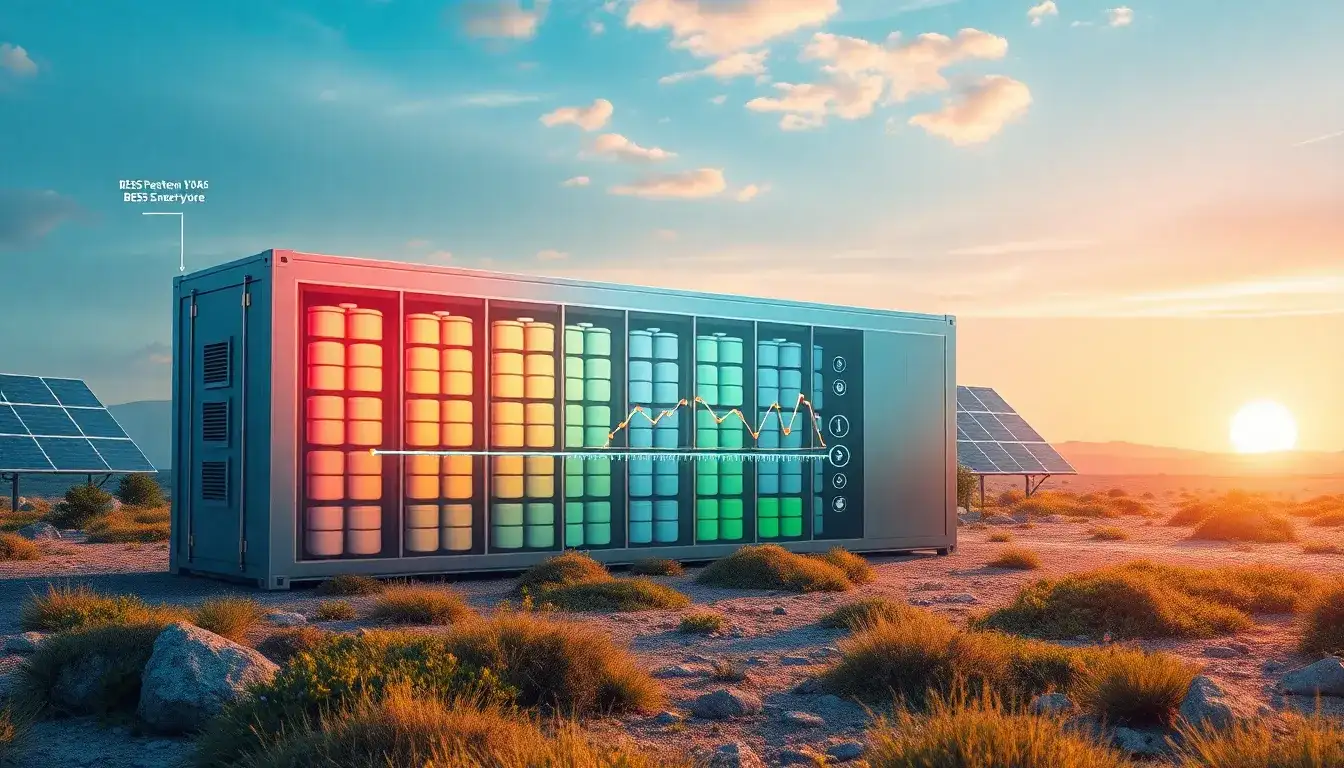
Battery Energy Storage Systems (BESS) experience various losses over time due to several factors, impacting their efficiency and capacity. Here are the typical losses associated with BESS systems:
Types of Losses
- Capacity Losses:
- Irreversible Losses: These occur due to battery aging, manufacturing discrepancies, or environmental factors, leading to permanent degradation of battery cells. In series-connected systems, variability in cell capacities results in overall system performance being limited by the weakest cell.
- Reversible Losses: These are often caused by state-of-charge (SOC) imbalances or SOC estimation errors. Proper management strategies can mitigate these losses by balancing SOC levels across cells and recalibrating SOC estimators.
- Efficiency Losses:
- Round-Trip Efficiency (RTE): BESS typically have an RTE of around 80-85%, meaning 15-20% of the energy input is lost during cycling due to factors like charging and discharging inefficiencies.
- Energy Losses: For example, in a system like MISO Future 2A, significant energy is lost, especially in heating during charging and discharging cycles, impacting overall system efficiency.
- Operational Losses:
- Self-Discharge: Batteries can lose charge over time when not in use.
- Coulomb Efficiency (CE): CE measures the efficiency of storing and releasing energy during a cycle. Lower CE indicates more energy lost during each cycle.
Causes and Mitigation Strategies
- Operational Factors: Frequent charging and discharging can lead to faster degradation. Optimal charging strategies can help minimize this.
- Environmental Factors: High temperatures can accelerate degradation, making thermal management crucial.
- Design and Management: Proper design, balancing techniques, and SOC estimation strategies can help mitigate losses and extend system lifespan.
Economic and Environmental Implications
- Economic Impact: Efficiency and capacity losses over time can significantly impact the financial performance of BESS systems, making the cost of deploying and maintaining them higher.
- Environmental Implications: Higher energy demands for charging BESS can increase resource usage and potentially lead to higher greenhouse gas emissions if the charging energy comes from fossil fuels.
Original article by NenPower, If reposted, please credit the source: https://nenpower.com/blog/what-are-the-typical-losses-associated-with-bess-systems-over-time/

