

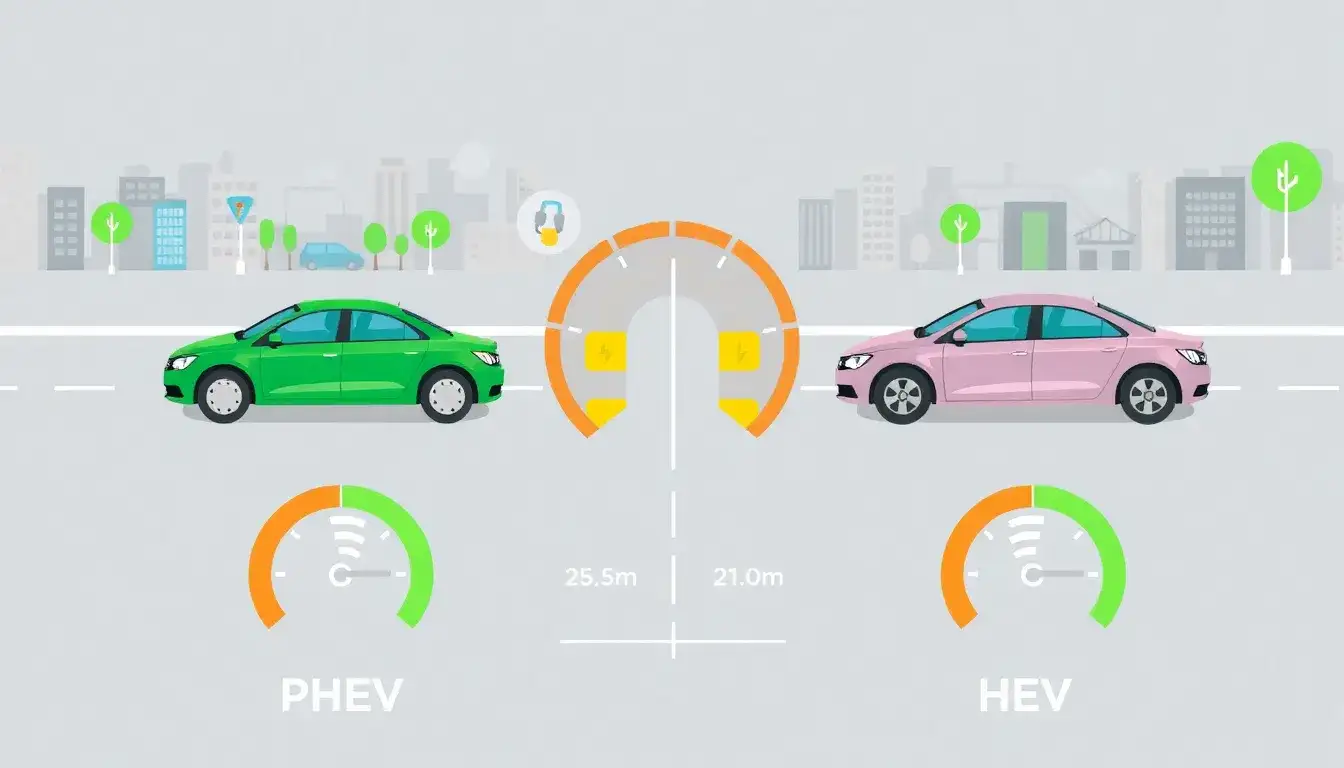
Typical Fuel Consumption Rates for PHEVs and HEVs in Urban Driving Conditions
Plug-in Hybrid Electric Vehicles (PHEVs)
- Fuel Consumption Rates: In urban driving conditions, PHEVs are generally more fuel-efficient than traditional internal combustion engine vehicles. However, their real-world fuel consumption can be significantly higher than type-approval values, often two to four times higher. This deviation increases if the vehicle is not frequently charged or used extensively for longer trips.
-
Factors Influencing Fuel Consumption: Key factors affecting PHEV fuel efficiency include:
- Charging Frequency: Regular charging improves fuel efficiency.
- All-Electric Range: Longer ranges can enhance efficiency in urban settings where trips are typically shorter.
- Driver Behavior: Aggressive driving reduces efficiency.
- Urban Efficiency: PHEVs are more efficient in urban environments due to stop-and-go traffic, which optimizes electric mode usage.
Hybrid Electric Vehicles (HEVs)
- Fuel Consumption Rates: HEVs typically offer better fuel economy compared to conventional vehicles but are less efficient than PHEVs over short trips where electric mode can be maximized.
-
Factors Influencing Fuel Consumption: Key factors include:
- Route Type: City driving benefits from stop-and-go traffic.
- Driver Behavior: Smooth acceleration enhances efficiency.
- System Design: Optimized hybrid systems can improve urban fuel economy.
- Urban Efficiency: HEVs are efficient in urban environments due to their ability to optimize engine use during stop-and-go driving, but they lack the electric-only capability of PHEVs for significant parts of trips.
Comparison
- Short Trips: PHEVs are more fuel-efficient if charged regularly, but their efficiency drops significantly if not charged. HEVs maintain consistent efficiency regardless of charging but are generally less efficient than well-charged PHEVs.
- Long Trips: HEVs can be more fuel-efficient on longer trips due to their optimized hybrid systems, while PHEVs revert to conventional fuel use once their electric range is depleted.
In summary, both PHEVs and HEVs offer better fuel efficiency in urban driving compared to conventional vehicles, with PHEVs being more efficient on short trips when regularly charged and HEVs maintaining consistent efficiency across various conditions.
Original article by NenPower, If reposted, please credit the source: https://nenpower.com/blog/what-are-the-typical-fuel-consumption-rates-for-phevs-and-hevs-in-urban-driving-conditions/

