

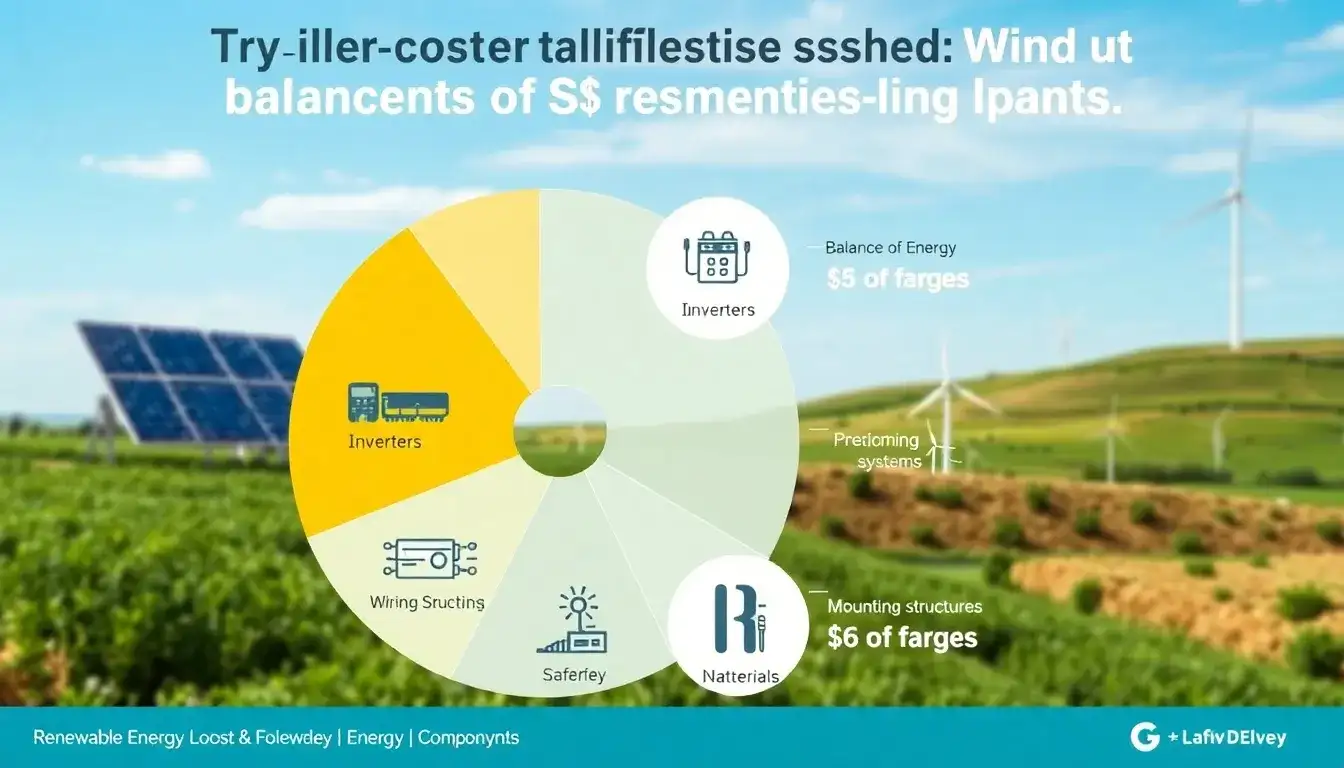
The costs associated with the balance of system (BoS) components in solar power systems vary widely depending on the type of installation (residential, commercial) and the specific components included. Generally, BoS components can account for approximately 10% to 50% of the total cost of a solar PV system, depending on the complexity and scale of the project. Here is a breakdown of typical costs associated with BoS components:
Types of BoS Costs
- Non-Module Hardware Costs:
- Inverters: Convert DC power from solar panels to AC power for home or grid use. Costs can vary significantly based on brand and efficiency.
- Racking and Mounting: Necessary for safely and securely installing solar panels. Costs depend on the type of racking system and the complexity of installation.
- Cabling: Includes both DC and AC cables necessary for connecting components. Prices vary based on the quality and length of cabling required.
- Grid Connection Equipment: Includes transformers, switchgear, and other components required to connect to the electrical grid. These costs can be substantial for large-scale installations.
- Monitoring and Control Systems: Enable remote monitoring and control of the solar system. Costs depend on the sophistication of the system.
- Installation Costs:
- Mechanical Installation: Includes site preparation, construction of internal roads, and installation of racking systems.
- Electrical Installation: Covers the installation of electrical components such as DC and AC wiring and inverters.
- Inspection and Supervision: Costs associated with ensuring that the installation meets regulatory and safety standards.
- Soft Costs:
These include permitting, labor costs, inspection fees, and other expenses not directly related to hardware.
Average Cost Breakdown
- Residential Systems: BoS costs can range from approximately 10% to 30% of the total system cost, though this can vary based on system complexity and local labor prices.
- Commercial Systems: BoS components might account for about 40% of total costs, especially in large-scale solar farms.
Overall, while solar panel prices have decreased significantly over time, the cost of BoS components remains a significant portion of the total system cost due to the diverse range of components needed to ensure system efficiency and reliability.
Original article by NenPower, If reposted, please credit the source: https://nenpower.com/blog/what-are-the-typical-costs-associated-with-the-balance-of-system-bos-components/

