

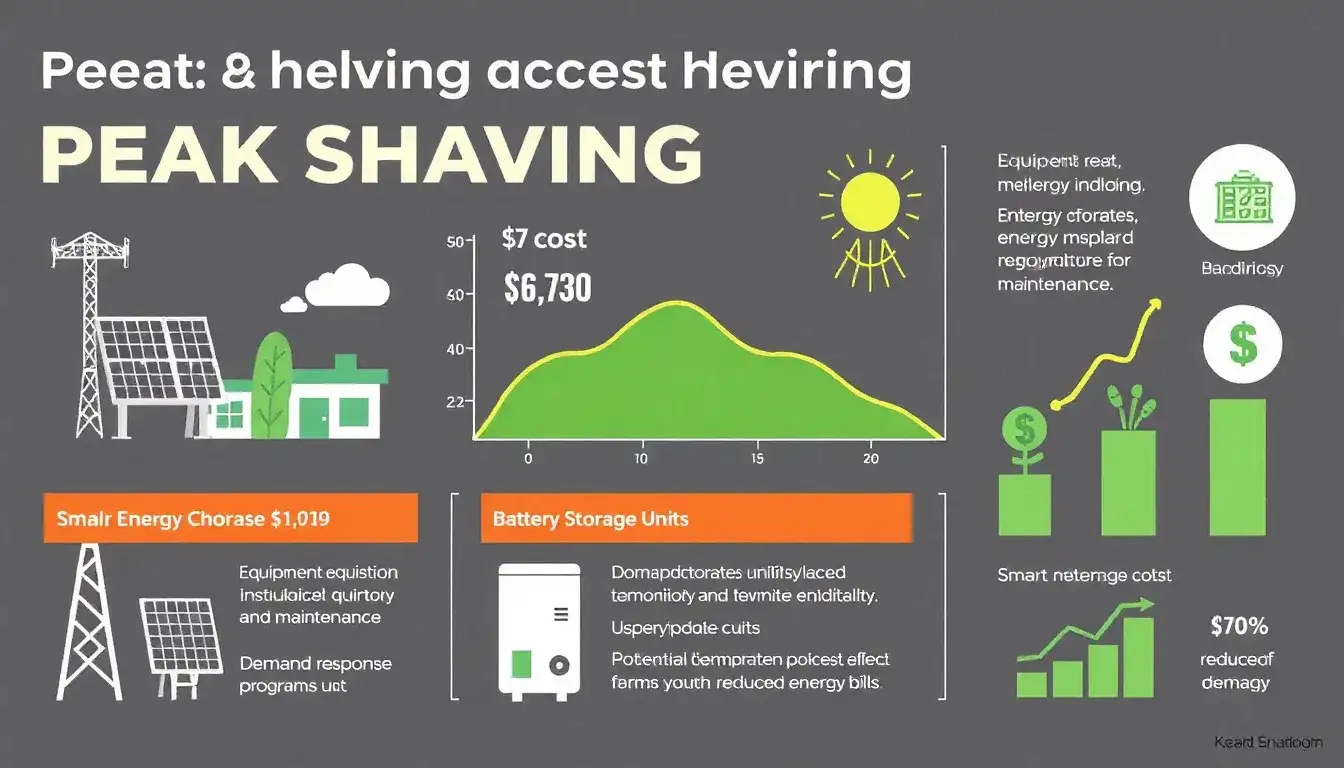
Implementing Peak Shaving Strategies
Implementing peak shaving strategies can involve various costs, depending on the methods employed. Here’s a breakdown of typical costs associated with common peak shaving methods:
1. On-Site Generation Systems
- Solar Panels: The cost of installing solar panels can vary widely based on the size of the system and local installation costs. For commercial installations, prices range from $1.50 to $3.50 per watt, meaning a 100 kW system could cost between $150,000 and $350,000.
- Natural Gas Generators or CHP Plants: These can be more expensive than solar, with costs typically higher due to equipment and fuel expenses. Initial installation costs can be substantial, often ranging from tens of thousands to hundreds of thousands of dollars depending on capacity.
2. Battery Energy Storage Systems (BESS)
- Initial Investment: The upfront cost of BESS is significant but can vary depending on the technology, capacity, and vendor. For example, lithium-ion batteries, the most common type, can cost between $300 to $600 per kilowatt-hour (kWh) of capacity. A 1 MWh system, therefore, could cost between $300,000 and $600,000.
- Installation and Maintenance Costs: Additional expenses include installation, which can add tens of thousands of dollars, and ongoing maintenance costs.
3. Load Curtailment and Load Shifting Technologies
- Automation and Control Systems: Modern energy management systems that enable load curtailment or shifting can cost significantly less than on-site generation or storage, often requiring an initial investment in the tens of thousands of dollars. These systems automate the reduction of energy use during peak periods by adjusting HVAC settings, lighting, etc.
4. Other Costs and Considerations
- Energy Management Software: Costs for advanced energy management software can vary widely depending on the complexity and scale of operations. However, these tools are essential for optimizing peak shaving strategies.
- Grid Integration Fees: While peak shaving reduces demand charges, integrating on-site systems with the grid may involve additional fees.
Potential Savings
While the initial costs can be significant, peak shaving can lead to substantial savings over time. For example, reducing peak demand can lower demand charges, which are often a substantial part of a commercial electricity bill. The savings from peak shaving depend on factors such as electricity pricing structures, demand charges, and the effectiveness of the peak shaving strategy implemented.
In summary, while the initial investment in peak shaving technologies can be considerable, the long-term cost savings from reduced electricity bills can make these strategies financially viable for many businesses.
Original article by NenPower, If reposted, please credit the source: https://nenpower.com/blog/what-are-the-typical-costs-associated-with-implementing-peak-shaving/

