

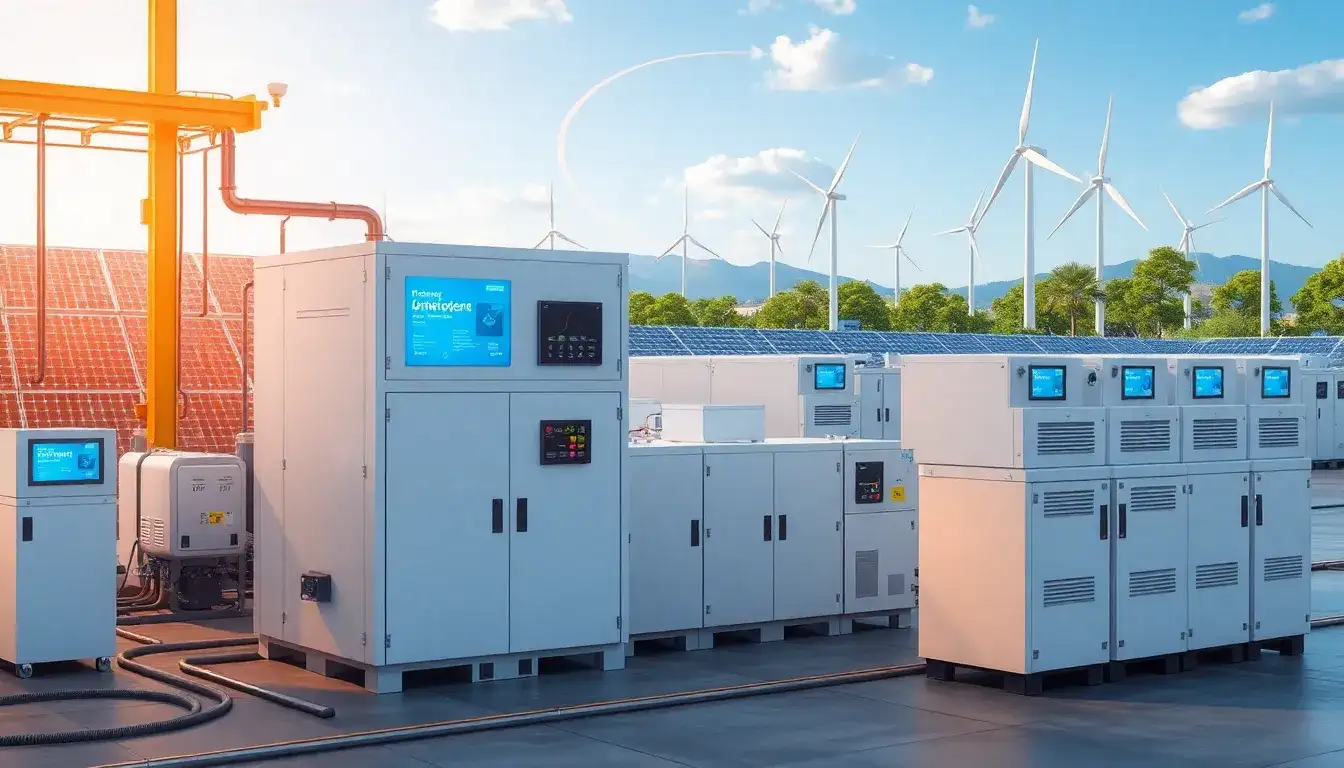
Commercial battery energy storage systems (BESS) typically have capacities ranging from tens of kilowatt-hours (kWh) for small businesses to thousands of kWh for large industrial operations. Key details include:
Capacity Ranges
- Small-scale commercial:
- 60–400 kWh (e.g., Ampowr’s commercial systems).
- ~192 kWh for integrated solutions like Exro’s Cell Driver™.
- Industrial:
- 400 kWh–10 MWh, scaling with power conversion systems (PCS) of 200 kW–5 MW.
- General commercial:
- “A few dozen kWh” to “thousands of kWh”, depending on energy needs and goals like backup power or cost savings.
- NREL’s 2024 ATB benchmarks:
- Power capacity: 100–2,000 kWDC.
- Energy-to-power (E/P) ratio: 1–8 hours (e.g., a 600 kW system with a 4-hour E/P ratio holds 2,400 kWh).
Key Factors Influencing Capacity
- Usage purpose:
- Backup power: Smaller capacities (e.g., critical loads only).
- Load-shifting/renewable integration: Larger systems to store excess solar/wind energy.
- Depth of Discharge (DoD):
- 80–90% DoD for lithium-ion systems to balance longevity and usable capacity.
- Battery chemistry:
- LFP (lithium iron phosphate) dominates stationary storage for safety and cycle life.
- Efficiency:
- 85% round-trip efficiency is standard for commercial BESS.
Example Configurations
| Power Rating | E/P Ratio | Energy Capacity | Use Case |
|---|---|---|---|
| 600 kW | 4 hours | 2,400 kWh | Industrial load-shifting |
| 100 kW | 2 hours | 200 kWh | Small business backup |
| 2,000 kW | 8 hours | 16,000 kWh | Large-scale renewable integration |
Larger systems (10 MWh+) are classified as utility-scale, while smaller setups (<60 kWh) often fall under residential.
Original article by NenPower, If reposted, please credit the source: https://nenpower.com/blog/what-are-the-typical-capacities-of-commercial-battery-energy-storage-systems/

