

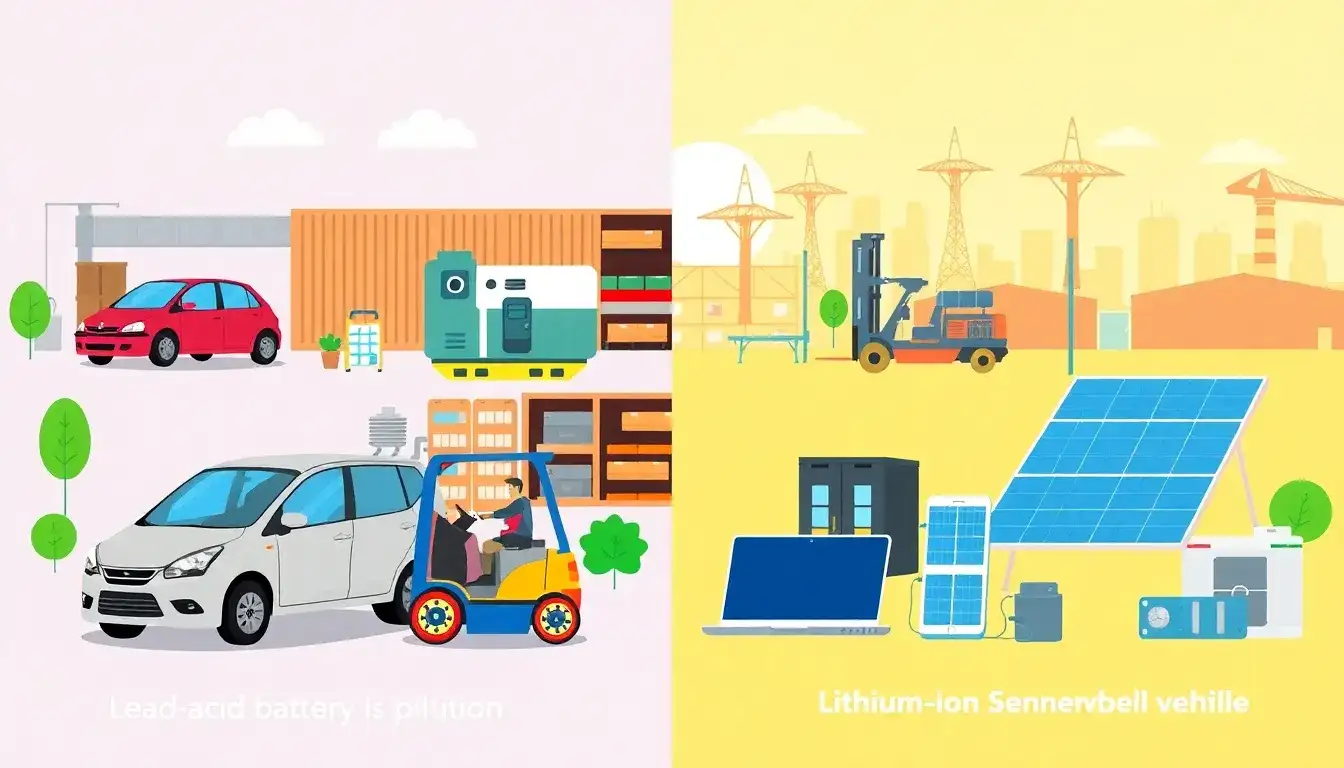
Lead-Acid Batteries
Applications of Lead-Acid Batteries:
- Automotive Starting Batteries: Lead-acid batteries are widely used in vehicles for starting internal combustion engines due to their ability to supply high surge currents, which is necessary for starting engines in cold conditions.
- Backup Power Systems: They are used in telecommunications, hospitals, and data centers for emergency power systems because of their reliability and cost-effectiveness.
- Deep-Cycle Applications: Types like VRLA (Valve-Regulated Lead-Acid) batteries, including AGM and gel batteries, are used in golf carts, wheelchairs, and renewable energy systems for their deep-cycle capabilities.
- Industrial Uses: Common in forklifts and material handling due to their cost-effectiveness and weight, which can serve as a counterbalance.
Characteristics of Lead-Acid Batteries:
- Higher self-discharge rate compared to lithium-ion.
- Lower energy density and cycle life.
- Cost-effective and widely recycled.
Lithium-Ion Batteries
Applications of Lithium-Ion Batteries:
- Electric Vehicles (EVs): They are preferred for EV traction due to their high energy density, light weight, and long cycle life.
- Portable Electronics: Widely used in smartphones, laptops, and other portable devices due to their high energy density and low self-discharge rate.
- Renewable Energy Storage: Often used in residential and grid-scale energy storage systems because of their high efficiency and versatility.
Characteristics of Lithium-Ion Batteries:
- Higher energy density and cycle life compared to lead-acid.
- Lighter and more efficient than lead-acid.
- Generally more expensive than lead-acid batteries.
In summary, while lithium-ion batteries are favored for high-performance and energy-dense applications, lead-acid batteries remain a staple in cost-sensitive, high-surge applications like automotive starting and some industrial uses.
Original article by NenPower, If reposted, please credit the source: https://nenpower.com/blog/what-are-the-typical-applications-for-lead-acid-batteries-compared-to-lithium-ion-batteries/

