

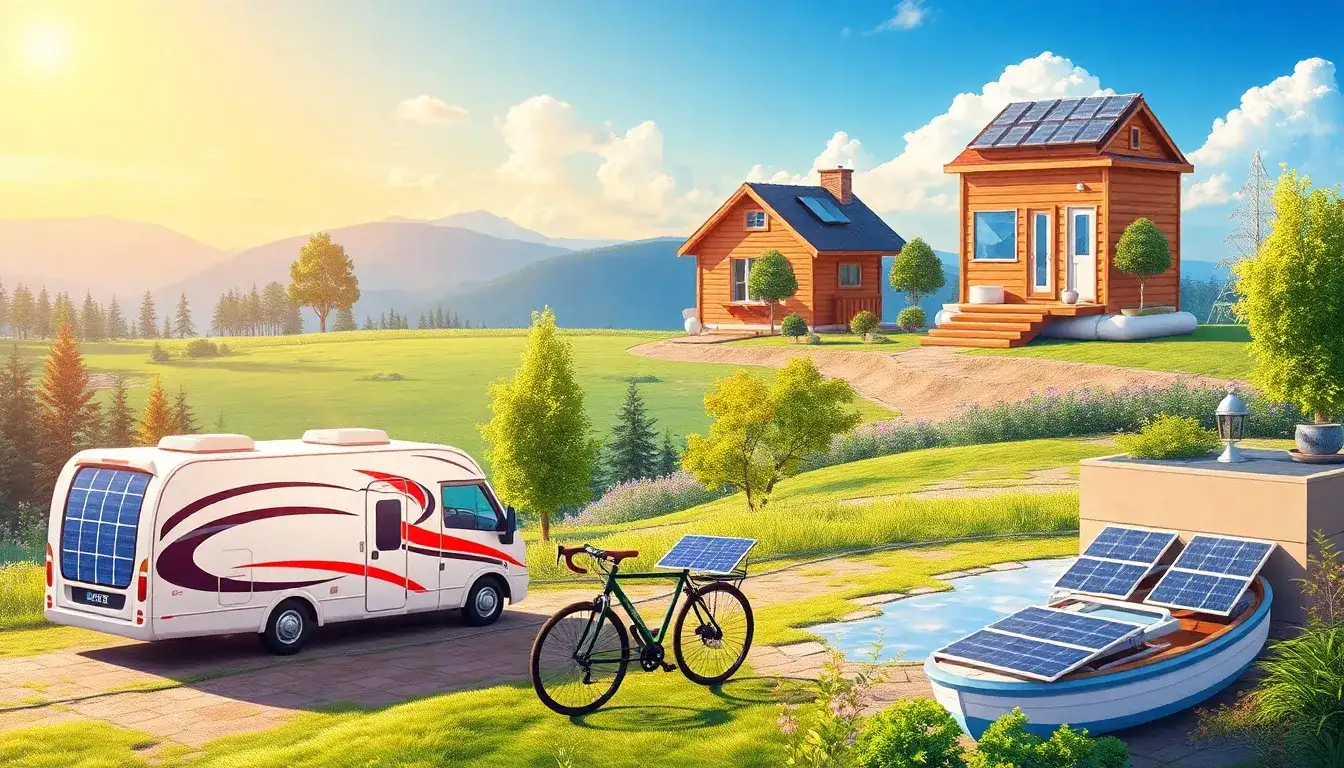
Flexible solar panels have a range of typical applications mainly due to their lightweight, portability, and ability to conform to curved or uneven surfaces. Here are the primary uses:
Typical Applications for Flexible Solar Panels
- Recreational Vehicles (RVs) and Campers
Flexible solar panels are commonly installed on RVs and campers to run lights, appliances, and recharge batteries during the day, enabling off-grid mobility without constant reliance on electrical hookups. They can be easily mounted on curved or irregular surfaces of the vehicle roof with adhesive or Velcro and offer lightweight, portable solar power solutions for road travel. - Boats and Marine Use
These panels are ideal for boats, including sailboats and yachts, where weight and space constraints exist. Flexible panels can power navigation lights, radio, and autopilot systems, and help keep batteries charged, reducing engine use. Their adaptability allows installation on unused or curved areas of a boat’s surface. - Outdoor Activities: Camping and Hiking
Portable and lightweight, flexible solar panels are favored by campers and hikers to charge electronic devices such as phones, GPS units, and portable batteries. They can be attached to backpacks, tents, or simply deployed on the ground for reliable power on the go. - Building-Integrated Photovoltaics (BIPV)
Flexible panels can be integrated into building facades, roofs, or windows due to their thin, bendable nature. This approach generates clean energy while enhancing architectural aesthetics, particularly on curved or complex surfaces where rigid panels are impractical. - Off-Grid Lighting and Remote Power
They can power outdoor lighting for gardens, pathways, and parks without needing electrical wiring or batteries. In remote or off-grid locations, flexible solar panels provide energy for lighting, communication equipment, and water pumping systems. - Uneven or Curved Surfaces
Flexible solar panels excel in applications where surfaces are not flat or conventional. Their ability to bend up to 240 degrees makes them suitable for installation on curved roofs of vehicles, cabins, or other irregularly shaped structures. - Portable Electronics Charging
Besides large applications, they are used to charge laptops, digital cameras, mobile phones, and other small electronics in various field conditions due to their portability and ease of use.
Summary Table of Typical Applications
| Application Area | Description | Key Advantages |
|---|---|---|
| RVs and Campers | Powering lights, appliances, and batteries on the road | Lightweight, conform to curved roofs, easy DIY installation |
| Boats and Marine | Charging batteries and powering navigation/communication | Lightweight, space-saving, adaptable to curved surfaces |
| Camping and Hiking | Charging portable devices during outdoor activities | Portable, lightweight, flexible form factor |
| Building-Integrated PV (BIPV) | Solar integration in building materials (roofs, facades) | Aesthetic, fits curved/uneven surfaces |
| Off-Grid Lighting | Powering outdoor lighting without wiring | No wiring/batteries needed, portable |
| Uneven/Curved Surfaces | Installation on irregular surfaces | Flexibility to conform to shapes |
| Portable Electronics Charging | Charging phones, laptops, GPS devices | Portable, easy to carry, convenient |
While flexible solar panels are less efficient and less durable than traditional rigid panels, their unique qualities make them ideal for specific uses where portability, light weight, and adaptability to odd surfaces are essential. They are generally not suited for large-scale, permanent home solar installations but excel in mobile, temporary, or specialized applications.
References
- Uses and characteristics of flexible solar panels for RVs, boats, camping, portable electronics, and off-grid usage.
Original article by NenPower, If reposted, please credit the source: https://nenpower.com/blog/what-are-the-typical-applications-for-flexible-solar-panels/

