

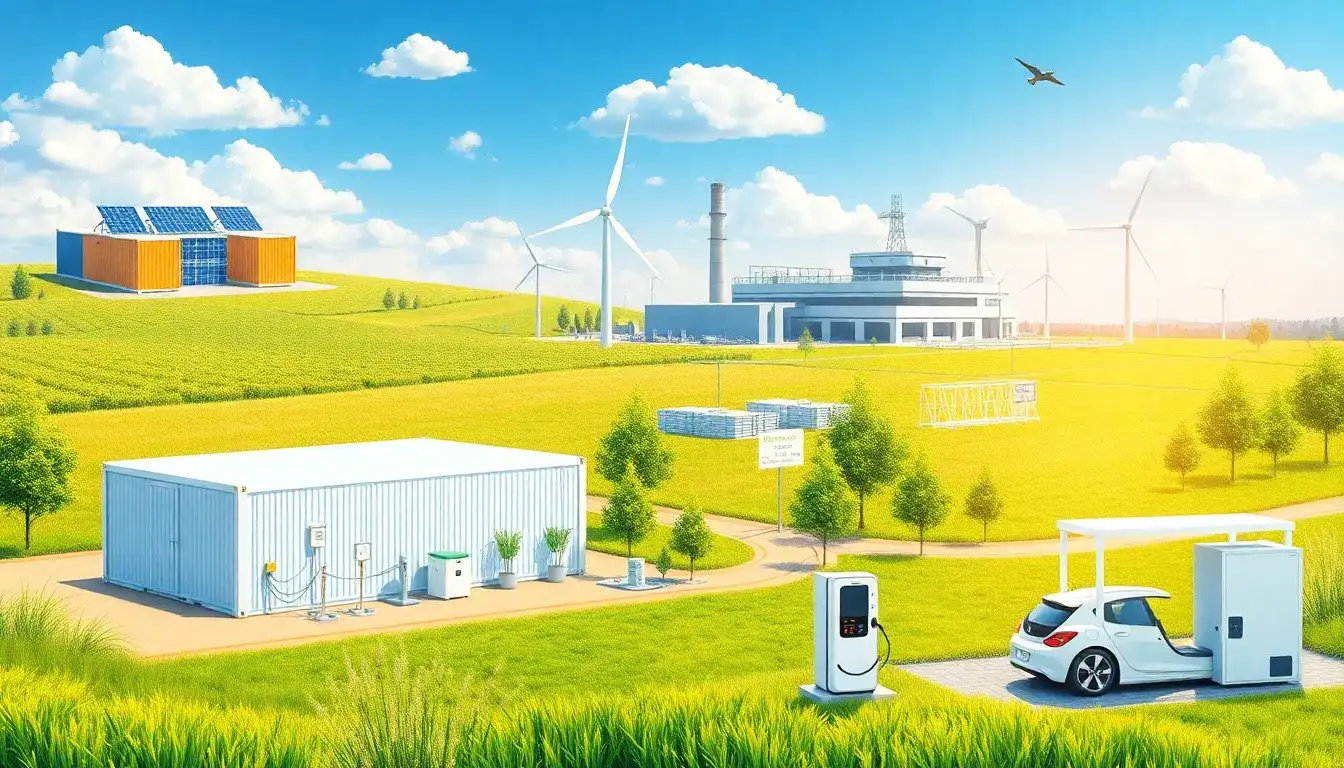
Commercial battery storage systems have a variety of typical applications across businesses and industries, centered around energy management, cost savings, and resilience. These include:
Typical Applications of Commercial Battery Storage Systems
1. Demand Charge Management
Commercial battery systems store energy during low-demand or off-peak times and discharge it during peak demand periods to reduce demand charges imposed by utilities on businesses for their highest electricity use moments. This leads to significant cost savings on electricity bills for commercial customers.
2. Backup Power and Energy Resilience
They provide critical backup power during grid outages or emergencies, ensuring uninterrupted operations for businesses like hospitals, refrigerated facilities, data centers, and manufacturing plants that require continuous power. This enhances operational reliability and reduces risks from outages.
3. Renewable Energy Integration and Self-Consumption Optimization
Battery storage paired with on-site renewable energy sources such as solar and wind enables businesses to store excess energy generated during peak production periods and use it when renewable generation is low (e.g., nighttime for solar). This increases energy independence, reduces reliance on the grid, and helps meet sustainability goals.
4. Electric Vehicle (EV) Charging Support
With growing EV adoption, commercial battery systems buffer the electricity load for EV charging stations by charging batteries during times of low demand and discharging power during peak charging periods. This stabilizes the grid connection and avoids costly upgrades.
5. Microgrid Enablement
Batteries support microgrid applications by enabling local energy systems to operate independently from the main grid. This is useful in remote areas or in businesses aiming for energy self-sufficiency. Combining solar with battery storage in microgrids fosters reliable, sustainable power supply.
6. Grid Services and Energy Market Participation
Some sophisticated commercial systems participate actively in energy markets by dispatching stored electricity to the grid during high price periods or providing grid stabilization services (frequency control ancillary services, demand response). This can generate additional revenue streams beyond simple energy bill savings.
7. Harsh Environment and Off-Grid Applications
Battery storage is increasingly replacing diesel generators in mining, construction, oil and gas exploration, and temporary event sites, driven by regulatory pressure and sustainability efforts. Hybrid systems combining batteries and generators are common transition solutions.
Summary Table of Commercial Battery Storage Applications
| Application | Description | Benefits |
|---|---|---|
| Demand Charge Management | Reduce peak electricity demand charges | Cost savings, lower utility bills |
| Backup Power | Provide emergency power during outages | Operational reliability, business continuity |
| Renewable Integration | Store excess solar or wind energy for later use | Energy independence, sustainability |
| EV Charging Support | Manage load of EV charging stations | Grid stability, avoids infrastructure overload |
| Microgrid Enablement | Support localized, independent energy systems | Energy autonomy, remote site power supply |
| Grid Services & Market Participation | Dispatch power to grid, provide ancillary services | Additional revenue, grid stabilization |
| Harsh Environment Applications | Replace diesel generators in mining, construction etc. | Reduced emissions, regulatory compliance |
In conclusion, commercial battery storage systems are versatile tools that help businesses optimize energy costs, enhance resilience, integrate renewables, support EV infrastructure, and even participate in grid services, all while advancing sustainability objectives.
Original article by NenPower, If reposted, please credit the source: https://nenpower.com/blog/what-are-the-typical-applications-for-commercial-battery-storage-systems/

