

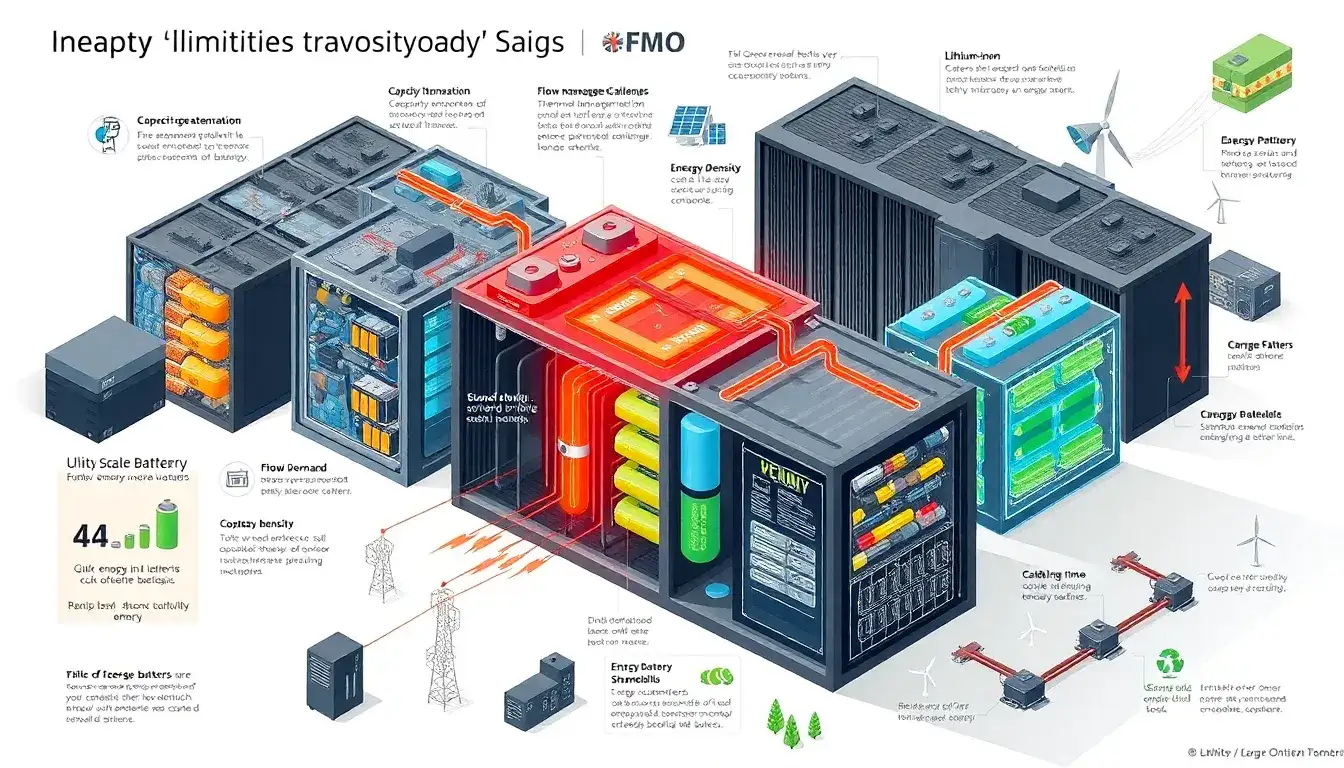
Utility-scale batteries face several technical limitations that significantly affect their performance, lifespan, safety, and economic viability:
Key Technical Limitations
1. Limited Energy Density and Physical Space Requirements
While lithium-ion batteries have relatively high energy density compared to other battery types such as lead-acid, their energy density is still limited for utility-scale storage needs. This means large physical footprints are required to store substantial amounts of energy, making installations space-intensive and sometimes impractical for certain locations.
2. Limited Cycle Life and Capacity Fade
Lithium-ion batteries degrade with use: each charge-discharge cycle reduces their ability to hold charge (capacity fade). For utility-scale applications where batteries are frequently cycled, this degradation shortens operational lifespan and incurs higher replacement costs. Lead-acid batteries typically have even shorter lifespans (around five years), making them less sustainable and cost-effective over time.
3. Safety Concerns
Lithium-ion batteries can overheat and are prone to thermal runaway, fire, and explosion risks if not properly managed. Safety issues are amplified in large installations, where a battery fire can spread quickly and be difficult to extinguish, posing significant risks to personnel and infrastructure.
4. High Cost
The manufacturing and scaling of lithium-ion batteries result in high capital costs, driven by expensive raw materials like lithium. This cost challenge can limit the economic viability of utility-scale projects. Lead-acid batteries are cheaper but trade off with lower energy density, shorter life, and environmental concerns.
5. Limited Duration and Discharge Rates
Utility-scale batteries provide energy over limited durations, often from minutes to a few hours, before depletion requires recharging. This limits their ability to support long-duration storage needs such as multi-hour or seasonal shifting of energy. Additionally, battery energy management must prioritize among multiple grid services (frequency regulation, peak shaving, backup, etc.), which can be mutually exclusive depending on battery design and state of charge.
6. Environmental and Disposal Issues
Lead-acid batteries contain heavy metals and sulfuric acid, necessitating careful disposal and posing environmental hazards. Frequent replacements due to short lifespans exacerbate these issues.
Impact on Performance
- Reduced Operational Lifespan due to capacity fade increases total cost of ownership and maintenance.
- Safety risks require extensive monitoring and safety systems, increasing complexity and costs.
- Limited duration and energy density constrain battery use cases on the grid, making them better suited for short-term grid balancing rather than long-term energy storage.
- Economic challenges restrict adoption where alternative energy storage or grid infrastructure investments may be more cost-effective.
- Service prioritization means batteries might underperform in certain roles if multiple grid demands conflict or exceed battery duration.
In summary, utility-scale batteries are constrained by their chemistry-driven physical and operational limits, safety issues, costs, and environmental impacts. These factors dictate their optimal applications and influence their integration into the energy grid. Addressing these limitations is a focus of ongoing research into new storage technologies and improved battery management systems.
Original article by NenPower, If reposted, please credit the source: https://nenpower.com/blog/what-are-the-technical-limitations-of-utility-scale-batteries-and-how-do-they-affect-their-performance/

