

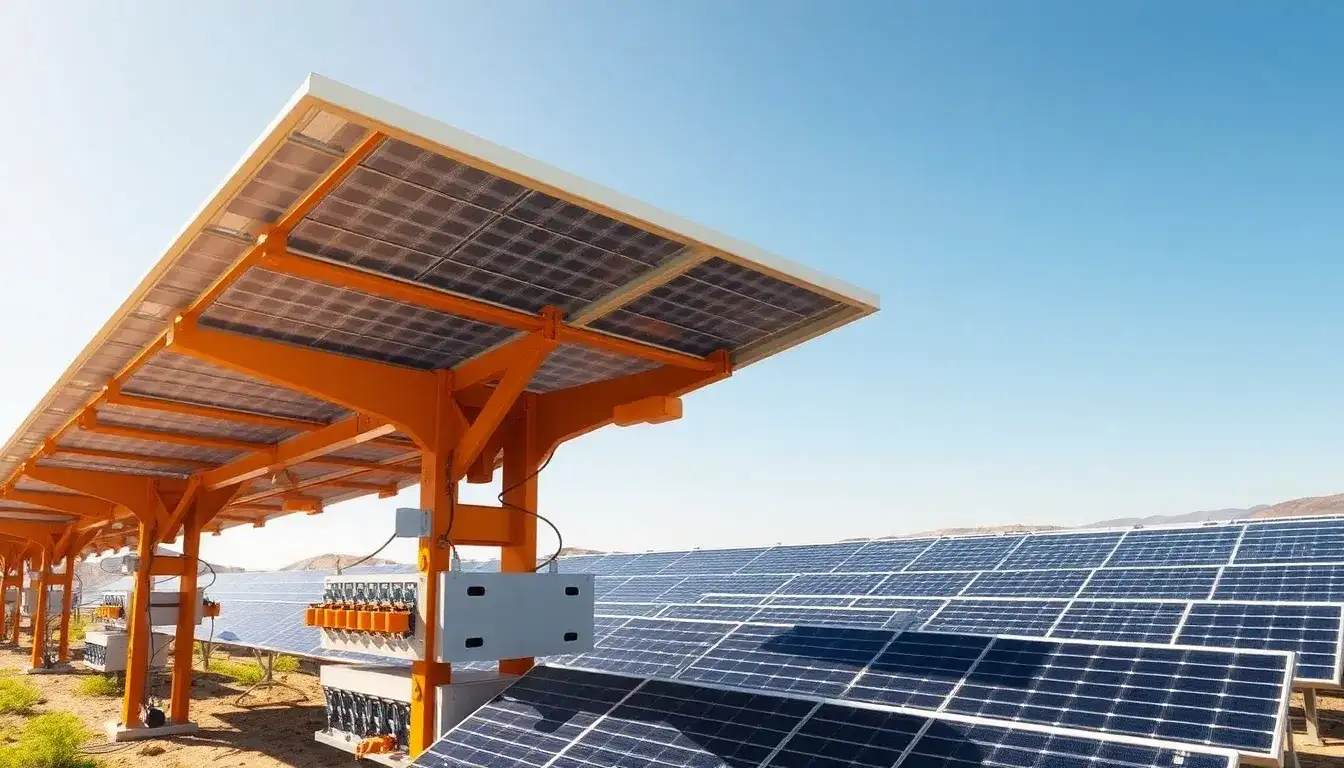
Key Structural Requirements for Lithium-Ion Battery Support in Solar Systems
1. Strong, Rigid Framework
- The battery support structure must be robust enough to hold the weight of battery packs without deformation or failure. This involves using materials with sufficient load-bearing capacity, such as steel or reinforced aluminum frames, designed to support the combined battery weight and any external loads (e.g., seismic, wind, or installation forces).
- For enhanced integration, some emerging designs use the battery pack as part of the structural framework itself, combining energy storage and mechanical support, thus reducing redundant materials and weight.
2. Mechanical Integration and Stability
- The structure should securely fix the battery cells/packs to avoid movement or vibration that could damage cells or connections.
- Use of modular racks or enclosures that can be anchored to floors, walls, or dedicated battery supports are common to maintain stability during operation and external disturbances.
3. Thermal Management Considerations
- The support system must allow sufficient airflow or incorporate thermal management systems to maintain optimal battery temperatures (~15°C ideal for storage) and prevent overheating, which can compromise structural integrity or cause battery failure.
4. Use of Structural Materials Enhancing Strength
- Advances in structural battery design incorporate carbon fibers or other composite materials within battery components like anodes and current collectors to add mechanical strength and reduce inactive material weight. While this applies more to battery cell design, the concept may influence structural support materials to be lightweight yet high-strength.
5. Safety and Fire Protection
- Supporting structures should include provisions for safe battery operation, especially considering lithium-ion battery risks (thermal runaway).
- Fire-resistant materials or protective barriers might be integrated into the structure, alongside proper spacing to prevent heat transfer between units.
6. Modular and Scalable Architecture
- Solar battery storage systems often require scalability; structural supports should accommodate ease of adding or removing battery modules without compromising integrity.
Summary Table of Structural Requirements
| Requirement | Description |
|---|---|
| Load-bearing capacity | Use strong materials (steel, aluminum) to support battery weight and external forces |
| Stability and vibration control | Secure mounting to avoid cell damage |
| Thermal management integration | Design supports for airflow or cooling systems to maintain battery temperature |
| Use of advanced materials | Potential use of composites/carbon fiber in structures for strength and reduced weight |
| Safety/fire protection | Include fire-resistant materials or protective design to mitigate battery hazards |
| Modularity | Design for easy expandability and maintenance |
While the internal battery structure (anode, cathode, separator, electrolyte) is crucial for performance, the external mechanical support in solar systems primarily focuses on safe, strong, thermally adequate housing and mounting.
No exact engineering codes were found in the results, but typical practices align with electrical installation standards and battery manufacturer guidelines to ensure structural safety and system longevity.
This overview synthesizes available information on lithium-ion battery structure and associated mechanical integration principles relevant to solar energy systems.
Original article by NenPower, If reposted, please credit the source: https://nenpower.com/blog/what-are-the-structural-requirements-for-supporting-the-weight-of-lithium-ion-batteries-in-solar-systems/

