

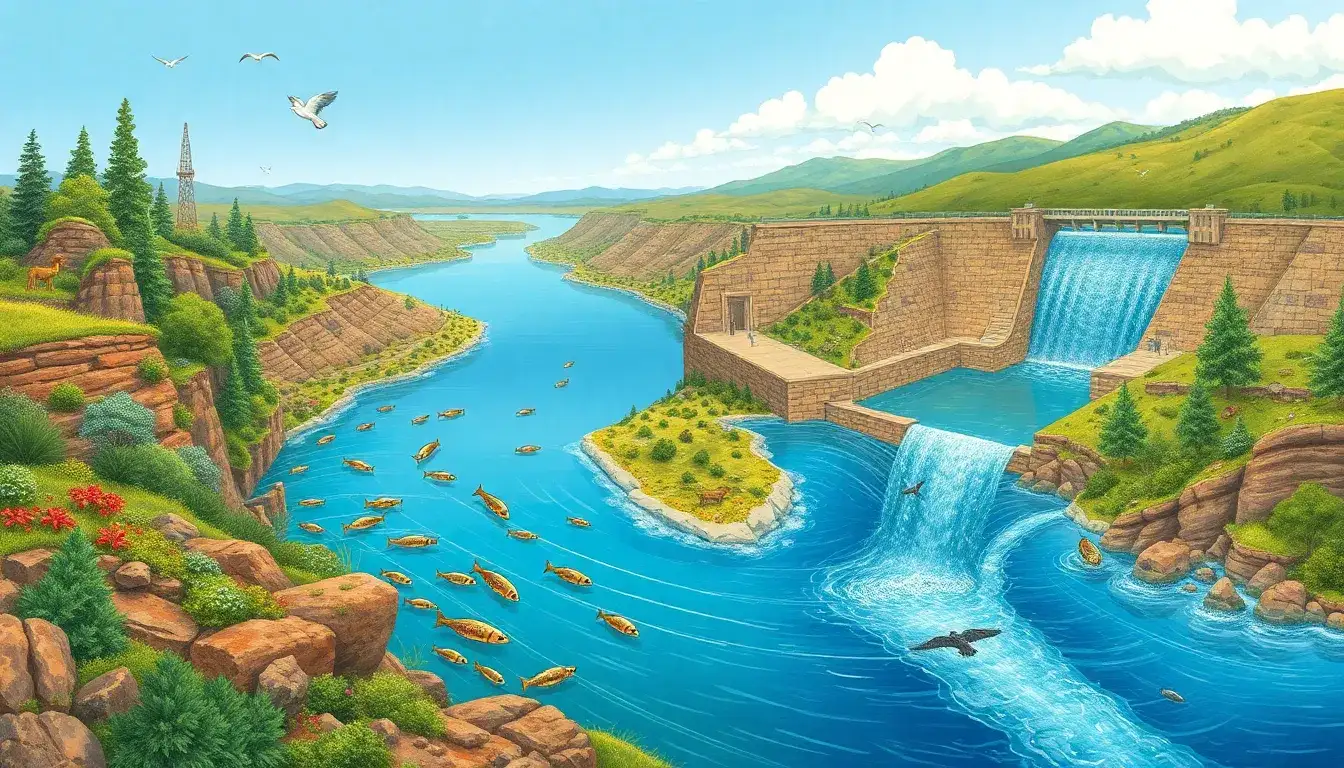
The construction of reservoirs and dams causes several specific and significant ecological changes affecting river and lake ecosystems:
Disruption of Natural River Flow and Sediment Transport
- Dams block the natural movement of sediments, causing sediment accumulation behind the dam and reducing sediment flow downstream. This sediment trapping leads to a decline in downstream habitat quality and availability because the sediment that nourishes and builds aquatic habitats is lost.
- The reduction of sediment downstream also results in “sediment-starved” water that can erode riverbeds and banks below the dam, degrading habitats further.
- Sediment accumulation behind dams gradually reduces reservoir water storage capacity, affecting water availability for multiple uses.
Altered Water Temperature and Flow Regimes
- Reservoirs created by dams typically hold colder water compared to natural river systems. When this water is released, it can cause unnatural variability in downstream water temperatures.
- This temperature alteration disrupts aquatic species, many of which require specific and predictable temperature cues for migration and reproduction.
- The change from free-flowing river to a reservoir ecosystem shifts hydrological dynamics, often resulting in altered seasonal flow patterns and loss of natural flood pulses important to ecosystems.
Biodiversity Loss and Habitat Modification
- Dams convert river habitats into lake-like reservoirs, which can negatively affect native fish and other aquatic species adapted to flowing water conditions.
- Barriers created by dams impede the migration of fish and other aquatic organisms, disrupting life cycles and reducing population connectivity.
- Changes in predator-prey relationships occur due to habitat alteration, possibly increasing predation on native species or allowing invasive species to thrive.
- The transformation and degradation of river ecosystems caused by dams have contributed to declines in fisheries and loss of biodiversity at large scales.
Nutrient Retention and Eutrophication
- Dams trap nutrients such as phosphorus in reservoir sediments, with studies estimating up to 12% of global river phosphorus loads retained in reservoirs. This nutrient retention contributes to eutrophication, promoting excessive growth of microorganisms at the expense of other aquatic life.
- Eutrophication can lead to oxygen depletion and harmful algal blooms, further degrading water quality and ecosystem health.
Other Environmental Impacts
- Dams contribute to soil erosion, spread of diseases, salinization, and waterlogging in surrounding areas due to altered hydrology and land use changes.
In summary, dams and reservoirs cause ecological changes by disrupting sediment transport and river flow, altering water temperature regimes, blocking migration routes, causing nutrient build-up and eutrophication, and modifying habitats from riverine to lacustrine systems. These changes collectively result in biodiversity loss, degraded aquatic and riparian habitats, reduced fisheries, and compromised ecosystem functions.
Original article by NenPower, If reposted, please credit the source: https://nenpower.com/blog/what-are-the-specific-ecological-changes-caused-by-the-construction-of-reservoirs-and-dams/

