

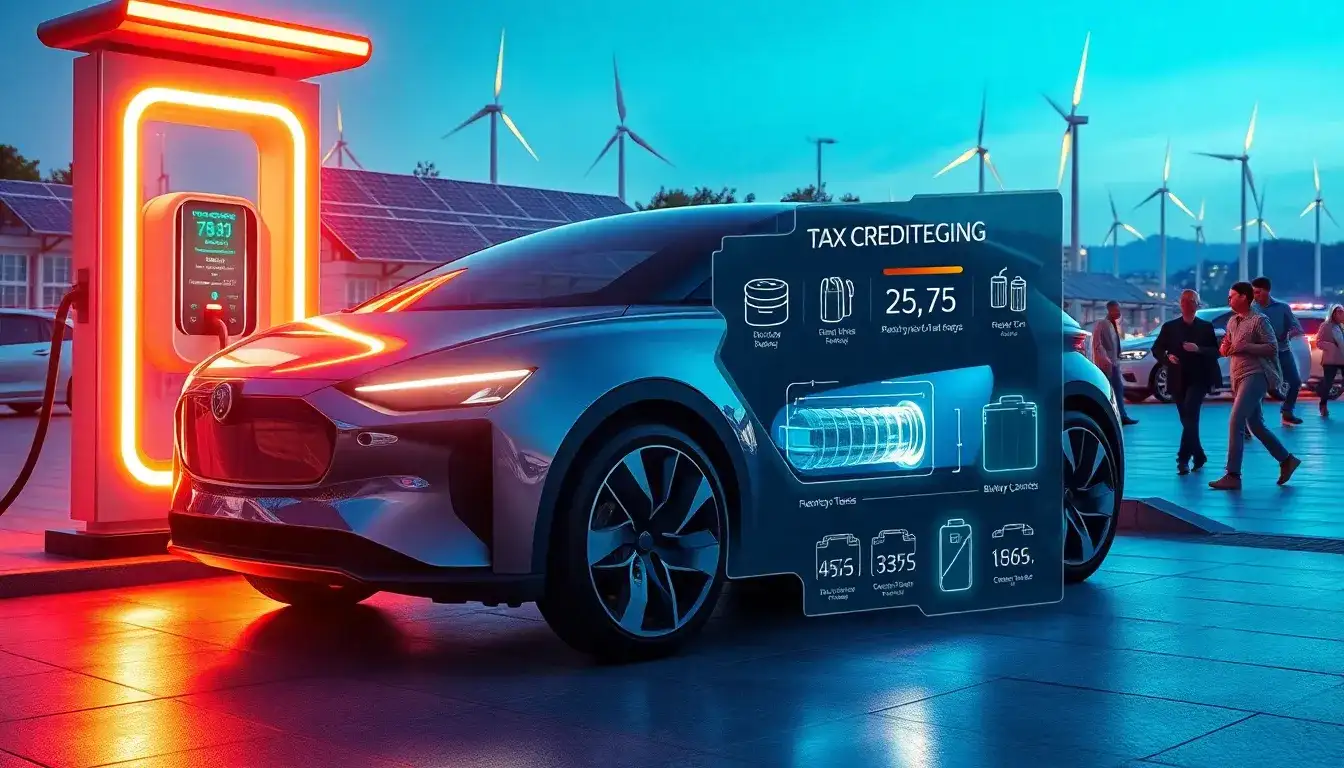
To qualify for the tax credit for electric vehicles (EVs), vehicles must meet several specific battery requirements:
- Battery Capacity: The vehicle must have a battery with a capacity of at least 7 kilowatt-hours (kWh) to be eligible for the tax credit.
- Battery Component Manufacturing:
- For 2023, at least 50% of the value of the battery components must be manufactured or assembled in North America.
- For 2024 and 2025, this requirement increases to 60%.
- By 2026, 70% of the battery components must be North American-made.
- In 2027, this increases to 80%, with 90% required in 2028 and 100% in 2029 and later.
- Critical Minerals Requirement:
- In 2023, at least 40% of the value of the battery’s critical minerals must be extracted or processed in the U.S. or within a country that has a free-trade agreement with the U.S.
- This requirement increases to 50% in 2024 and 60% in 2025.
- From 2026 onwards, the requirement is 70%, and from 2027, it will be 80%.
These requirements are part of the Clean Vehicle Credit, which can provide up to a $7,500 tax credit if both the battery component and critical minerals requirements are met.
Original article by NenPower, If reposted, please credit the source: https://nenpower.com/blog/what-are-the-specific-battery-requirements-for-a-vehicle-to-qualify-for-the-tax-credit/

