

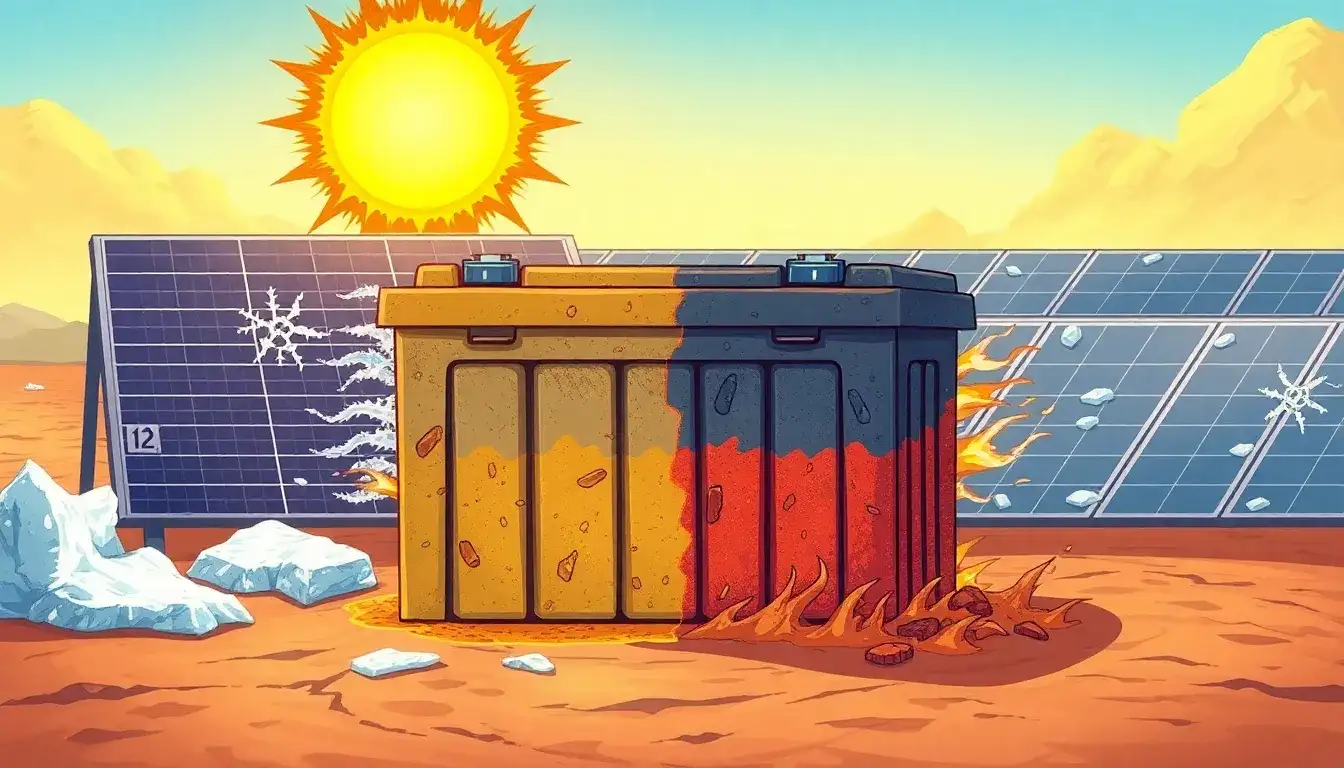
- Visible Physical Damage: Look for cracks, swelling, or ruptures in the battery casing. Swelling often occurs due to gas buildup caused by overheating.
- Excessive Heat or Cold: High temperatures can lead to rapid chemical reactions, potentially causing overcharging and reduced lifespan. Temperatures above 45°C (113°F) can be particularly harmful. Conversely, low temperatures can temporarily reduce battery capacity.
- Performance Decline: Batteries may not hold charges as well or may drain quickly, indicating reduced efficiency due to temperature stress.
- Leaks or Discoloration: Leaks, especially acid leaks in lead-acid batteries, and discoloration on the casing are hazardous signs of internal damage often linked to temperature extremes.
- Alarms from Charging Systems: Frequent alerts from the charge controller can indicate overcharging or overheating issues.
To maintain optimal battery health, ensure the operating environment stays within the recommended temperature range (usually 10°C to 25°C or 50°F to 77°F) and monitor temperature sensors for early signs of overheating or excessive cooling.
Original article by NenPower, If reposted, please credit the source: https://nenpower.com/blog/what-are-the-signs-that-a-solar-battery-is-deteriorating-due-to-extreme-temperatures/

