

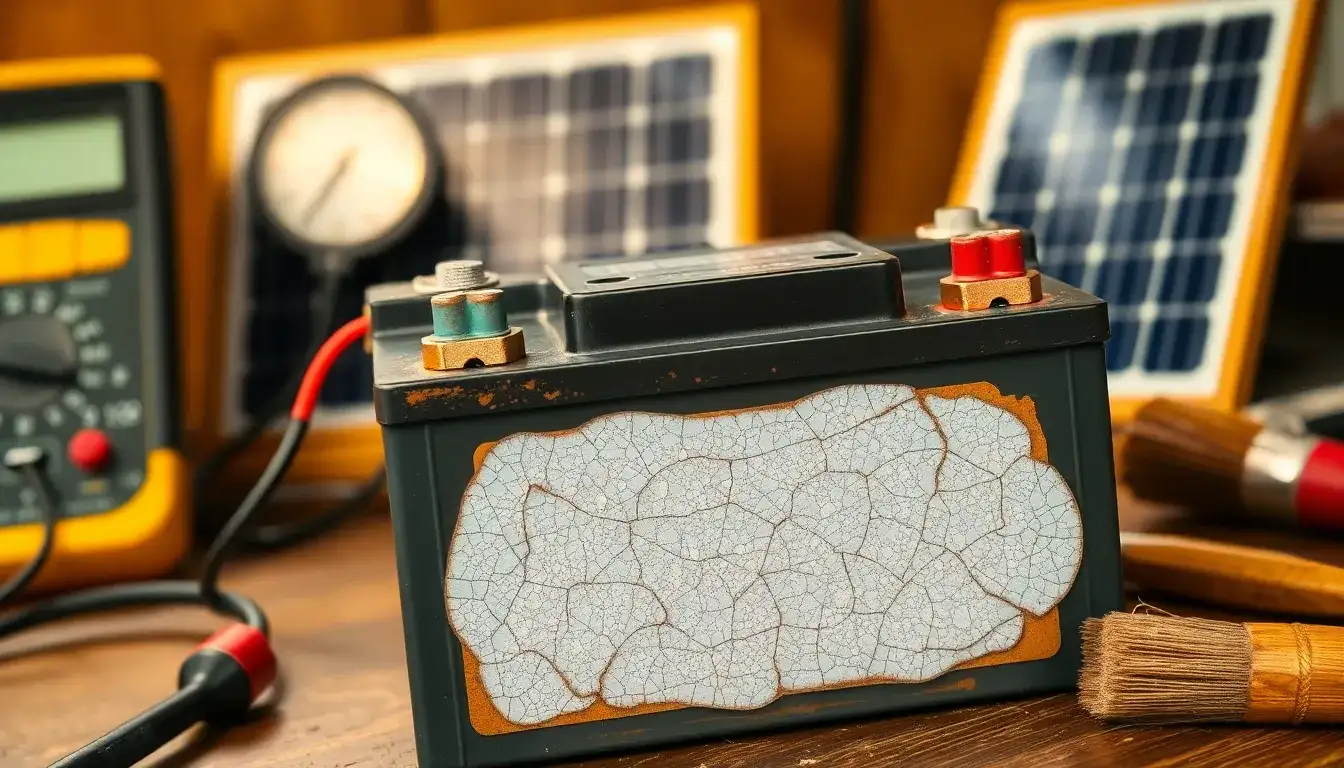
Sulfation in solar batteries, particularly lead-acid batteries, is a common issue that’s characterized by the buildup of lead sulfate crystals. Identifying the signs of sulfation can help prevent serious battery failure and extend the battery’s lifespan. Here are the primary signs to watch for:
Signs of Sulfation
- Inability to Hold Charge: A key indicator of sulfation is when the battery fails to hold a charge effectively or doesn’t hold a charge at all. This can lead to devices powered by the battery not receiving sufficient energy, resulting in dim lights, slow start-ups, or electronic devices not functioning correctly.
- Longer Charging Times: Sulfated batteries often take significantly longer to charge compared to healthy batteries. If you notice that your battery requires much more time to reach a full charge, this could be a sign of sulfation.
- Increased Heat: A sulfated battery may exhibit excessive heating during charging, which can further damage the battery and increase the rate of sulfation.
- Reduced Lifespan: Continuous sulfation reduces the battery’s overall lifespan, and the battery may fail completely if sulfation is not addressed. This is often seen as a significant decrease in the number of useful charge cycles the battery can undergo.
- Voltage Drop During Load: When tested under load, if the voltage of a fully charged battery drops rapidly, it indicates sulfation is likely preventing effective power delivery.
- Physical Signs: In some cases, you may notice physical changes, such as a swollen battery case or visible deposits on the battery terminals.
Causes of Sulfation
Sulfation typically occurs under a few conditions:
- Undercharging: If a battery is repeatedly not fully charged, it can lead to sulfation. This is common in solar applications where energy availability may be intermittent.
- Long-term Storage: Batteries stored without a full charge or for extended periods can develop sulfate crystals that become difficult to remove over time.
- High Temperatures: Storing or operating batteries at temperatures above 75°F increases the rate of sulfation and self-discharge.
Conclusion
Monitoring and maintaining the charge levels of your solar batteries are essential to prevent sulfation. Regular testing of the battery voltage and using appropriate charging techniques can help mitigate the effects of sulfation and ensure a longer lifespan for your energy storage solutions. If sulfation is suspected, professional assessment and potential recovery methods should be pursued to restore battery functionality.
Original article by NenPower, If reposted, please credit the source: https://nenpower.com/blog/what-are-the-signs-of-sulfation-in-solar-batteries/

