

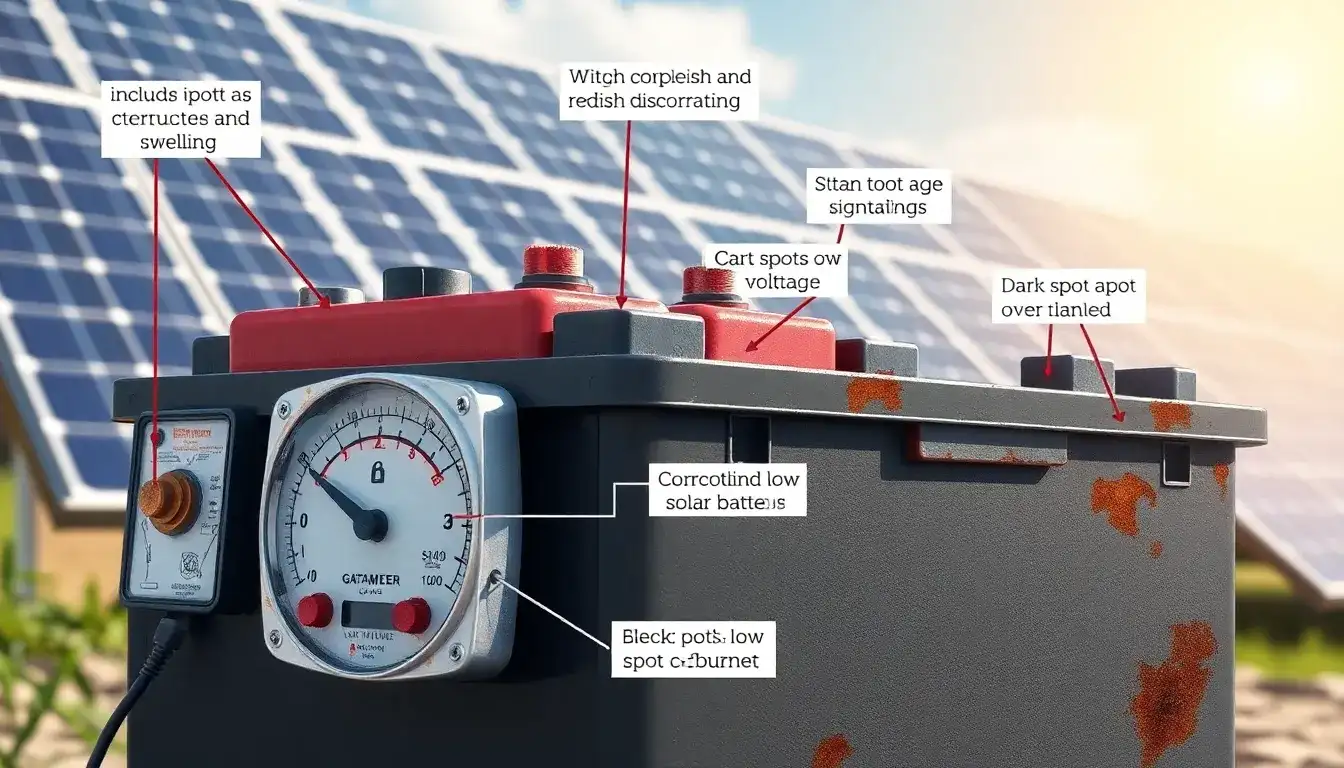
Solar batteries can exhibit several signs of damage or degradation, which can be identified through visual inspection, performance assessment, and testing. Here are some key indicators:
Visual and Physical Signs
- Cracks or Ruptures: Visible cracks in the battery casing indicate physical damage.
- Swelling or Bulging: Bulging can result from overcharging, leading to internal gas buildup.
- Leaks: Acid or electrolyte leaks can harm both the battery and surrounding components.
- Discoloration: Discoloration might suggest internal chemical imbalances or damage.
Performance Issues
- Reduced Capacity: The battery struggles to hold a charge or has a significantly reduced storage capacity.
- Increased Charging Time: It takes longer to fully charge the battery.
- Power Drains Quickly: The battery discharges faster than usual even after a full charge.
- Inefficient System Performance: Solar systems may not function as efficiently as they used to.
Testing Indicators
- Voltage Readings: Consistently low voltage readings on a multimeter can indicate battery degradation.
- Overcharging Signs: Swelling, excessive heat, reduced efficiency, and frequent charge controller alarms.
Age Consideration
- Batteries Over Five Years Old: Lead-acid batteries often have a lifespan of about five years, while lithium-ion batteries typically last longer.
Additional Signs
- Strange Noises or Smells: Unusual sounds or sulfur smells can indicate severe internal issues.
- Increased Energy Bills: For grid-tied systems, increased energy bills may suggest battery inefficiency.
Original article by NenPower, If reposted, please credit the source: https://nenpower.com/blog/what-are-the-signs-of-damage-in-solar-batteries/

