

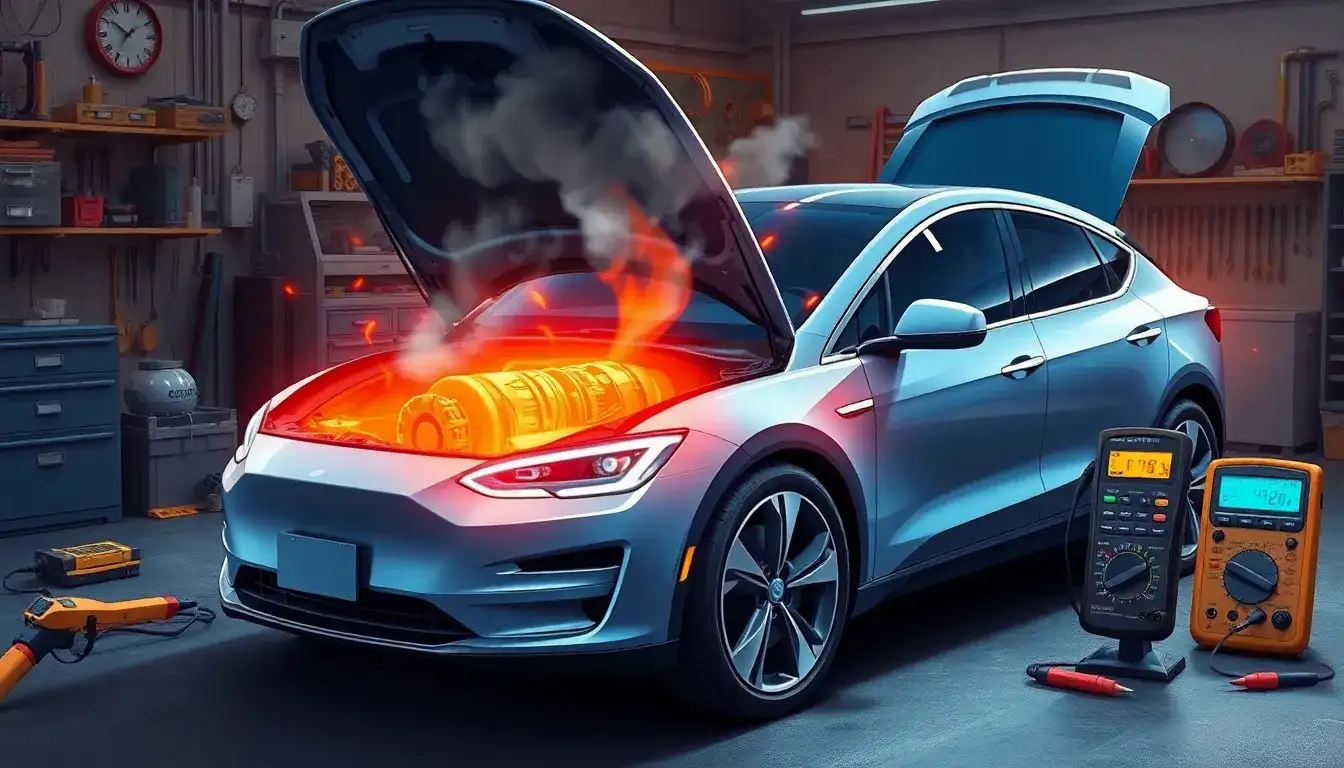
Identifying signs of an overheating electric motor in an electric vehicle (EV) is crucial to prevent damage and ensure vehicle safety. Here are common indicators and potential causes:
Signs of Overheating
- Excessive Heat
- The motor feels hot to the touch.
- Paint discoloration or darkening around the motor area can indicate prolonged exposure to heat.
- Performance Issues
- Reduced power output from the motor, which can manifest as slower acceleration or decreased overall vehicle performance.
- Visual and Olfactory Signs
- Although less common in EVs compared to combustion engines, there might be a burning smell if wiring or components have overheated.
- Unusual Noises
- Overheating can also lead to vibration and unusual noises due to internal motor issues like misaligned components or bearing wear.
- Fault Lights and Warnings
- Modern EVs often have onboard diagnostic systems that alert drivers to potential overheating issues through dashboard warnings or temperature alerts.
Causes of Overheating
- Overload and Voltage Issues: If the motor is overloaded or experiences irregular voltage supply, it can draw more current and overheat.
- Poor Maintenance: Lack of cooling system maintenance or blockages in cooling paths can prevent efficient heat dissipation.
- Design or Installation Flaws: Incorrect installation or design issues can lead to overheating due to inadequate airflow or cooling.
Potential Consequences
- Overheating can lead to insulation failure, reducing the motor’s lifespan by half for every 10°C (18°F) increase in temperature.
- Prolonged overheating can cause motor failure, which is costly to repair and might lead to sudden vehicle stops.
Original article by NenPower, If reposted, please credit the source: https://nenpower.com/blog/what-are-the-signs-of-an-overheating-electric-motor-in-an-ev/

