

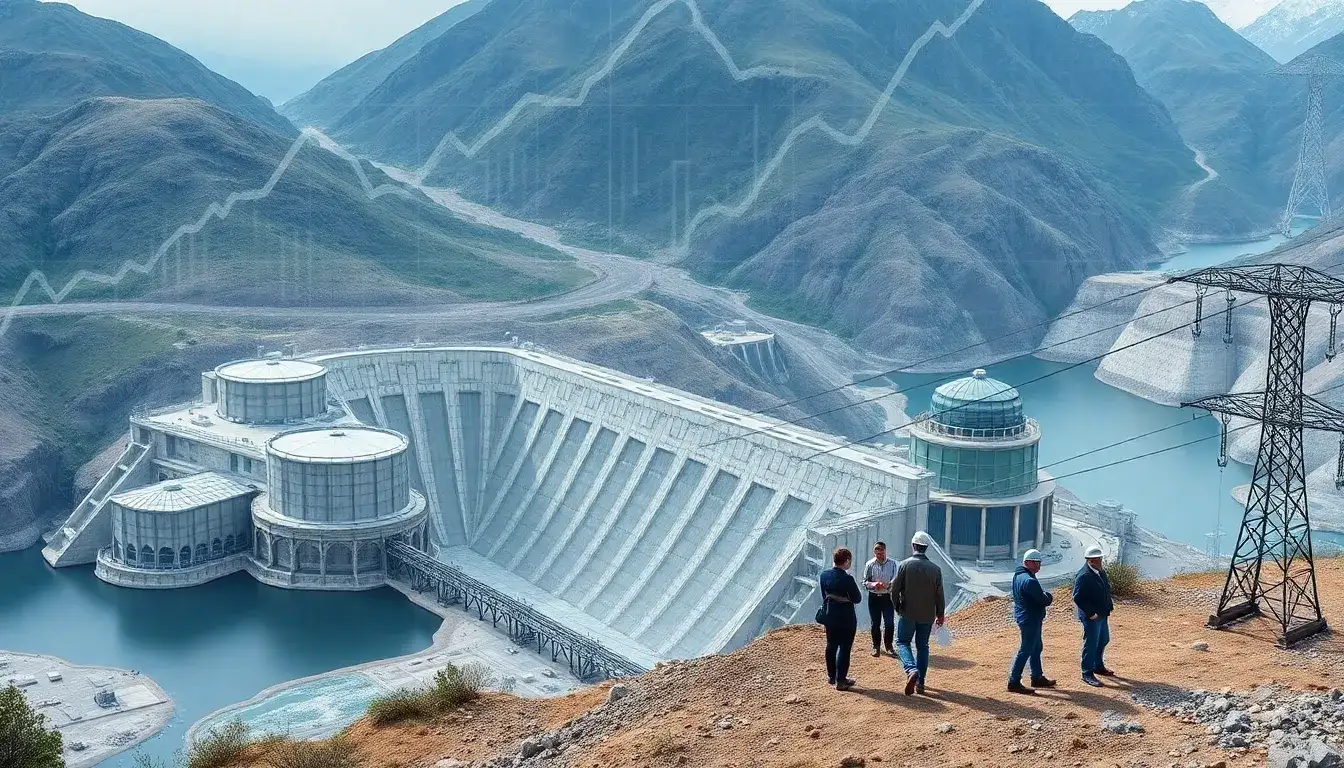
The significant financial challenges associated with building pumped hydroelectric energy storage (PHES) systems are multifaceted and stem from the project’s scale, complexity, and regulatory environment. Key financial hurdles include:
- High Capital Costs and Long Construction Timeframes: PHES projects require substantial upfront investment, particularly due to the heavy civil infrastructure involved. Major costs come from constructing dams, tunnels, penstocks, and other large structures. Construction can take 3 to 5 years or longer, especially when integrating renewable energy components, increasing financing costs and project risk.
- Licensing and Regulatory Delays: Obtaining the necessary permits and licenses can take several years, creating uncertainty and delaying revenue generation. The protracted approval process can deter investors and lenders concerned about long lead times and regulatory risks.
- Geographical and Site-Specific Costs: Construction costs and viability vary widely depending on local geography, geology, hydrology, access, land ownership, indigenous rights, environmental impact, and community opposition. These factors can substantially escalate costs or even halt projects.
- Market and Policy Uncertainty: Changing energy policies, market rules, and definitions of energy storage products affect revenue streams and project valuation. Uncertain regulations around ownership structures and business models add further financial risk. This volatility makes it difficult for investors to secure predictable returns.
- Revenue Uncertainty and Valuation Challenges: While PHES provides valuable grid services (flexibility, ramping, ancillary services, black start capability), quantifying and monetizing these benefits depends on the project location and electricity market dynamics. Accurately estimating revenues and project value is challenging, requiring sophisticated tools and conservative financial modeling.
- Financing Hesitancy: Because of the above risks and long timelines, financial institutions often hesitate to fund PHES projects, or demand higher returns to compensate for elevated risk, increasing overall project costs.
In summary, the financial challenges are driven by the large capital investment needed, long development and construction periods, complex regulatory hurdles, site-specific cost variability, uncertain revenue streams, and evolving policy landscapes, all contributing to higher financial risk and difficulty securing cost-effective financing for PHES systems.
Original article by NenPower, If reposted, please credit the source: https://nenpower.com/blog/what-are-the-significant-financial-challenges-associated-with-building-pumped-hydroelectric-energy-storage-systems/

